Although I voted to remain in the European Union in the 2016 referendum, this did not reflect an entirely uncritical view of the European project and, in particular, its democratic structures. I was interested therefore to listen to the Leading Podcast interview with Poland’s Deputy Prime Minister, Radek Sikorski. In a wide-ranging conversation, he makes a very spirited argument in favour of EU Democracy.
Sikorski’s relationship with the UK is an interesting one. Just nineteen years old, he was granted political asylum in Britain in 1982 following the declaration of martial law in Poland in December of the previous year. He won a place to study PPE at the University of Oxford where he established his conservative political credentials and became a member of the notorious Bullingdon Club. He was an acquaintance of both David Cameron and Boris Johnson, and an admirer of the latter.
During this period of his life he was a Eurosceptic. Reflecting on this, he now says that in the 1980s, when his own Euroscepticism was formed, “The British public was consistently misled about how the EU works.” [Podcast: 23:32]
Having returned to Poland after the fall of the communist Eastern Bloc, he has entirely changed his view. He now offers a robust defence of the EU’s democratic character:
“For a directive to come into force not only do you need an agreement of the member states and in a majority of cases unanimously, you also need an agreement of the European Parliament; and the Commission are not ‘faceless bureaucrats’. They are appointed by democratically elected governments.”
Sikorski concludes: “Now that I know how it works I don’t know how you could make it any more democratic than that.” [Podcast: 26.02]
Nigel Farage, or indeed Boris Johnson or Michael Gove, would be unlikely to highlight this particular script; however, the core appeal of Brexit for many had more to do with that pesky slogan coined, I believe, by arch Brexiteer Dominic Cummings: “Take back control!”
These three words neatly encapsulated the alleged indignity of European Union membership: that the great British nation was sharing a sliver of its sovereignty with perfidious Europeans. And so, amidst much waving of the Union Jack, the clamour grew: “Take back control.”
There is, however, a democratic conundrum at the centre of this call to reclaim sovereignty. Intrinsically, democracy is about the pooling of individual sovereignty. In a world where each individual is a law unto themselves, we would be returned to the state of nature described by Thomas Hobbes in which, he argued, life would be “nasty, brutish and short.” Hobbes was no democrat, but in his view, any form of government, however unjust, would be preferable to the state of nature.
I would be tempted to argue with Hobbes’s characterisation of human nature as being so irredeemably brutish, but will set that aside for the moment and return to my main point. If we want democracy, then the sharing of individual sovereignty is a prerequisite. The question only remains to decide how widely that sovereignty should be shared. It is obviously the case that the smaller a democratic unit, the more influence an individual citizen will have. This said, federal and quasi-federal structures, like the European Union, allow decisions to be made which affect larger groups of people without removing the right of smaller groups to manage their own affairs. When all is said and done, has ‘taking back control’ to Westminster given a Scottish voter, or a voter in Liverpool, more control than pooling some sovereignty in a larger body where their MEP has a vote?
Naturally, sharing sovereignty means that we will sometimes dislike democratically made decisions, regardless of whether they have been made locally, nationally, or at some transnational level. The alternative, however, is a free-for-all in which, generally, the powerful get their way and everyone else gets the leftovers.
In the light of the somewhat dismal performance of the UK since its exit from the EU, it seems reasonable to suggest that the time has come to undo the damage done by Brexit and rejoin. According to YouGov: “Nine years on from the EU referendum, most Britons believe that it was wrong to vote to leave the EU.”
It is a curious fact, however, that despite this outcome, one of the key architects of Brexit, Nigel Farage, continues to rise in popularity amongst the disaffected, whilst the esteem in which other leading politicians are held is in free-fall.
Radek Sikorski is clear that, were the UK to apply to rejoin, we would be welcomed back into the European fold. My own sense, however, is that rejoining the EU at this stage would prove unpopular in the UK regardless of Brexit-regret. And there is the additional question of the currency.
Gordon Brown—smart man—negotiated for us to keep the pound rather than adopt the Euro. While not an immediate condition, rejoining would almost certainly require a commitment to adopt the Euro in the long term—a sovereignty I believe is worth retaining.
More importantly, however, in this time of Trumponomics, all bets are off. So far as most commentators are concerned, Trump’s tariffs strategy is actively harming the US economy, and the collateral damage to other economies around the world is of no concern to him. As in all things, Trump appears to prefer division to unity and would doubtless be hostile to the UK rejoining the EU. He has no interest in anything other than a winner-takes-all rammy at the level of international affairs. The way in which he is playing his hand can be stupefying, but undeniably he continues to hold many strong cards.
All things considered, I think we should probably put our application to rejoin the EU on hold. For the moment, we must navigate the turbulent world that Brexit, Trump, and the populist zeitgeist have helped to create.
There was a time when a person who had become mortally ill or who had reached their high old age could expect to die at home amongst family and not far from friends. In the current era this may yet be the case in communities as yet untouched by the modern world. But for those of us who do not succumb to fatal accident or heart attack, old age offers the prospect of lingering decline, often in a care home, with illness, hospitalisation and indignity all too probable at the finish.
Pain and illness have no doubt always been hazards at the end of life, but our genius for extending life, often regardless of its quality, is a defining feature of the modern world.
On the plus side, the management of pain through administration of drugs and the quality of professionalised care and support has never been higher.
Yet, the standard of what might be considered “a good death” continues to be set by the widespread belief that to die at home, within touching distance of those closest to us, is as good an end to life as we can possibly hope for.
The changing role of women, who formerly carried the greater part of this burden of care, is no doubt one of the reasons why dying has become so professionalised. Whilst attendance at the bedside of someone who is dying is as much a part of life as it has always been, hands on care for the sick and the infirm is something with which we have become less familiar.
Perhaps in time to come families and communities will evolve in such a way as to fully and unflinchingly take on this task in a way that does not gender the responsibilities for doing so. But for the foreseeable future we must rely on those aforementioned medical and care services. It is precisely for this reason that the just published Research Handbook on End of Life Care and Society is an important piece of work. In the introduction, Editors David Clark and Annemarie Samuels write:
Our Handbook is about end of life care in society. It harnesses the social sciences and humanities to a set of problems that remain dominated by medicalised and managerial solutions within healthcare systems, and in so doing it takes us into a vast range of perspectives on something that is essential to social life itself: the human encounter with dying, death and bereavement.
For me, it is this “vast range of perspectives” which makes the Handbook a project of special interest.
I was fortunate enough to attend the launch event for this book at the University of Glasgow, Rutherford McCowan Building, in Dumfries. The attendees were treated to an introduction from the editors of the Handbook, and contributions from a couple of the contributors. One in particular, which caught my attention, was from Marian Krawczyk, University of Glasgow, End of Life Studies Group, which focused on the concept of “total pain.” This I understood to be an amalgam of psychological and physical suffering arising in many cases directly from the treatment being applied to the terminally ill person.
Marian Krawczyk however is concerned with the disruption caused to the microbiome by treatments and how this disruption in turn directly influences the “total pain” experience of the subject. As she pointed out, progress into our understanding of the human gut microbiome has come on enormously in recent years. My own awareness of this subject has been mostly through the work of Professor Tim Spector. It comes as no surprise that rapidly expanding knowledge in this area of research is now being applied to find ways to mitigate the side effects of treatments such as chemotherapy, radiotherapy and antibiotics. Such treatments can devastate the gut biome and cause set backs to an individual’s progress which have hitherto gone unrecognised.
One of the exciting features of the Handbook is its international character. The contributors bring a diversity of cultural perspectives to the enterprise. A quick scan of the contents page reveals authors from Switzerland, the USA, the Netherlands, New Zealand,Denmark, Japan, Uganda, Portugal, Brazil, and Finland.
The multidisciplinary nature of these contributions is also striking. For example, the essay, Homelessness at the end of life speaks of a concern to reach into the darker corners of our world and to understand these marginal realities and perhaps even to learn something from them.
Speaking to David Clark briefly at the conclusion of the event I enquired as to the extent of anthropological study of end of life care. How has care for the dying been managed across cultures in the past? My assumption was that much of this end of life practice has been lost to progress and modernisation. I was reassured to be told that much data already exists from previous anthropological studies and that this is the discipline that determined David Clark’s own route into a focus on palliative care.
A further contribution to the launch event came from Sandy Whitelaw, based on his shared authorship – together with David Clark – of the Handbook essay titled: The opportunities and limitations of ‘choice’ at the end of life. This discussion of ‘choice’ resonated powerfully with a recent radio programme I had heard, an abridged version of Sarah Perry’s book Death of an Ordinary Man. The narrative records, in agonising detail, the experience of her father in law, David, from his initial recognition that he is not well to, just a month later, his death from oesophageal cancer. To be accurate, the book records not just David’s experience of these traumatic events, but also that of Sarah Perry and her husband, Rob, David’s son.
Interactions with the medical profession during this period were marked by good intentions and professional missteps in equal measure. For example: at the point when the stark realities of David’s situation have become clear, an attempt is made to establish whether his treatment should prioritise prolongation of life or, on the other hand, should ensure his comfort, with the consequence that death might come a little sooner.
Sarah Perry is present at the interview which attempts to spell out this choice to David and to establish his decision on the matter. The problem is that, with the rapid progress of his illness, his comprehension is failing. In fact, he is bewildered by the conversation with which he is faced. Uncertainly Sarah Perry tries to guide him towards the decision she believes he would want. Eventually he appears to grasp what is being asked of him. “I don’t want to be mucked about with,” he says. The DNR box is ticked; the interviewer seems relieved with the outcome; Sarah Perry leaves the meeting doubting the validity of her own contribution to this momentous decision.
In the question time stage of the event David Clark was able to inform me that it is quite possible in a Scottish context to have this discussion with your general practitioner long before the onset of any serious illness. Such preferences, along with other important information, can be entered into your Key Information Summary. This then forms part of your medical records and will be shared with other medical practitioners as may be required.
I’d have to admit I was completely unaware of this and will hope to raise the matter with my medical practice the next time a convenient opportunity arises. I feel sure there are others who share my feeling that, in the event of terminal illness they would prefer, like David, not “to be mucked about with”.
A hardback copy of the Handbook, as is often the case with academic textbooks, costs a small fortune. That’s not really as outrageous as it might seem, for a project on this scale has significant overheads and the publishers no doubt wish to cover their costs. However, there is a determination that the book should be more widely distributed and the necessary support has been put in place to make the book available free of charge, downloadable as a PDF. My only quibble with this is that an EPUB file would probably behave better in my Play Books App.
I don’t expect many people outside those with an academic or professional interest will be likely to read this book from cover-to-cover, but the range of perspectives represented is impressive and the care and management of terminal illness, whether our own or that of someone close to us, is something of which we might all be better informed. I suspect there may be many who will find something in this Handbook which is of interest to them.
Cultural Extinctions or Digital Revival: The Future of Language Learning
Mandana Seyfeddinipur, Director of the Endangered Languages Archive, has issued a stark warning: “Of the 7,000 languages estimated to exist, half will have disappeared by the end of this century.” [1] I imagine this prediction of impending cultural extinctions will attract a certain amount of elite attention and concern but will otherwise pass largely unnoticed by the wider world.
For as long as I can remember, I have had an unrequited love affair with languages. There is no language that I would not like to learn at least a little of, but there is equally no language—apart from English itself—in which I have managed to achieve anything like fluency, despite efforts which continue to this day.
I owe something of my linguistic curiosity to my mother. When, during the late 1950s, we would take our family caravan on the long trek to the West of Ireland for a fortnight’s holiday in the month of August, one of the most stirring things we would encounter was the sound of native Irish speakers going about their business. We didn’t understand what was being said, but the sound of another language being spoken was beguiling.
Though we were Protestants, there was some evidence of Irish scholarship on my mother’s side of the family. These “scholars,” always spoken of with reverence had, as I understood it, attended Trinity College in Dublin and studied Irish language and literature to an advanced level. It seems probable that this family interest in Irish studies was at least in part due to the fact that my mother’s great grandfather, Peter Foley, born 1831, had been a native Irish speaker who had converted to the protestant faith at the time of the Irish famine.
Irish was not taught in Newry High School when I attended or, to the best of my knowledge, in any of the state schools of Northern Ireland at that time, but my parents, I have no doubt, would have approved if we had been offered the chance to learn. In the absence of Irish, I struggled for two years with Latin and took French to O-level. My accent was not bad, I was told, but that was the limit of my talent. My mother provided a significant advantage in my studies by acquiring a vinyl-record-based language course, Asimil — an early and progressive approach to the learning of a new language which involved listening to native French speakers and repeating what they said. A few phrases stuck with me from Asimil, most notably, “Que pensez vous de la situation politique?” I managed to weave this and a few other memorable and easily deployed phrases into my responses in French examination and earned a grade three at O-level for my troubles; but that was the pinnacle of my achievement and clearly I was never going to be a scholar in French or any other language.
In the anglophone world, there is little incentive to learn languages for the purpose of getting by in another country. As I have said in public on at least one occasion – sung, to be accurate –
Money talks in English
On foreign soil you’ll find your way
For every corner trader
Speaks the language of the USA.
For most purposes English has become the international language that Esperanto once aspired to be. Casualties of this dominance—languages like Irish, Welsh, and Scots Gaelic, which were aggressively and systematically marginalised—have only in recent times established recognition of their cultural worth. They have established the necessary respect to acquire resources for a revival of sorts, but in many cases, this re-evaluation has arrived too late.
But what is wrong with having a single shared language through which we can all communicate? The practical advantages are obvious.
The irony is that, so far as English speakers are concerned, English as a bridge language works best for non-native-English speakers. Some become very fluent, and that’s not necessarily by speaking with native English speakers. It is more difficult, however, for native English speakers to learn other languages, because so many people want to practice and improve their own English and do not have the patience to work with someone who is stumbling to get by in French, German, Spanish, or Italian.The understandable consequence is that most native English speakers who go abroad simply don’t think it’s worth the effort to learn even a few words of the local lingo. Why bother?
Language learning rumbles on in school as it has always done, better taught now, I am sure, than when I was a pupil. But in schools foreign language learning remains the pursuit of the gifted or those with the knack for languages. The great majority fall by the wayside and never feel the deficit when they go on package holidays to Greece and Spain and Turkey.
This gloomy picture, however, does not tell the full story. Language learning is enjoying something of a renaissance. A 2024 study from the Faculty of Arts, University of Ljubljana, offers evidence that “With the rise of digital audio platforms, podcasts have emerged as a significant medium for acquiring knowledge outside formal educational settings.” [2] Unsurprisingly, this informal self-education includes language learning, with audio podcasts offering an excellent resource for the purpose.
The fact that so many language learning podcasts exist at all is powerful evidence that this is not just a passing fad. The Coffee Break franchise, for example, offers 10 different language courses including Scots Gaelic and Japanese. They claim to offer over 1500 different lessons, and this month alone have delivered these lessons to nearly 2million learners. [3]
But what about those 3500 languages which Mandana Seyfeddinipur suggests will have disappeared by the end of this century. Can language podcasts also be their saviour?
I imagine that in some cases the answer could be “yes,” though in other instances I would guess these marginalised languages exist in remote places and will not have access to the resources which have enabled Welsh and Irish and Scots Gaelic to make a comeback of some description. The great linguistic sharks will continue to cruise the cultural oceans and swallow up the endangered minnows.
In many spheres English continues to dominate, despite the importance of French and Spanish, but we all know that Chinese is the future. Yet, is all this testosterone-fuelled jostling to be the dominant international language really the only way forward? Esperanto has also established a place in the world of the podcast. Or, alternatively, you can learn the language in “five minutes a day” on Duolingo.
Esperanto was created in the 19th Century by Ludwig Zamenhof, and has survived long enough to establish its status as a serviceable tool of communication. It is designed to be easy to learn and is perfectly regular in its grammar. It is an excellent introduction to language learning for children. “[It] is the most successful constructed international auxiliary language, and the only such language with a sizeable population of native speakers of which there are an estimated 2,000. Usage estimates are difficult, but estimates put the number of people who know how to speak Esperanto at around 100,000.” [4] Its purpose has never been to replace other languages. Its potential to facilitate the continuing existence of marginalised languages remains untapped.
In his book, Against Identity, Alexander Douglas quotes Upton Sinclair: “It is difficult to get a man to understand something, when his salary depends upon his not understanding it.”
Douglas goes on to say: “Well, try getting somebody to understand something when their identity depends upon not understanding it. If they do not even realize that they are protecting their identity, their mind will confabulate prolifically to explain their resistance to understanding. It will tell itself a story, for example that the source of the proffered understanding is an unreliable creep, a dangerous manipulator.”
Douglas’s book is not an attack on identity per se, but rather questions the significance it has for many of us. We live in a world where we are encouraged at every turn to “discover our true self – to be all we can be – to live authentically.” There is an assumption at the centre of these exhortations that this identity we seek to uncover is the very core of our being and is deserving of discovery, respect and expression.
In the United Kingdom there is a current fascination with the idea of being British. The Labour Party’s recent conference saw the delegates clutching and waving a variety of the nation’s flags, a preponderance of Union Jacks but also Welsh and Scottish flags. It was a fairly blatant attempt to reclaim these expressions of identity from Reform and other factions on the extreme right of our politics. As a member of the Labour Party I find myself somewhat squeamish in the face of this flag-waving. Yes, I was born in Northern Ireland and so, I am de facto, British. Somewhere in a drawer I have an out of date British Passport. But as for “feeling British,” what does that even mean? Does my heart swell at the playing of Jerusalem? I will admit some fondness for the hymn tune to which Blake’s great poem is set and for the sentiments expressed in its lines. But such emotion as this raises in me has nothing to do with ‘feeling British’.
Perhaps though, I feel Irish. I have sometimes considered applying for an Irish passport, to which I would be entitled. I’ve never got around to it but may yet do so. I have strong family and sentimental connections which cross the Irish border and which, in my mind, seem to encompass the entire island. I will admit to a surge of emotion on hearing reference to the singing of “Galway Bay” when Fairy Tale of New York rings out once again in the supermarket as Christmas time approaches. I like to see Irish teams win in sport. It pleases me when people first notice that I still speak with an Irish accent. I might say, with some honesty, that I love Ireland.
But then I also love Dumfries and Galloway where I have lived for the past forty years. So to claim Irish as an identity seems just as bogus as to claim Britishness.
When I was twelve or thirteen I became an ardent supporter of Liverpool F.C. The precise reasons for this need not concern us, though it may have had something to do with the fact that the popular choice in Newry High School in the late 1960s was to support Manchester United. George Best was working his magic for them at the time. However, despite my admiration for Best, I clearly wanted to distinguish myself and with guidance from Nicholas Pipkin, an exile to Northern Ireland from the Wirrel, I was persuaded of the greatness of Bill Shankly, of the near sanctity of Ian St. John and of the magnificent camaraderie one might experience standing in the choir at the Spion Kop end of Anfield football ground.
Looking back I’d say that being a Liverpool supporter became part of my identity, sharpened no doubt by theatrical banter that took place following the drama of the results each Saturday afternoon.
A football identity such as this follows many through their entire lives. There were stories of Liverpool supporters who, on their demise, were buried in the team colours. Living now in Scotland I am regularly reminded that substantial sections of the populace have Rangers or Celtic written right through the core of their being.
And yet my own attachment to Liverpool F.C. has fallen away. I continue to keep half an eye on football results. I was lucky enough to be present when Queen of the South defeated Aberdeen by four goals to three to reach the final of the Scottish Cup in 2008. In the company of most of the population of Dumfries, I shared the thrill of watching them in the final, losing only by a single goal to Rangers. But in truth I pay very little attention now to what goes on in football and have tired of the predictability of the same teams repeatedly contesting the top honours. So much for my identity as a supporter of Liverpool F.C.
I heard Alexander Douglas interviewed by journalist and writer Stuart Kelly on the subject of his book at the recent Wigtown Book Festival. The full title says much about its central argument. Against Identity: The Wisdom of Escaping the Self. Douglas draws out his theme from the writings of three individuals: the Chinese sage Zhuangzi, who lived around the 4th century BCE, the 17th-century Dutch philosopher Benedict Spinoza, and the 20th-century historian-critic René Girard.
I’ll risk summarising. Identity is a social construct. It arises from conscious or unconscious mimetic behaviour. This mimetic behaviour is an expression of admiration of those encountered. Once an identity has become established the natural impulse for an individual is to become a source of admiration and identity for others.
As the title implies, identities stick. They are like a comfort blanket, a source of security. However they also function as a shackle on our further development. Though it may be desirable, cutting oneself adrift from an identity is not easily done.
I could not help thinking about these ideas when the following week, also as part of the Wigtown book festival, the same Stuart Kelly interviewed Jenny Lindsay on her book Hounded. I had never heard of Jenny Lindsay, but was familiar with at least some of the elements of her story. A successful performance poet, she became embroiled in 2019 in the arguments over gender identity. She comes to this controversy from a gender critical perspective which holds that being a woman is a biologically defined category. Gender identity activists, by contrast, argue that people should be accepted as the gender they believe themselves to be, regardless of their biology.
This self-identification is not particularly problematic in itself. However, gender identity activists insist that someone self-identifying as a woman is entitled to access spaces hitherto reserved for women on the basis of biologically defined gender. A trans woman, according to this reasoning, should be entitled to use women’s toilets, to participate in women’s sport or to be employed as a counsellor in services offering support to women who have been raped or physically abused by men.
The story that Jenny Lindsay tells is that she and many other women who have spoken out from a feminist and gender critical point of view have been systematically abused on-line and in person, subjected to extremely hostile picketing of their public appearances and in many cases obliged to resign their jobs for allegedly using non-inclusive language. All this for merely expressing a point of view. The gender-critical critique itself, regardless of how it is framed, is read as hostile, abusive, and harmful to transgender women.
I had heard of others who have been on the receiving end of such “houndings,” in particular J.K. Rowling, Germaine Greer and Joanna Cherry QC. I have felt puzzled by the extremity of the language directed at them. I have felt sympathy for the argument they make. I am sure that not all gender activists are implicated in the more extreme end of hounding behaviour, but there does seem to be a lot of it about. I could not but admire Jenny Lindsay for the courage she shows in telling her story.
Opening the national border to all who wish to come is an unfashionable idea. The last person I can recall advocating such a policy was Angela Merkel. “Wir schaffen das” she said with the confidence of a true leader. We can do this.
It was a courageous policy to open German borders and take in large numbers of beleaguered Syrian migrants. The consequence however, in the short term at least, would appear to be the rise of the Alternative für Deutschland (AfD). The AfD is resolutely hostile to immigration.
And yet, in this post, I will make the case for opening our borders, for offering a passport and British citizenship to all-comers.
There are many reasons why we should keep our cool in the face of high numbers of people arriving from abroad into the UK. Clearly there are challenges, most obviously in relation to the provision of housing, health care and education. But then there are also good things which can follow from such an open doors policy, and which can be to the very immediate benefit of our economy. And so I join Angela Merkel in saying: “Wir schaffen das.” We can do it.
I recently attended an event featuring a documentary film on a Citizens Assembly tasked with responding to Climate Change. The post-film discussion turned to the practical difficulties of, for example, upgrading our national electricity grid. The current Government was castigated for its alleged failure to make progress on any front.
I pointed out that, even if the money were made available, it is doubtful that the resources, and in particular the necessary workforce, would be available in short order to do all the jobs that need to be done. It’s not just the re-construction of our national electricity grid that competes for our workforce. We have an ageing population that requires a high level of personal care. There is a need to build more houses. We have a health care crisis which is “keeping millions out of work”. [1]
The immediate response to my litany was one with which I could not disagree. “That’s why we need migrants!”
This is quite a familiar argument, though one which is brushed aside by those who are hostile to migration. The need for greater strength and resilience in our workforce is easy to understate. Indeed a problem of misperception runs right through the whole issue of migration. As Bobby Duffy, Professor of Public Policy and Director of the Policy Institute argues:
The public have a very poor understanding of the scale and nature of immigration. Surveys regularly show we think between a quarter and third of the population are immigrants – when the actual figures are closer to 13%. And these misperceptions extend to our view of the make-up of immigrants. The most mentioned are refugees or asylum-seekers, despite these being the least common immigrant type. The least mentioned group are people who come here to study, when in fact students were the largest category of migrant to the UK in 2011. [2]
The number of students as a proportion of migrants continues to run at a high level.[3]
However, as Bobby Duffy sagely goes on to remark: “it’s very wrong to conclude … that if only we could re-educate the public through “myth-busting” they won’t worry about immigration. Our misperceptions are as much a result of our concern as our concern is a result of misperceptions.”
I am inclined to agree that re-education is not a realistic way of turning round the public’s attitude to the presence of migrants, and yet I think education may have a part to play, in particular where migrant children in our school are concerned. I am reminded of a story I came across recently on social media. It was told by Smajo Bešo, a Lecturer & Researcher at Newcastle University. Smajo arrived in Newcastle in the 1990s, a refugee in flight, with his parents, from the war in Bosnia. As Smajo tells the story:
I missed my grandparents and friends. I was having awful nightmares, and I would wake up screaming every single night. I hated going to school. I would sit in my chair, look out of the window, and spend my day daydreaming about ways to run back to Bosnia. I didn’t want to be here.
Well, that’s probably just what is to be expected in the event of such a traumatic upheaval in the life of a child. However, Smajo goes on to talk about his primary school teacher, Miss Webster, and an experience that was to play an important part in turning things around for him.
After a couple of weeks at school, my teacher, Miss Webster, and my classmates did something special to help me settle, something that made me feel less of a stranger. That was the first day I went home with a smile on my face.
Miss Webster was amazing, but I couldn’t understand a word she was saying. She had this ritual where, at the end of each day, we would all sit on the floor around her, she would play the guitar, and we would all sing a song together.
My classmates loved this, but I hated it. It annoyed me because I couldn’t understand what they were singing, but if I am honest, I hated it mainly because of how happy they all were. I definitely wasn’t happy. I cried myself to sleep nearly every night.
I eventually started having separate English lessons, which I enjoyed more because it took me out of the classroom. It was always daunting coming to school because I felt everyone was looking at me or speaking about me. For months, my dad would stand with me outside the school gates in the morning until it was time to go in.
One day I came back into the classroom from my English lesson. We sat down, and everyone was extra-excited, looking at me more than usual for some reason. Of course, I thought it was because I was a refugee, because I couldn’t speak English, or because they couldn’t pronounce my name. I was bracing myself for another afternoon of my classmates encouraging me to sing. This was probably the closest I came to running out.
So we were all sitting on the floor around Miss Webster. She was holding her guitar, ready to sing. I remember the sun shining through the tall, narrow windows as I slowly drifted into a daydream of being back in Bosnia. She began playing the guitar, my classmates joined in, but this time, everything was different. I froze. I understood what they were singing. Not because I had miraculously learned English in one afternoon, but because they were singing in Bosnian for me. I looked around in shock, and they were all smiling at me, and for a moment I thought I was daydreaming.
While I was having separate English lessons, Miss Webster had taught our entire class to sing this song for me in Bosnian. They sang it terribly, but it was the most beautiful thing I had ever heard. I skipped home that day with a huge smile on my face. For the first time, I looked forward to going back to school the next day.
I have often imagined Miss Webster and my classmates rehearsing, struggling with the strange Bosnian words and laughing at themselves. For me, that effort was the ultimate recognition, an act of peace that felt like the opposite of everything I had known during the war. It was special.
I do not know if they realised it then, but that moment helped to give me back my dignity, my belonging, and, for the first time in a long time, I didn’t feel like I was just a refugee or an outsider. I was home.”
I cannot imagine anyone being unmoved by this story. However, opening a small door into the language and culture of Bosnia did something important not just for Smajo, but for his entire class. Yes, Smajo went home on that special day with a smile on his face, but perhaps, more importantly, his entire class “were all smiling at me.”
Who knows, perhaps one or two of those children did develop a deeper interest in Bosnian language and culture, but such interest or knowledge was never going to be a threat to their own culture – and Smajo, it is quite clear, went on to do something remarkable in his adopted country.
The potential for migrants to enrich the education of their English speaking peers is generally overlooked, even feared. Learning even to say a few words in the language of a stranger, for a small child, can be a magical and even, on occasion, a transformative aspect of their education.
Not every teacher can be a Miss Webster, but the idea of moving some small way towards the culture of migrants is a powerful one. The current popular enthusiasm is to double down on a one way street of migrant integration into some officially approved, flag waving, vainglorious, distillation of British language and culture “more honored in the breach than the observance.”
This suggests to me a sad, and I believe, completely unnecessary, lack of cultural self confidence and belief. The reality is that British culture encompasses very strange bedfellows – and that is as it should be. Everything from Shakespeare to the Sex Pistols, from J M W Turner to Tracey Emin. You don’t have to like it all to recognise it as part of what has made the extraordinary patchwork of modern Britain.
It is of relatively little consequence if some adult migrants struggle with English and perhaps always remain locked within their own language and culture. As all evidence shows, the experience of the children of migrants and of subsequent generations is entirely different. They learn English. They understand British culture and augment it. Inevitably, however, the way in which this happens will be qualified and even compromised by the reception they receive from their teachers and class mates as they pass through the education system. The antidote to this is to think like Miss Webster.
The way we engage with adult migrants also deserves greater attention. Colleges of further education are already on the front line of this interface, no doubt doing good work. FE Colleges are learning communities which can offer a gateway into every aspect of the life and work of the United Kingdom.
Naturally it can be a source of friction if resources are diverted away from the training of young people who have grown up in the catchment area of a College, to meet this new challenge. Just as should be the case with schools with significant numbers of migrant pupils on their roll, additional resources must be applied to meet the challenge. There could be a role, I imagine, for volunteers or for retired College lecturers – such as myself – to play a part in this process. Whatever is done, whatever is spent, will be an investment in our future which will benefit not just these new citizens, but also those who have grown up in the locality.
The payoff will be greater societal resilience in the face of the many challenges which lie ahead. Put simply, we will have more young people in our demographic. That means more people to work in our health service, to care for the old and infirm, to start small businesses, to build the infrastructure we need for a sustainable and prosperous future.
The AfD in Germany and the far right in general raise up additional phantoms in the form of the “Great Replacement Theory” which suggests that an indigenous European white—population is being replaced by non-European immigrants. In 50 or 100 years time, many aspects of our society will indeed be very different than they are today. So long as the transition takes place in a harmonious way the outcome should be a matter of curiosity only, not of concern.
In making the case for open borders I am not suggesting that a sudden growth in our population can be accommodated without difficulties. There is bound to be friction, at some stages. There is clearly a rising tide of British citizens who have set themselves against such an idea. Yet I continue to believe that, with the right leadership we can adopt an approach to migration which is thoughtful, welcoming, ingenious, inspirational and to the mutual benefit of both migrants and the population of the UK in general.
I’d never heard of the improvisational guitarist Derek Bailey until I encountered his story on BBC Radio’s Great Lives programme. Amongst other things, the programme was memorable for a short and fractious exchange between the presenter Matthew Parris, and comedian Stewart Lee, who had selected Bailey as his “Great Life.” According to Wikipedia “As an adult [Bailey] worked as a guitarist and session musician in clubs, radio, and dance hall bands, playing with Morecambe and Wise, Gracie Fields, Bob Monkhouse, Kathy Kirby, and on the television program Opportunity Knocks.” Stewart Lee suggests – though this is not substantiated – that Bailey played as a session musician on Petula Clark’s 1964 international hit, Downtown. But that was before he abandoned such bread and butter work and set off on his improvisational journey into the musical avant-garde, and obscurity.
On listening to a snatch of Derek Bailey’s music on the programme, it would appear for the first time, Matthew Parris, usually a genial and open-minded host, suggested the it sounded as though it might have been played by a “chimpanzee.” Stewart Lee was not having that but, rather than walking out, he complained bitterly at Parris’ crass response.
Matthew Parris appeared unable to apologise or moderate his position. He might, for example, have admitted that he found the music challenging, difficult even. That, at least, would have been an acknowledgement that the failure was his and not Derek Bailey’s.
Don’t get me wrong. Following the programme I’ve been taking a listen to Derek Bailey on Spotify. For someone like myself, whose musical inclinations have been shaped by the Beatles and the top twenty of the 1960s, Bailey’s music is a challenge. But, to paraphrase Scottish Composer James McMillan, to appreciate great music requires effort.
McMillan, by the way, also featured in a recent edition of Great Lives, but in that case the Great Life, chosen by him, was Jock Stein, manager of the “Lisbon Lions.” This was the Celtic team that defeated Inter Milan 2-1 in the final of the European Cup in 1967 at the Estádio Nacional, Lisbon. At that time I considered myself a supporter of Liverpool and Newry Town, but I am proud to say that, as a fourteen year old, I watched that game and shared every second of its high drama on the black and white television of my family home. But I digress.
I was reminded of my recent acquaintance with Derek Bailey when I visited the Scottish Landscape Awards 2025 Exhibition, currently showing at the Kirkcudbright Galleries. It’s a stunning collection of work but I’d have to confess that I entered the gallery with the lazy expectation of encountering lots of dramatic coastlines, mountains, huge skies, maybe a few trees bent by the prevailing wind, and wee white cottages, all done in a range of styles and media. There was a certain amount of that but much of what was on offer seemed, on superficial encounter, to have only a very tenuous connection indeed to scottish landscape. But when I came away I found myself grateful that my prior expectations had been so completely confounded. I suppose landscape was the inspiration but what came next was as varied and wonderful as can be imagined. If you can’t get to the exhibition before it closes on September 28, then at least you can take a look at the pictures online.
If you don’t make it to the Landscape Exhibition, then at least be sure you don’t miss the show hiding away on the top floor of Kirkcudbright Galleries. It tells the story of four women living in Kirkcudbright in the early part of the 20th Century. They were outspoken supporters of women’s suffrage and, as artists, unafraid of expressing themselves flamboyantly and with originality in their life and their work. However, and this is clearly part of the story the exhibition intends to draw to our attention, in their friendship they were not bound by the heterosexual conventions of the time. This aspect of their friendship remained hidden and encoded in the archive of their artworks, diaries, letters and photographs. What the exhibition makes clear is that these women were as much a part of the story of Kirkcudbright Artists’ Town as are E.A.Hornell, E.A Taylor and Jessie M King.
The Home of Jessie M King and E A Taylor, 38 High St, Kirkcudbright.
As one of the interviewees says, in the film which accompanies the exhibition: “Kirkcudbright was just a few streets at that time.” He reflects on the impact these women must have had in a small rural fishing port in the wake of the First World War.
For me, three remarkable, bold, confident canvases were an eye-catching highlight of the exhibition. There must surely be other work hidden away in private collections and gallery storerooms around the country which deserves an airing.
My only complaint was the sound quality of the video – to be clear, not the recording of the sound, but its broadcast on rather tinny speakers. The poor quality of the soundsystem made the interviews quite hard work to follow and produced a rather disagreeable soundscape which reverberated through the main exhibition. But I don’t wish to overstate this. All credit to DJ McDowall of the Imaginarium who co-produced the exhibition with the help of young people from Kirkcudbright Academy, and the support of The Holywood Trust.
Coming Out of the Archives This exhibition celebrates the bohemian lives of the women artists who spent their summers in Kirkcudbright in the early 20th century. The Story of a Fairy Family
Following the assassination of Charlie Kirk I listened to an edition of BBC Radio’s Americast which included a number of clips of Charlie Kirk in action. In one of these he was addressed by a young man who introduced himself as gay, but also conservative in his politics. My guess was that, despite his religious and conservative identification, he felt himself targeted by Kirk’s extreme right wing christian evangelism.
Kirk’s response was polite, even welcoming. However he went on to challenge the way in which the young man had identified himself by his sexuality. “You’re more than that” he assured him.The young man immediately seemed reconciled to this challenge to his self-presentation. Of course, he was more than his sexual identity.
And yet it was not hard to see something disingenuous in the welcome Charlie Kirk gave to this young gay man. His insistence that he should not allow himself to be defined by something so narrow as his sexual orientation was a way of silencing him. Be what you want to be, but don’t talk about it.
The reality is that people frequently identify themselves by some detail which seems particularly important to them but which in reality offers a very limited window on the person they are. When I walk down the street in Dumfries I often see young men dressed in Celtic or Rangers shirts. They’re not going to a game. It’s just the clothing they feel comfortable in. It does sometimes cross my mind that their projected identity diminishes them, but really, it’s none of my business.
On that campus in Utah, where he was to meet his end, Charlie Kirk was shown throwing out red MAGA baseball caps to the crowd. The intention was obvious. Put on a MAGA cap and identify yourself with what it represents – and set the messy complexity of your real identity to one side.
The contradiction between Charlie Kirk’s challenge to that young gay man and his seduction of the crowd with his slick rhetoric and his red MAGA baseball caps, is obvious. And someone, armed with a high powered rifle, was sufficiently angered by that contradiction to climb a roof, take aim, and fire the single shot which was to end Charlie Kirk’s life.
In the frenzy of media coverage there have been other glimpses of Charlie Kirk in action. There is no doubt that he had capability in setting out a case against abortion or in defence of a religiously framed politics. Where the latter was concerned he was immediately able to offer a barrage of biblical quotations to support his case, though notably absent “Render unto Caesar what is Caesar’s, and unto God the things that are God’s.”
Charlie Kirk’s method was neither that of the philosopher or the theologian. He did not wrestle with contradictions or make subtle distinctions. He was, I can easily imagine, the star of the school debating team, quick witted, an excellent memory, smart. Armed with this talent he became fluid in the arguments that fed the algorithm which made him rich, famous, notorious, a friend of a President.
But that algorithm almost certainly became his master, shaped him and ultimately was to place him in the cross-hairs of his nemesis, a young man, just 22 years old, Tyler Robinson. Tyler Robinson’s motivations and affiliations remain shrouded in mystery but it can be safely assumed he was a mess of contradictions in search of an identity. I say “was” because his identity has become a public property, something over which he no longer has any control.
The death of Charlie Kirk is a tragedy, not just for Kirk himself but also for his two young children and his wife. Yet many will also see tragedy in the story of Tyler Robinson and his family who find themselves in a place they could never have imagined or wished for.
These tragedies, however, pale into insignificance when set against the war in Ukraine and the ongoing and systematic destruction of Gaza. Meanwhile, an incompetent US President looks on, threatens much, but does nothing.
Three Stories from This Year’s Festival of Art and Culture
Story 1: Home Truths for Home Rule: Scotland After 25 Years of Devolution
Lesley Riddoch and Henry McLeish in Conversation
Kirkcudbright Fringe has once again presented us with a fine array of events in a picturesque and – for me at any rate – very accessible location.
My opening outing was to see Lesley Riddoch debate with Henry McLeish the highs and lows of 25 years of a Scottish Parliament.
Lesley Riddoch, Henry McLeish and the discussion host, Alec Ross.
It was, contrary to the appearance of this prediscussion face-off picture, an amicable affair reminding me of the leadership debate in the 2010 UK General Election where the key takeaway was Gordon Brown declaring repeatedly: “I agree with Nick” – referring of course to Nick Clegg, leader of the Liberal Democrats. In this case it was Henry McLeish who was keen to say – without actually letting his Unionist credentials go hang: “I agree with Lesley.”
In her opening statement Lesley Riddoch outlined key failures of the UK constitution which remain unresolved. She mentioned in particular the unreformed and increasingly unrepresentative electoral system of the UK Parliament. She mentioned her interest in the question of land ownership. She illustrated this particular point by reference to the Great Reform Act of 1832 which allocated the franchise to all male citizens meeting the necessary property qualification – amounting in practice to an extension of the franchise from 1 percent of the population to 7 percent. In Norway as Lesley explained, where there were many small farmers holding their own property, a similar reform in practice extended the franchise to just over 40% of the population. But Scotland, as I am sure was Lesley’s point, has its own more extreme version of this injustice. Andy Wightmans lays out the scale of injustice involved in his book The Poor had no Lawyers. It’s a work which makes Proudhon’s provocative declaration: “Property is Theft” seem entirely reasonable.
Henry contested none of this. Indeed he sketched out further common ground in “stupidity” of Brexit, and the obvious self harm it has caused. Nevertheless, he asserted his right to be considered a proud Scot whilst simultaneously defending the Union with our English neighbours – they would after all, continue to be our neighbours in the event of Scottish Independence.
Missing from the discussion, for me, was the question of the currency. There seems general agreement that a Scottish pound, though possibly appealing to the more extreme flag wavers, is not a viable proposition. In the longer term Scotland would either have to retain Sterling, a currency over which it could no longer exercise any meaningful influence, or adopt the Euro, a currency union in which Scotland would be a very small player with very distinct island economic interests. It would have minimal influence over a currency which in any case has been conservatively managed in its short history as the Greek experience under Finance Minister Yanis Varoufakis demonstrated.
Questions from the floor, as is often the case in such events, were less questions than declarations, mostly, so far as I could tell, expressing impatience with Westminster and a desire for Scotland to go it alone. One member of the audience, however, did throw down an interesting challenge to both Lesley and Henry – full disclosure – it was me! – arguing that Holyrood could never fulfill its full promise without radical reform of Westminster politics, in particular, the electoral system for the House of Commons.
When our politics was dominated by two parties, Labour and Conservative, the First Past the Post delivered a semblance of fairness in which Scotland shared – that is before the advent of Margaret Thatcher. Our party system however, is now in crisis with First Past the Post delivering increasingly unrepresentative and unpredictable outcomes. The Scottish National Party has been the beneficiary of this chaos and its polarising impact on politics in general and Scottish politics in particular.
Were the problem to be addressed and the system reformed, I would bet that an independence referendum, 10 years on, would deliver a resounding “No” to the secessionist proposition. But I’ll be waving no flags, one way or the other, and if I am wrong I’ll still hope to be around to experience the dawn of the new and independent Scotland. I’m sure they’ll do just fine.
Story 2: The Beatles, the Sixties and Me
Philip Norman in Conversation with Ken McNab
I have read a few music celebrity biographies in my time – Dylan – more than one, Cohen, Neil Young, Bruce Springsteen, … but in more recent years I have grown weary of the genre. Yet I could not resist this event, Philip Norman, biographer of the Beatles, both the group and the individual members – well, all except Ringo, but more of that later, interviewed by Ken McNab who has also written extensively about The Beatles.
Philip Norman (left) and Ken McNab amidst the splendour of the gallery room in Broughton House.
It was, perhaps unsurprisingly, an anecdote rich conversation. But what anecdotes they were. Philip Norman had encountered the Beatles in person at the earliest flowering of their celebrity, both Paul McCartney and John Lennon welcoming him, an unknown young journalist, into their inner circle, at least briefly, until firmly ejected by a professional Beatle Minder but not before gathering further evidence of George Harrison as a more taciturn presence and Ringo Starr … well, as I’ve already said, more on Ringo, later.
In fact Philip Norman was eventually to write a Beatles biography, Shout, published following Lennon’s death, in 1981. It was the first significant work on the Beatles. Subsequent Norman biographies of McCartney and Harrison were to revise some aspects of the narrative set out in Shout, which had pleased neither McCartney nor Harrison. Yet what was clear from the discussion was Philip Norman’s willingness to look for a more complex and complete version of the Beatles story.
The conversation was characterised more by jaw dropping anecdote and revelation than by brilliant insight, but given that Norman had found his way into the presence of such stellar celebrity, could it possibly have been otherwise?
A number of tantalising strands did emerge. One such was pinpointed by a question from the audience, which observed the rich evidence of John Lennon’s wit in the Beatles early years. And yet, when he formed his relationship with Yoko Ono and eventually broke with the Beatles and moved with Yoko to New York, all of this humour and whimsy, as evidenced in his early publication of the books John Lennon in his Own Write and A Spaniard in the Works, appeared to go missing.
Philip Norman, to some degree defended Lennon against this charge and yet was very clear that John was in awe of Yoko Ono’s status as a serious artist, and doubted his own claim to be an artist of any worth at all.
The discussion of Brian Epstein’s role in the rise of the Beatles touched on a similar failure of confidence. Philip Norman was very clear that Epstein was a crucial element of the Beatles rise to fame, and yet Epstein’s influence seems to me to have been a stifling one, particularly evident in insistence on Beatle suits.
Before Epstein came on the scene, The Beatles had, with the help of their booking agent, Allan Williams, found their way from the Cavern in Liverpool to a residency in Hamburg. There is strong evidence to suggest that they were capable of a discipline that might very well have carried them forward, perhaps with a different manager and without the intervention of Brian Epstein. And in those early Hamburg photographs their appearance is strikingly defined by leather jackets, jeans, Brylcreem and attitude. This is all evidence of the influence of the US film and music culture from which their own work was to grow. It was a look which could only have worked in their favour and yet Brian Epstein was to insist that they “smarten up”.
The remarkable thing is that the band went along with this regime and in John’s case it seems unexpectedly deferential.
Having said this, I’d have to admit that the cleaner look which Epstein brought to the band quite possibly did extend their reach into more conservative corners of the culture and perhaps this was crucial to the scale of their success.
Ah yes, Ringo. Not considered interesting enough, it would seem, for a Norman biography. Indeed unfavourable comparisons were made in the conversation between Ringo’s abilities and those of one of his predecessors, Stuart Sutcliffe, who left the band for reasons that are still debated, and tragically, was to die in April 1962 of a brain haemorrhage. Sutcliffe was succeeded as drummer, by Pete Best. Best already a band member, switched from bass to drums, with McCartney taking over on bass. Brian Epstein fired Best following the band’s first recording session and then, on 16 August 1962, came Ringo.[1]
Ringo has continued to be the butt of unfavourable comment. John Lennon is alleged to have said “’Ringo wasn’t even the best drummer in the Beatles.” And yet it may be that Ringo’s talent was perfectly fitted to the music that emerged and that a more brilliant or creative drummer, whilst they might have tipped the group down a musically interesting, route, would have harmed their popular appeal. I think I hear Gerry Hassan making a very similar observation about Ringo in the latest episode of Dumfries and Galloway’s very own Beatle Blethers, currently riding high in the UK podcast charts.
Story 3: The Power of Equality in the UK and Globally
Peter Tatchell in Conversation with D. J. McDowall
I arrived at this event with some sense of Peter Tatchell’s importance as a campaigner for human rights, equality and LGBT+ freedom over many years. I had not expected to find myself so impressed by the endless invention of his campaigning, and the courage, modesty and restraint he continues to show in the face of the threats and abuse directed against him.
D. J. McDowall’s thoughtfully planned sequence of questions deserves credit for a conversation which touched upon many aspects of Peter Tatchell’s 50 year career as a campaigner. Along the way we learnt about his deeply religious fundamentalist upbringing, his early protests, in Australia, against the Vietnam war, his two attempts to perform a citizens arrest on Robert Mugabe, and his unrelenting workload and commitment. “I am tired all the time. I just keep going”….I’m 73 now. I hope I’ll have another 20 years of campaigning.” The conclusion was understandably emotional. The standing ovation that followed was something I had never before experienced at such an event.
Above all, the conversation elicited from Peter Tatchell a master class in something he has raised to the level of an art form: protest and campaigning. Joy and humour were his key ideas, as exemplified in the mass kiss-in at Picadilly Circus in 1990 organised to challenge police harassment and laws that criminalised public same sex affection. His advice on how to greet an approaching policeman: with a smile and an outstretched and open palm – “It’s not what they expect.”
Peter Tatchell and D.J. McDowall
In the past, Peter Tatchell has worked cooperatively with Keir Starmer on human rights cases. He is distressed by what has become of Starmer. “I liked Keir and I don’t know what has happened to him.” A particular frustration has been the Government’s refusal to change the electoral system despite clear support from within the Labour Party in favour of reform.
Like many others, Peter Tatchell fears that the next general election will deliver an unrepresentative and backward-looking government, led by Nigel Farage. If the Government will not give us a fairer voting system, the only way to prevent this bleak outcome, he suggested, will be tactical voting and electoral pacts beween parties.
On a lighter note, D.J. McDowall somewhat ambushed Peter with a request for music that he has found inspiring or listens to in order to relax. He doesn’t really seem to do much of the latter. At any rate, here’s his impromptu playlist.
“Every day” said Peter Tatchell “I try to imagine …”
Endnotes
Note, this post was updated on 12 September, 13:55, to correct D.J. McDowall’s name and also the original elision of Pete Best from the sequence of Beatle drummers.
Further update on 15 September, with more detail on Pete Best’s presence in the band.
I arrived at the Coach and Horses last Thursday with no intention to write anything about the evening which was to come. But I went home with a different idea entirely for the event celebrated not just poetry but a remarkable local publishing venture: Roncadora Press. Hugh Bryden, the creative force behind Roncadora, has engaged in an extended collaboration with local poets to produce limited edition books. Each one is unique in character and, quite apart from its content, crafted with unfailing deftness in a range of print techniques, formats, and layouts. But Hugh has decided that Roncadora Press has run its course, and he wishes to focus on other projects.
To mark the conclusion of the Roncadora era, its final collaboration was with another Hugh, Hugh McMillan. The two Hughs have collaborated on many Roncadora projects. This final work, “Colin goes South”, has been described by the poet himself as a “deranged version of the Gododdin set on the train from Dumfries to Carlisle!” We were treated to readings from this epic, a fascinating and, at times, hilarious piece of work. I should like to have quoted from it. Sadly, the copy I bought somehow got left behind in the Coach and Horses. Rest assured, I shall be purchasing a second copy and sending my good wishes to whoever went home with mine.
The second half of the evening was given over to an open mic session, providing an opportunity for a range of others to present their work. We heard everything from a first poem—a kind of manifesto for the medium—through to poems expressing grief, a poem on the challenge of an empty chair, and a poem on a remarkable encounter in East Belfast, this last read by a visitor, Charlie Gracie. For me, perhaps signalling my less than complete commitment to serious work, the highlight of the evening came from a young woman (I didn’t catch her name, but someone I hope will tell me). She gave us an extended monologue culminating in a visit to the castle of Count Dracula, the whole thing performed from memory in a range of character voices and distinguished by some magnificent puns. Edinburgh Fringe, eat your heart out, I would say. It was a fine evening’s entertainment all round.
I would note one contribution from a member of the audience who did not deign to take the floor. She offered an eight-line poem, a commentary, as I understood it, on the use of mobile phones by some of those performing as a source from which to read their work. The eight lines were cleverly written, I thought. The author appeared to suggest that words read from a paper source, whether book, notebook, or folder, were in some way preferable, perhaps even superior—or did I miss some detail?—to those read from a screen.
My understanding of the message was consistent with the creative framing which Roncodora Press has offered for the work of local poets, and that is something I esteem. Yet as I set off for home, I found myself in disagreement with what I think I heard. I have listened more than once to poems read from a mobile phone and thought the work was good. Indeed, I have more than once read poetry aloud (not my own) from a mobile phone and felt that I have shared something significant with my listeners which I’d like to think was welcome. There is a vast archive of poetry on the internet which can be accessed on a mobile phone.
If I do have a message for those who read their work from a phone or a tablet, it would be: get the damn thing sorted out before you stand up. But that’s a minor point, and I can imagine that, when you’re nervous, sorting your phone out is a little like tuning a guitar—necessary, of course, but also a way of calming yourself down.
I’ll finish, though, with a further mention of the work of Hugh Bryden. I was in Sanquhar a few weeks ago in the cafe and art centre, A’ The Airts. I spotted a book of poems by Betty Tyndal, titled “Journey at Solstice”. I knew who Betty was, though I hadn’t seen her for years. I picked up the book. It was a slim volume, hand-sewn, but what most caught my eye were the beautiful illustrations throughout. They were by Hugh Bryden, working in a style I might not have associated with him. I won’t tell you the price for which it was for sale, because it was an insult to the work. Of course I bought it, took it home, and what’s more, I read it. I thought it a rather fine piece of writing.
I brought the book along to the Coach and Horses and asked Hugh to sign it, which he did, telling me that Betty, now aged 92, is still living at the address given for the publisher and printed at the front of the book.
The following day I dropped in to see her. She sat in her small conservatory, surrounded by books, overlooking a garden full of apple and pear trees laden with fruit. She recalled for me the research she had done for “Journey at Solstice”, which she thought of as a reappraisal of the contribution which the Vikings made to our culture. She was kind enough to sign the copy of her book which I had brought with me.
Remarkably, she was working on a new poem, framed within her own bespoke book—a beautifully crafted folding creation with little pockets containing various objects, and also a short poem, which she took out and read to me. The project is a work in progress, she told me.
There is no doubt that mobile phones do have their limitations.
I really enjoyed the first episode of the Beatle Blethers podcast with Alan McClure and Gerry Hassan. It was a lively conversation, yet Alan and Gerry managed to avoid that excess of bonhomie, weak jokes, and loud laughter which can infect the podcast genre. It was definitely “a blether”, and yet that word, “blether,” understates the depth of knowledge of the subject, and the cultural and historical context which underpinned the discussion. I learnt a lot of things I didn’t know.
I grew up with the Beatles – well, I was 9 years old in October 1962 and living in Newry, Co. Down, when their first single Love Me Do was released. I have my eldest brother Michael to thank for bringing each of their LP records into our household as they arrived in Carlin’s record shop, just opposite Newry Market. Our family sat around the telly to watch them perform All You Need Is Love as Britain’s contribution to Our World, the first live global television link. It was heady stuff, but the Beatles broke up and the world moved on.
It is a good moment to reflect on the seismic impact of the Beatles on UK culture and on the culture of the wider world but also on the culture and politics of Northern Ireland. The first stirrings of the Northern Ireland Civil Rights Association (NICRA) were in the early 1960s. I am guessing the leaders of that movement were probably listening to singers like Woody Guthrie, Pete Seeger, early Bob Dylan, Joan Baez and, no doubt, the speeches of Martin Luther King.
The appeal of the Beatles went way beyond the boundaries of folk music and created a much larger space for young people to start thinking and behaving in ways that were challenging to the old orthodoxies. I am quite sure that Terence O’Neill, who became Prime Minister of Northern Ireland in 1963, only listened to the Beatles long enough to make him very uneasy about their likely impact. Reverend Ian Paisley, on the other hand knew, with his usual certainty, that this was the devil’s music. (Sorry, I can’t provide references for either of these speculations, but somehow I doubt many will question the accuracy of those guesses.)
A possible moment for peaceful political change occurred in Northern Ireland as NICRA gained strength with its formal establishment in 1967. Its stated objectives were:
To defend the basic freedoms of all citizens
To protect the rights of the individual
To highlight abuses of power
To demand guarantees for freedom of speech, assembly and association
To inform the public of its lawful rights[1]
Unionism and, above all, Reverend Paisley, dug in to defend the status quo from such nonsense.
There were to be other moments during The Troubles when the music scene set a course towards cross community rapprochement that the campaign of the Provisional IRA and the unyielding inflexibility of the Unionist establishment were relentlessly undermining. Terri Hooley, a heroic figure in the recent history of Northern Ireland, founded Good Vibrations record shop in the early 1970s and created a space in which a Northern Irish punk rock scene emerged with the Undertones, and Stiff Little Fingers breaking through into the wider UK music market.
So what? Nothing changed until 1997 and the Good Friday Agreement and that didn’t really owe much to Lennon and McCartney or Terri Hooley. And yet, the Beatles were the opening blast of a popular cultural revolution which has crossed all of the political divisions in Ireland. A deeply divided community has become more aware of the things that unifies it. There can be no doubt this cultural shift made political change not just easier, but perhaps inevitable.
As for possible themes for future episodes of Beatle Blethers … What about the impact of Bob Dylan on the direction in which Lennon McCartney’s song writing and lyrics developed? I imagine that impact to have been significant, but maybe I am overestimating it?
Or the Irish connection; in episode one Gerry and Alan referenced some ill-judged interventions from Lennon and McCartney in the debate on the The Troubles across the water, but I am more interested in the cultural influence of Ireland through the family connections of Lennon and McCartney. Perhaps that’s just fancy on my part and I am trying to claim something for Ireland that is indelibly Anglo American in its roots. Discuss!
I dare say Alan and Gerry have got a few other things in the pipeline!
How Fringe Factions Fuel Dysfunction in Israel and Beyond
[1,097 words, 6 minutes read time]
When Hamas attacked Israel on October 7th 2023, they massacred 1,195 people, 736 Israeli civilians (including 38 children), 79 foreign nationals, and 379 members of the security forces. While Israel had every right to defend itself, the scale and nature of its military response in Gaza have been disproportionate and reckless, amounting to war crimes on an industrial scale. A panel of experts in international law convened by the prosecutor of the International Criminal Court states that: “Based on the material it has reviewed… there are reasonable grounds to believe that Netanyahu and Gallant (Israeli Minister of Defence, 2022-24) made essential contributions to the common plan to use starvation of civilians as a method of warfare and commit other acts of violence against the civilian population.” [1]
While Benjamin Netanyahu and his Likud party carry primary responsibility for these actions it is equally clear that the opportunism of small Jewish fundamentalist parties has exacerbated the situation and has made a uniquely malign contribution to the catastrophe.
At the outset of the Israeli election in November 2022, Likud won 34 seats. Its coalition government was enabled by three other factions. These were:
Shas, which favours orthodox religious practice and holds 11 seats.
The Religious Zionist Party, with 14 seats
United Torah Judaism (UTJ) with 7 seats [2] [3]
Such parties rely on religious text to determine their key policy positions and have little interest in pragmatism other than as a means of obtaining their own narrow objectives.
The coalition gave Benjamin Netanyahu 64 seats in a 120 seat parliament. There have been various fallings out in the meantime and following the Hamas terrorist attack, the formation of a war cabinet which includes Benny Ganz, former Israeli Defence Force Chief of Staff. Critically, however, Ben-Gvir (leader of the far-right Otzma Yehudit party) and Bezalel Smotrich (leader of the Religious Zionism party), indicated they would withdraw from the government if there was to be a ceasefire at this stage. Their withdrawal—along with their factions—would collapse the government. Netanyahu, prioritizing political survival over moderation, empowered these factions—granting them unprecedented influence over security and settlement policies.
Inflexible ideological or religious thinking and a narrow agenda, even a single issue agenda, are liable to be characteristic of small political parties. Of course there are exceptions, small parties with genuine potential to grow their electoral base and an authentic commitment to good governance. But many small parties will always remain on the fringe, their eccentric character obvious to most citizens.
With multiple small parties democratic politics slides, sooner or later, into dysfunction. Coalition building becomes increasingly difficult and time consuming. Larger parties concede to the eccentricities of smaller parties. Smaller parties use their unwarranted power to collapse the system in favour of their own interests rather than accepting compromise to protect the national interest. The electorate becomes weary of the whole fiasco and blames politicians rather than the system.
In most countries where the legislature is elected by a proportional system, measures are in place to manage this problem, with minimum vote thresholds for a party to be awarded seats.
The dangers of small, extremist parties holding disproportionate power are not unique to Israel. In the UK, a fragmented political landscape raises similar concerns. In a recent edition of the Rest of Politics podcast Alistair Campbell and Rory Stewart were contemplating the possibility following the next General Election,, by some quirk of the electoral outcome, of either Nigel Farage or Jeremy Corbyn, becoming the next UK Prime Minister. As Campbell commented: “We are on the point of becoming a European Multi Party democracy in a First Past the Post System.” [4]
He’s not wrong. Indeed I would put it a little more strongly than that. We are on the cusp of a new level of dysfunction in UK politics. Jeremy Corbyn and Zarah Sultan are launching a new party “to take on the rich and powerful.” [5] This seems laudable, but why not join the Greens who seem broadly to share this same objective? The likely outcome of this exceptionalism will be vote splitting, creating opportunity for Reform to come through the middle and take seats. And by the way, part of the current dysfunction in our electoral politics is the significant under-representation of Reform. This distortion fuels public disillusionment, as just over 4 million votes for Reform translate into negligible parliamentary power.
Regionally based parties, with a limited interest in a national perspective, add a further dimension to the quagmire. The DUP saw the chance to extract their pound of flesh from Teresa May’s government during the post Brexit hiatus. Often overlooked in this particular fiasco was the negative contribution of Sinn Fein, who by virtue of their abstentionist policy, utterly failed to represent their EU friendly constituency in the way Brexit was handled. But do Sinn Fein care if the UK Government screws up? All they are really interested in is Irish Unity – another project, by the way, for which I have some sympathy. Like Israel’s fringe parties, regional factions like the DUP and Sinn Féin exploit their leverage—not to govern, but to extract concessions or sabotage the system outright.
Then, of course, there is the rise of Scottish and Welsh Nationalism. Separatist parties have a legitimate case to make, but their role in the UK Parliament is inevitably subversive. They have no interest in a successful UK Government and direct all their energies into undermining those parties who are attempting to make it work.
If the Labour government truly wants to prevent the kind of dysfunction seen in Israel—or the looming chaos of an unrepresentative Farage or Corbyn premiership—electoral reform should be at the top of their agenda. It may seem a low priority amid economic crises—but delaying it only entrenches dysfunction.
Basic Income, Artificial Intelligence and Reimagining Immigration
Universal Basic Income (UBI) – that is to say provision of a living allowance for all citizens regardless of their employment status – is an idea that has interested me for many years. Indeed in October 2017 I had a brief email conversation with BBC and Financial Times journalist Tim Harford on the subject. He told me that he was a fan of the idea himself but cautioned: “It’s not easy to make the sums add up.” He referred me to an article by John Kay, a journalist with the Financial Times. I read it carefully and was left feeling thoroughly disheartened. Essentially John Kay offered an impenetrable case suggesting UBI would be impossibly expensive to implement. I could see no way to push back against what he said.
Expense is the obvious objection to UBI, yet logic suggests that if the goal is not wealth redistribution but maintaining current incomes through tax-and-payment adjustments, the net cost could be neutral—aside from transitional bureaucracy.
I can accept that transitioning from the current system of benefits and means tests to a system of UBI would be fiendishly complicated. I don’t see Rachael Reeves buying into the idea anytime soon. And yet there are reasons why even so fiscally cautious a person as Rachael Reeves might be persuaded that the time is coming soon when a basic income for all citizens will be not just desirable, but necessary.
The AI Jobs Crisis
The most obvious consideration is the coming Artificial Intelligence (AI) revolution. A Government Report, published in 2021 – ancient history so far as AI development is concerned – suggested that “7% of jobs were at high risk of being automated in the next 5 years, rising to 30% after 20 years.” The research “also reported that many jobs would be created through AI-related productivity and economic growth (and) concludes that the most plausible assumption is that the long-term impact of AI on employment levels in the UK (will be) broadly neutral, but that the potential impact is unclear.”
This conclusion carries a hint of wishful thinking. AI offers increases in productivity that have eluded us in recent years. AI-driven productivity gains will reshape the economy. While some jobs vanish, new ones may emerge—but not necessarily at the same scale or skill level. The real risk is structural unemployment outpacing retraining efforts.
China is already trialling driverless lorries. A driverless lorry is probably a safer proposition than an overworked individual who may fall asleep on the job. For a human at the wheel of a UK lorry the maximum driving time per day is 9 hours, not to mention a range of other requirements to allow for ingestion of food, excretion, rest and recreation – oh yes, and weekends and holidays. The economic benefit of ditching human drivers is obvious. Yes, there will be resistance to change, but the inevitable outcome will be fewer jobs.
The impact of driverless vehicles alone will be massive. Driverless taxis are already being used in some parts of the United States.
Increased productivity will initially result in an expanding economy, but new businesses and expansion of existing businesses will inevitably base their investment on increasingly effective use of AI and the longer term promises an economy in which there will be a plentiful supply of what people need produced by a workforce pared to the absolute minimum.
There is an economic catch in this apparently virtuous cycle. Unemployment—the byproduct of AI-driven efficiency—could trigger a recession unless we bolster the spending power of displaced workers.
There is both a dystopian and a utopian vision as regards the way in which this future will unfold. Perhaps some of these obsolescent individuals will retrain to provide a much needed boost to those areas of service and care which can less easily be handed over to AI. That would be a positive outcome. It is also possible that lorry drivers cast on the AI scrapheap, having lost the dignity of traversing the country at the wheel of a supertanker or some other articulated behemoth, will find the transition to a new life a difficult one. I imagine however that many will make every effort to reinvent themselves for employment or self-employment. But the stark reality is there may be no job waiting for them.
A basic income would expand options for this growing pool of unemployed individuals. UBI makes it more possible to imagine individuals starting micro businesses, developing latent artistic, musical and craft abilities, volunteering, gardening, self-educating; the possibilities are endless. All of such activity has the potential to strengthen the wider economy and enrich our culture.
But for this to become a reality there would have to be a greater acceptance that society no longer requires every citizen to be formally employed at every stage of their adult life in the production of needed goods and services.
It is worth pointing out that UBI, in addition to its obvious benefit for those not in employment, would also mediate the power relationship between those in low paid employment and their employers. An employee would more easily be able to walk away from a working situation where they are being poorly treated or they could insist on better pay if the work is unpleasant or demanding. UBI, on the one hand, is a subsidy to employers. Indeed in some circumstances interesting work and generous working conditions may be enough to keep an individual in employment where the employer does not have the means to offer generous pay.
Immigration Reimagined
UBI could also recalibrate immigration policy. By restricting it to citizens (after, say, a 10-year residency), we might deter some migrants while ensuring those who come contribute meaningfully before accessing benefits.
Determination and a willingness to accept some difficulties would be required but these are qualities immigrants exhibit on a daily basis. Registration, being an essential step in beginning the journey to citizenship and stability, would be encouraged. Equally, the charge coming from some quarters of our political culture, that migrants are getting preferment in various ways, would be immediately quashed.
Undoubtedly the implementation of UBI on this basis would give prospective migrants pause for thought. One might expect a consequent decline in the number of new arrivals, but those coming could be made welcome. It is also obvious that migrants with qualifications would be less discouraged by the citizenship qualification period, for they might hope to earn at a higher level from the outset.
Personally I have some concerns about attempting to attract highly qualified migrants who, by rights, should probably be serving the needs of the people in the country in which they had gained their training. For the moment that seems a minor concern which might be addressed by other measures such as increases to the foreign aid budget.
Support Networks
At present, typically, immigrants who arrive unbidden and under the radar in the UK rely for support on a network of relatives and friends. Such networks are strengthened by community ethnic and religious affiliations. These protections, however, fall well short of a guarantee against exploitation and hardships of various kinds.
Under the UBI citizenship qualification that I suggest, registered migrants would quite possibly be even more vulnerable to dropping through their informal networks of support and protection. The state would have an obligation to provide a safety net. Registered migrants could have access to a range of services, which might include health insurance, hostel accommodation and food kitchens. It would also make sense to offer training in language and other skills which might be of immediate use. There could be an environmental task force offering day work – both to citizens and migrants – in need of ready cash.
War, famine, political instability, tyranny, climate change.
I cannot leave this discussion without asking an obvious, indeed rhetorical, question. Why do so many people face the huge challenge of leaving the country of their birth, making a perilous journey across foreign countries and dangerous seas to seek employment in a country which is often unwelcoming, even hostile to their arrival?
The answers are familiar to anyone paying attention: war, famine, political instability, tyranny, and climate change.
Anything which contributes to the alleviation of these challenges would reduce flows of migrants into Europe and North America. Hitherto, that has been one of the objectives of foreign aid budgets. Policies advancing net zero also address migration, since climate-induced disasters—floods, droughts—force people to flee.
The US Government, at the bidding of Donald Trump, has just dismantled USAID and all such aid initiatives in the UK and elsewhere are under threat from the populist right of our politics. There is a short sighted clamour, energised by the politically unscrupulous, to cut or abandon foreign aid and policies intended to take us towards net zero.
Into the vacuum, which this parochial thinking has opened up, China is building influence through its Belt and Road initiative. In so doing, they are focussed on securing their own interests and are content to leave Europe and the US to flounder in the squalor of their fractious divisions.
John Kay may be correct in his estimation that UBI would be impossibly expensive to implement. Perhaps, on the other hand, its time has come. I would say to Rachael Reeves and indeed, Keir Starmer – should they be listening – the way forward would be a minefield of fiscal constraints and political resistance. But leadership demands courage, not just caution.
Not long after publishing my memoir, Remembered Fragments, I thought it might be an idea to contact the Newry Reporter in order to draw this momentous event to their attention. After all, at various points, the Newry Reporter made an appearance in episodes I recalled in the book. The slightly portentous style of its journalism in the late 1960s, particularly where sport was concerned, had made something of an impression on my young mind. I found a telephone number for the paper and rang up. I was answered by someone who described himself as the editor.
I formed the impression of a young man, possibly in his early 30s, sitting back in one of those wheeled chairs that tip satisfyingly with the occupant when they lean back. That’s what I imagined this young man was doing when he received my call; leaning back, enjoying a break from his computer screen, perhaps even with his feet up on the desk, ankles crossed.
“How can I help you?” he enquired.
I summarised the nature of the book and told him that I’d sent a copy to Colum Sands. He had emailed me to say he was enjoying it. The young man seemed to have heard of Colum Sands, and did not disagree with my assertion that Colum was a local person of some cultural significance. However, my offer of a free copy of Remembered Fragments for review purposes met with obvious disdain.
On reflection, my approach was naive. I had imagined myself phoning into a busy office. Perhaps that was the case, but having examined the current business model of the Reporter I have some doubts about this image and imagine the editor was, as likely as not, all on his lonesome.
The Reporter is no longer published in a print edition, but continues to exist as part of a consortium of local papers each with their content entirely online. Many column inches are filled with shared stories of national or even international significance.
In the case of the Newry Reporter, the banner title so familiar to me still exists with its gothic lettering framing the little motif of St. Patrick sitting between the two yew trees on the strand, which were to give Newry its name. Apart from this handsome banner, there is no similarity between the online paper as it is today and the paper I remember. The new business model relies heavily, it would seem, on copy submitted by members of the public. I daresay the editor himself engages with the larger local stories when they emerge.
When he had finished my book Colum Sands was good enough to send me a review. I submitted this to the Reporter. They published it. I’m very grateful for that, despite the fact that the presentation of the review is, for me, somewhat marred by the presence of multiple advertisements and a standard layout which hints that I might myself have written this favourable review.
But in other respects, what could be wrong with a local news platform filled with just such unpaid contributions. Indeed, that may be the only way in which “the local” in local papers can continue to exist.
Perhaps the Newry Reporter always relied on some element of voluntary journalism. Were the reports on the Carnbane League and multiple other sporting events which were documented in the paper, really the work of professional journalists? It is hard to imagine a payroll that extensive. Nevertheless, the Reporter, as I remember it, was an institution deeply embedded in the lives of Newry people. It united all the disparate elements of local life: sport, music, drama, education, the visual arts, commerce, criminal behaviour, marriages, births, deaths. The paper, so far as I could see, navigated matters of religion and politics without becoming entangled in any of the divisions which marred the world in which I grew up.
The Newry Reporter had been founded in 1867 by James Burn. However in 1915 it was acquired by Edward Hodgett, and the Hodgett family were to be the proprietors until January 11th 2023 when its locally based production became unviable and it was sold to National World, a company with its head office in Leeds.
As a boy scout in Newry, I had some knowledge of the Hodgett family. Noel Hodgett, or “Frosty”, the name by which everyone in the scouts knew him, had an enduring connection with the First Newry troop. Frosty, along with his brothers Max and Richard, was a director of Edward Hodgett Ltd, the company, founded by their father, that owned the Newry Reporter
I always understood that Frosty had a connection with the paper though was never clear what precisely his role was in the weekly appearance of the Newry Reporter in our household. He did not strike me as a journalist, a purveyor of the written word, but nor for that matter did he seem in the least like a small town Rupert Murdoch.
At the time I became a scout, Frosty had withdrawn from weekly attendance at meetings, but nevertheless I remember him coming on annual camps. We delighted in his reputation, a jovial figure, his good humour beaming from many of the photographs recording those great adventures.
From stories I heard about Frosty I came to believe that he was more than just good humour. There was evidence that he had a benign understanding of the many concerning stages through which adolescent boys develop on their way to a state which might pass as maturity. He was as interested in the miscreants as much as those destined to become Queen’s Scouts.
To what extent these rich human qualities were shared by the other directors of Edward Hodgett Ltd, or influenced production of the Reporter, would be hard for me to say, but what is clear is that Frosty was a newspaper proprietor with much more than just a commercial interest in the community which he served.
Can National World match this level of commitment to the many small communities to which it now provides an online news service? The Newry Reporter’s shift from print to a shared online platform reflects a wider trend. Studies show that as local papers are absorbed by conglomerates, their original character often fades, replaced by homogenized content and community-submitted copy—a far cry from the deeply rooted journalism of Frosty Hodgett’s era.
It is, however, too early to judge the matter. We are on a journey where the provision of news is concerned and it could be that the esteem in which local print media were once held in so many communities may in time be matched by the online output of National World and their like. In 2022, the Hussman School of Journalism and Media compiled a report which includes the following call to action.
Making certain that no community is disenfranchised because its residents lack access to critical information is the journalistic challenge of the 21st century. The burden for accomplishing this mission is not only on journalists, but also on community activists, philanthropists, owners of news organizations and government officials to make sure newsrooms have the resources they need to enfranchise everyone.
Review on YourWorld.Net This is the same review by Colum Sands minus advertisements but also without the historic Newry Reporter Banner.
News Deserts and Ghost Newspapers: Will Local News Survive? A paper which documents the decline in local media in the US, argues the importance of local media for a vibrant local democracy, and suggests possible ways of reinventing local news.
Is it truly impossible for aspiring writers to break into the publishing industry? At this, the penultimate event in Kirkcudbright Book Week 2025, the panel of experts seemed to think so.
The programme information referred to the “rapid change” which the world of publishing is undergoing, “providing authors, readers, publishers and bookshops with unprecedented opportunities and challenges.” I looked forward to a wide ranging conversation. Yet though I enjoyed the discussion, from the point of view of aspirant writers, what I heard was mostly a counsel of despair. It is nearly impossible to get a publisher, we were told. Fiction does not sell, said Ian Spring of Rymour Books, though non-fiction can sell, for example books about the Scottish mountains. This was stark realism in spades.
There was very little analysis of the sub genres of non-fiction – biography, memoir, travel, history philosophy and so on. According to Gerry Hassan, writing on popular music is enjoying something of a golden age and may be treated as an exception. To self publish, on the other hand, is to accept that you will only ever be read by friends and family. One member of the audience did claim to have sold four hundred copies of a self published book. There was general assent from the panel that that was a pretty impressive outcome. Nevertheless, said panel member, Anstey Spraggan, you can tell, often by just reading the first line of a book, whether it is a work of self publication or has gone through the rigours of editing on which a proper publisher will insist.
The comment of the panel on the difficulties of finding a publisher is something on which I have a personal story to tell. Indeed, having attempted unsuccessfully to get a publisher for my memoir, Remembered Fragments, I have some sense of just how competitive the world of publishing is.
My book was written during the pandemic when, we can be sure, many similar projects were being worked out. The central narrative was my coming of age in Newry, Northern Ireland, with my earliest memories from the late 1950s through the 1960s when the Troubles were just beginning to kick off.
For whatever reason I had settled on the idea that Belfast’s Blackstaff Press would love what I had to say. On consulting their website it became clear that they were not taking any further submissions for that year, as they were already overloaded. When I checked up in January of the following year, the message had been updated to say that Blackstaff would only be accepting submissions in April and May, and that a maximum of 30,000 words should be submitted. I waited patiently and submitted my 30,000 words and in due course was turned down. I received no comment on the quality of the work.
The panel at the Selkirk Arms in Kirkcudbright was clearly representative of a fairly traditional model of publishing for fiction and non-fiction books. There was a general assumption that, unlike myself, would-be writers are intent on a career as an author. If you are in that category, then get yourself an agent who will act as an intermediary between you and potential publishers. So far as I can tell this system of agents as intermediaries continues to work well for many established writers. The main challenge for new writers is the increasing number of people out there who believe, rightly or wrongly, that they have a book in them, perhaps even a future as a writer. This inevitably makes the problem of getting the attention of a publisher more difficult.
Publishers in general take the view that they are already skimming the cream and that great writing will inevitably find its way to the top. There is of course a market for celebrity biographies, cookbooks, and the like. For the rest, there is self publishing in its various forms. The possible merits of this option were not really explored other than as a refuge for the desperate. The panel warned us in particular against the blandishments of those who will take money in exchange for proofreading and typographical services. I’d say that was sound advice.
But even if we restrict our idea of publishing to the written word, the age of change has had impacts well beyond the bastion of mainstream traditional publishing. For those with an impulse to blog on whatever subject takes their fancy, a world of opportunity has opened up with the internet. My own efforts as a blogger have had limited reach, but I follow a couple of local blogs which I think are well written and of significant interest and which clearly have a substantial audience. Increasingly even professional writers are using Substack and similar platforms to cut out the middlemen and get paid directly by their readers.
Panelist Ian Spring, made it clear that poetry can sell, though this is usually reliant on energetic promotion by the poet. In Dumfries and Galloway, and I am sure elsewhere, the writing of poetry is supported by workshops which offer an apprenticeship of sorts and undoubtedly a first level of quality control. Southlight Magazine is a secondary filter on the local literary scene offering a forum to new writers of poetry and indeed of short stories. Southlight provides opportunities to read at the Magazine’s launch events. Small publishers such as Drunk Muse Press deserve honourable mention having brought some of the fine poetry which is being written in obscure corners to a wider audience.
While small specialist publishers have long existed, they have been made more viable by the computing technology used to prepare work for publication which, combined with modern methods of printing, would appear to make short print runs an affordable proposition. Since poets never expect to become best sellers, this model of publishing works well for them.
When question time came I was keen to ask the panel how they thought Artificial Intelligence might affect the publishing industry. The question was understood more as being concerned with the threat posed by AI rather than the opportunities which it might offer. I was advised that asking Chat GPT or Deep Seek for comment on drafts for my blog, as I do, was “feeding the beast” … well the word “beast” wasn’t used, but that was the implication.
It does seem possible that Artificial Intelligence may begin to replace writers in a range of circumstances and that is indeed an alarming thought. Yet at the current stage of its development, AI has the capability to assist writers in shaping their work, just as a friend or editor will assist us by making corrections and suggestions – for example that chapter 3 is a pointless and self indulgent digression which should be cut out entirely; and so on. Used in this way, we control the AI and get it to do what we want. If you don’t like what it says, by all means, plough your own furrow.
Ian Spring pointed out that the publishing industry is already shaping the work of writers, moving it towards what will be more digestible, more saleable. At the more extreme end of this “management,” publishing may already be doing the very thing that we fear most from AI, crushing creativity and promoting a product which is shaped entirely by the demands of the market.
Where creative writing is concerned, the end point impact of Artificial Intelligence is indeed hard to predict. AI can, in its current incarnation, rattle off poems to order, no doubt, making some attempt at the style of T.S.Elliot, or W.B.Yeats, if required. Yet I don’t see a serious threat to the writing of poetry from this quarter. Perhaps AI will independently produce work to feed a public appetite for crime, romantic or science fiction. Much of the publication in these genres already betrays a strong element of formula in its construction. That, possibly dark day, of ubiquitous AI created content has not yet arrived. In the meantime we will probably do better if we take control of AI and exploit its obvious potential as a researcher, an editor and a critic of our work.
Many of the audience for this event, I suspect, had attended with some hope of gaining advice on how to gain a foothold for their own work in the world of publishing. Well not James Robertson, who was present mostly because he was the main attraction in the following event, though his contribution to the discussion was welcome, so far as I was concerned.
I felt particularly for the lady who had turned up with a complete manuscript in her bag. It was, she declared, the work of a deceased aunt. She had discovered it gathering dust in an attic and, having read it, was sufficiently impressed to believe it was deserving of a wider audience. The panel listened to her story politely, and made some encouraging noises. The phrase “friends and family” may have figured yet again, but no one rushed forward to claim the document for their own press.
I imagine this was a handwritten manuscript. My advice to that lady would be, type it up, or pay to have it typed up if you can afford to do so. Feed the manuscript into ChatGPT or Deep Seek asking for advice on spelling, grammar, readability and structure. Work through the advice and make whatever corrections and changes you yourself feel are appropriate.
This will be quite a job of work, which would usually be undertaken by the author. Indeed the process brings to mind a recent cartoon in the Guardian by Tom Gault on Finishing a Book. This makes it clear how an author is obliged to revise and rework at every stage of their engagement with an agent and a publisher.
If, as I eventually did, you use Amazon Print on Demand for publication of your book, Amazon will assist you with cover and book design. However, don’t expect this necessarily to do justice to your aunt’s work. If you are prepared to pay money, employ someone to assist you with the design and typography. I might approach a local artist, even for advice on this subject. In my own case, I paid my nephew Joe, who works in graphic design in London. That was the most expensive part of my own project, but I think well worth it.
Once you’ve got a copy of the book in your hands, think about a launch event. Invite all your friends, acquaintances, family, members of the local book club, indeed anyone who seems remotely interested. Print enough copies to sell to the number you believe will be likely to attend. Better too few than too many. You can always take orders. You definitely don’t want to be tripping over boxes of unsold books for years to come. At the event you should tell the story of how you found the book, came to believe in its worth, and explain the process by which you published it. Offer a short reading.
This done, write a press release summarising the story of the book’s publication as you have told it at the launch event. Send the press release to local and national newspapers and television. They’ll love your story and the book will maybe even sell a few copies on Amazon. Don’t expect the book to be reviewed but, just possibly, word of mouth will spread and you will have an extraordinary success on your hands.
But that’s not likely. In a previous post on the subject of blogging I quoted writer Hamilton Nolan who said: “most books sell shockingly few copies…You should not write a book to get rich or famous. That won’t happen.” He then goes on very powerfully to explain why this should not put a writer off. I think what he has to say might equally be applied to the project of publishing your aunt’s legacy.
I wish you luck and am confident that your finished book will for you be an important achievement whether it sells or not.
Endnotes
Chair: Rosie Ilett, writer, editor and co-director of the Kirkcudbright Fringe Festival.
Panel: Publisher Ian Spring, the founder of Rymour Books, Elizabeth Parsons, of Kirkcudbright Book Shop Gallovidian, and authors Anstey Spraggan and Gerry Hassan.
Arguments for Defence and Foreign Aid Spending in a Volatile World.
[2130 words]
I’ve spent a good part of my life arguing in favour of defusing conflict by means of unilateral disarmament and negotiation. I now find myself in the somewhat uncomfortable position of accepting that the United Kingdom, together with its European allies should be spending more money on arms. I don’t really need to explain the reasons for my personal turnaround to anyone who has been awake in the last week or so. A few key words will suffice. Vladimir Putin. Ukraine. Donald Trump.
The moral challenge of this shift in my thinking has been compounded by Keir Starmer’s announcement that in order for the UK to increase its defence spending the foreign aid budget will be cut by a comparable sum. This trade-off will appeal to a certain constituency which considers any money spent in favour of the poor and downtrodden overseas to be equivalent to pouring it down the drain. Generally this view is based on the notion that foreign aid is in large part siphoned off by corrupt officials in those parts of the world which are the intended destination for the funds with little of it ever reaching the people who are truly in need.
I dare say there is some truth in this picture. Not every foreign aid programme has produced a benign outcome. The matter deserves study. However, relentless hostility towards foreign aid is clearly a politically motivated distortion intended to please a populist constituency. It is a distortion which disregards the many documented achievements of foreign aid in famine relief, eradication of disease and the provision of tools and skills which have enabled people to rebuild lives shattered by the whole gamut of natural disasters.
Regardless, this hostility to aid is a perspective which utterly fails to understand the way in which a sovereign currency functions. Any funds in sterling directed by the UK towards foreign aid can only have value so long as they may ultimately be redeemed in the UK economy. If this was not possible the aid would be no better than monopoly money.
Foreign aid in sterling will in part be converted to local currencies in order to purchase goods and services in the context of immediate need. However, this conversion is a balanced transaction in which the equivalent sum in sterling enters the money markets. It does not simply evaporate but in fact continues to be traded. It passes into another financial realm where it may be sold to people wanting to travel to the UK or purchase goods in the UK market. Investors and speculators also have a part to play, buying and selling sterling on the international money markets.
Even if those funds pass through corrupt hands and are invested in poorly run projects, they are in effect an extension of the UK economy. Looked at in this way, foreign aid delivered in pounds sterling, may be seen as an expansion of UK economic activity into other territories and domains. Unfortunately, on our balance sheet, this is counted as a deficit rather than a credit.
Naturally one hopes that money given as aid is spent wisely on projects which may stabilise a crisis situation and result in the restoration of a sustainable local economy. The benefits of this outcome are obvious not just to the community which has been given help. Successful foreign aid projects are one of the more humanly decent ways of reducing the flow of migration into Europe and the United States, a phenomenon which is clearly causing much of our current cultural and political turmoil.
I do see a possible flaw in this economic argument in favour of foreign aid. In order to maintain the existing foreign aid budget, whilst also increasing our defence spending, we may be obliged to increase our national debt. In the absence of tax rises this could require cutbacks to service delivery within the United Kingdom, unless the economy grows sufficiently to make this unnecessary. That would indeed be a perverse outcome. However, I am going to suggest that we don’t actually need to borrow money to both increase defence spending whilst maintaining our foreign aid budget.
So far as foreign aid is concerned, if we look at this expenditure as an extraterritorial extension of the UK economy then it becomes possible to consider it as an investment rather than a deficit. So long as the demand which results from the aid budget does not compete for scarce UK resources, then the impact will be a modest stimulus to the domestic economy. It is quite possible that prices for domestic consumers might even come down given increased levels of production of some goods and services and consequent efficiencies.
Clearly foreign aid should not expand to the point where it undermines the domestic economy, but it is safe to say there is plenty of head room in this respect. Indeed there is a case to be made, at the very least, for restoring aid to levels which were sustained during the tenure of the previous government.
While foreign aid is an important tool in building good international relations, the current geopolitical climate also demands a reassessment of defence spending. Historical precedents, such as the US economy during World War II, offer valuable insights.
The US economy grew fat on the back of weapons manufacture during the Second World War. It was, at that point, an economy in recovery. It did not have a huge surplus to spend on arms manufacture. Funding was in fact supported by the sale of war bonds to the American public and increased taxation.
Whilst the logic of these funding measures is obvious, it is not at all clear that they were a necessary part of this massive direction of US resources into the armaments industry. Only a few years previously, with the US economy in a much more dire situation, the US Government had decoupled the price of the dollar from the price of gold. This, together with other measures, “enabled the Federal Reserve to increase the amount of money in circulation to the level the economy needed.” This increase in the money supply was the foundation of Roosevelt’s New Deal spending.
The process of the New Deal lays bare the reality that, if a government in command of a sovereign currency deems certain works to be vital then, it has the power simply to add funds to the bank accounts of companies and individuals who contract to carry out those works. Assuming the necessary resources are available within the jurisdiction of the government, It is not necessary to borrow money or increase taxation to achieve this objective. Such a view is rooted in Keynesian economic theory but supported also by Modern Monetary Theory as expounded, for example, by Professor Stephanie Kelton.
The US could have increased the money supply in World War Two to facilitate rearmament. Indeed, if that had been its policy, it would not have been necessary to pay the interest on the war bonds which were sold to raise money. In other words, the same objective could have been attained more cheaply.
Undeniably, funding rearmament through direct payments carries risks. Overuse or poorly judged application of such a policy could lead to inflation. If spending, for example, is targeted at or results in demand for resources which are in short supply, the price of those resources will rise and that may be a problem for the economy. Central banks have a role in managing such inflation by controlling interest rates but, in the case of any economic policy, there are judgments to be made. There will be opportunities to use the money supply to activate resources of labour and raw materials which are readily available or under used. Owing to the dominance of conservative economic thinking in recent times, such opportunities have been under exploited.
Though left leaning, the UK Labour Government languishes under this baleful economic constraint. It has, with greater reason, rejected the idea of issuing bonds in order to raise money for defence spending. This would increase an already worrying debt burden. The obvious option of increasing taxation has repeatedly been ruled out, though there are signs that a tax on the wealthy might be popular. Shockingly, the shoddy decision has been made to raid the aid budget for the purpose. As a result, Annaliese Dodds, International development minister, has felt it necessary to resign from the UK Cabinet.
The United States is a clear leader in the field of high tech armament production. It is possible the UK will use its increased defence budget to purchase these cutting edge weapons. That option certainly would require increased borrowing or taxation. Alternatively, the Government might direct funds towards our home grown armaments industry without increasing either debt or taxation.
Rory Stewart has pointed out that arms purchases from the US is increasingly compromised by the terms on which contracts are agreed. In the case of the most advanced military aircraft, the US demands that all surveillance gathered by these aircraft remains the property of the CIA. The US is also, understandably, secretive about the manufacture of their most advanced armaments. They retain control over supply of spare parts and other backup and training and have already shown some signs of not treating these as matters of priority.
With the US becoming less dependable as a defence ally, relying on them for the supply of weapons is looking increasingly unwise. Added to this, as Rory Stewart has also pointed out, the way in which the Ukraine war has been fought raises many questions about the type of weapons we would need to develop. Drone warfare has become very important in the Ukraine war, for both sides in the conflict.
The lesson may be that the UK, together with its European allies, should coordinate investment in their existing arms industries in order to develop the technology, expertise and weapons most appropriate to the threat posed by Russia. Such investment would have the obvious advantage of being a stimulus to the UK and European Economies. This should be an encouragement to defence spending, whichever of the funding options available may be chosen to make it happen.
As I write, President Zelensky has been ejected from the White House after being set upon by President Trump, an encounter provoked by Trump’s attack dog Vice President, JD Vance. This squalid piece of bullying took place in a press conference which was intended to herald the signing of a deal, a deal which promised that it might offer a foundation for a peace agreement. This prospect of peace now appears to be in tatters.
It seems improbable that the United Kingdom and Europe will, even with good intentions, be able to plug the armaments deficit which threatens as an immediate consequence of the capitulation of the Trump administration to Vladimir Putin. Nevertheless, it seems imperative that, in order to defend Ukraine and the other vulnerable European countries such as Poland and the Baltic States, the effort is made to do so. And whatever the scale of this challenge, we should continue to consider our foreign aid commitments as a complementary and potentially sound investment in both global stability and economic growth. It’s either that or submit to the hydra-headed monster that has emerged in the form of Donald Trump, JD Vance, Vladimir Putin,Viktor Orbán and other lesser bullies that are propagating in their wake.
Full Fact – UK and NATO Defence Spending Explained In 2024 the UK spent just 2.33% of its GDP on defence, whereas the United States spent 3.38% of its much larger GDP. Only two European countries currently spend at a higher level on defence than the United States. They are Poland, on 4.12%, and Estonia on 3.42%. Not far behind them are Latvia and Lithuania. Their desire to protect themselves from an escalation of Russia’s current aggression is clear.
Roosevelt’s New Deal https://en.wikipedia.org/wiki/New_Deal The dollar was allowed to float freely on foreign exchange markets with no guaranteed price in gold. With the passage of the Gold Reserve Act in 1934, the nominal price of gold was changed from $20.67 per troy ounce to $35. These measures enabled the Federal Reserve to increase the amount of money in circulation to the level the economy needed.
Why and How the UK Can and Should Invest Now in Grid-Upgrade and Solar Power
The national debt is a perpetual and festering sore in any discussion of our economy. The more we borrow, the heavier the millstone we pass on to future generations. Yet, without taking on more debt, we find ourselves trapped in an austerity riven with inequality—a situation that seems unjustifiable in a world where a small number enjoy improbable riches. Some economists argue that taxing the rich is not only a just measure but would stimulate growth. The idea, however, has not gained enough traction with the public in recent times. There is a lingering fear, stirred up by segments of the conservative media, that punishing the rich would risk stifling the very individuals who drive economic growth.
Economics can seem like a strange blend of superstition, alchemy, astrology, and religion. Consider the financial crash of 2008. Only a handful of economists saw the tidal wave coming. Even Gordon Brown, who is credited with orchestrating the rescue package, admits to mistakes in the lead-up to the crisis. Given his expertise, it’s reasonable to assume he understood the risks posed by the financial products flooding the market. While they made many wealthy, they contributed little in the way of meaningful goods or services for ordinary consumers. I suspect Gordon knew a crash was inevitable—he just didn’t know when it would arrive and hoped it wouldn’t happen on his watch. But it did.
Since the financial crash of 2008, our economy has grown at a slower pace, while national debt has increased significantly. Is this debt burden really a necessary evil, or a symptom of deeper failures of vision and economic policy?
Dharshini David, the BBC’s Chief Economics Correspondent, hosted a very penetrating radio programme summarising The Story Behind National Debt. She interviewed a series of luminaries, beginning with Sir Robert Stheeman, former Chief Executive of the UK Debt Management Office. It has been his job to organise the auctions which sell government bonds—also known as gilts—that are used to provide the finance which makes up our national debt.
Apart from explaining these technicalities, Sir Robert had a number of striking things to say about the inscrutable character of government debt. Just to begin with: it is “utterly different to every other kind of debt.” It is “all about credibility.” It’s not just about the numbers. In the context of Covid, huge sums were borrowed—but he said, “That was relatively easily absorbed…the market was willing to give the Government of the day the benefit of the doubt.” In this statement the role of “the market” i.e. primary and secondary traders in bonds, can be seen as crucial. If the markets don’t like what is happening that spells trouble for the government. At a later point in the programme Sir Robert says he doesn’t know whether we are approaching the limits of debt—“Nobody does!” He goes on to say that he does not think increasing debt is sustainable and concludes: “Something may have to give.”
I’d like to focus for a moment on the importance of credibility. What Sir Robert is saying is that if government debt is used to finance investment that is in the clear and immediate interest of an economy then investors will recognise this. They will see their investment as secure. Sale of bonds to finance the investment may be possible on the back of a credible plan, one which will clearly lead to increased growth and productivity.
Thinking about the current situation of the UK for a moment, it is clear that some infrastructure investments have been bedevilled by delays and cost overruns. Inevitably, this has undermined their credibility. HS2 was one such infrastructure black hole. There are signs that a third runway for Heathrow could be another. It will take years to complete, is likely to meet with consistent opposition and to cost vastly more than was first supposed.
Perhaps that is an unnecessarily gloomy projection but the point in this case is that the bond markets will almost certainly be influenced by that gloomy view of the matter. The Labour Government has been attempting to mitigate this problem in the case of new nuclear power installations. A range of measures has been introduced to facilitate the construction of Small Modular Reactors. Given the nature of the technology it is hard not to see a few pitfalls along the road to completion.
While large-scale infrastructure projects like HS2 face challenges, smaller, more innovative investments—such as solar energy—offer immediate returns and greater credibility. One of the panelists on a recent addition of Sunday with Laura Kuenssberg, Greg Jackson, CEO of Octopus Energy, spoke admiringly about the way China completely turned around the air quality of its big cities with the introduction of electric vehicles. 59% of cars on the streets are now electric. This has been made possible because China is surging ahead with the installation of solar panels. In 2023 alone, explained Greg Jackson, they “added more solar energy than the entire installed capacity of the United States.”
I might not have thought installation of solar panels was an obvious route to go down in the UK. It is the installation of wind turbines which has most captured public attention but there have been obstacles to development at every turn. Tom Heap, however, in his book Land Smart: How to Give People and Nature the Space to Thrive makes it clear that there is huge and immediately available potential for roll out of solar in the UK. Many of the ideas he suggests are innovative, but they are far from untried. Exploitation of warehouse roofing, building solar panels over car parks, floating solar on reservoirs, and so on.
Solar panel technology already exists and is coming down in price. In the examples Tom Heap suggests, space is already available and installation unlikely to prove controversial. The principal obstacles are complicating factors of ownership relative to the spaces concerned and also the need to upgrade our electricity grid to make it compatible with developing renewable capacity.
An increase in the pace of solar installation and improvements to our electricity grid could begin immediately. Further development can happen incrementally, and as logistical problems are solved, with increasing rapidity. The contribution to bringing down energy costs and insulating our economy from the vagaries of imported oil and gas are undeniable. The clear potential of such investment to lower UK production costs and to make output more efficient is what would provide the necessary confidence for investors to purchase government bonds to cover the costs. But I have a different suggestion.
There is another way to raise finance for a project which is so manifestly in the interest of the United Kingdom. The Government could use quantitative easing—a process where the central bank purchases assets to inject money into the economy—effectively creating new money.
The importance of this capability is greatly under discussed, because it is inclined to seem like a kind of dangerous trick which may be played by a government. Certainly, quantitative easing has the potential to be inflationary and if done for frivolous purposes is dangerous. Even talking about quantitative easing is liable to undermine confidence. However that fear of QE is at least in part promoted by economists who believe that deregulation of markets is the solution to all problems.
By “frivolous” use of QE I mean, for example, spending on day to day expenses, such as, f giving nurses a decent pay rise – obviously very tempting. To do so in a time of economic stringency is going to undermine the aforementioned confidence of investors and so the international markets would not treat the pound well. Its value would fall, and less money would flow into the UK economy—bad news all round.
However, if quantitative easing is used for investment in needed infrastructure then this has the potential to build confidence. Upgrading our electricity grid and building more renewable generation will obviously secure the energy resource in the UK, make it less vulnerable to international fluctuations in the oil price etc. The outcome will be to make the UK a place in which investors can invest more confidently.
This strategy of injecting money into the economy was first suggested by John Maynard Keynes. It was he who laid the theoretical foundation for President Roosevelt’s New Deal. This investment lifted the US out of the economic slump of the 1930s by organising and providing funds for the building of “useful works such as government buildings, airports, hospitals, schools, roads, bridges, and dams.”
Keynes‘ legacy has taken something of a beating since his death soon after the 1944 Bretton Woods conference. Bretton Woods was profoundly influential in establishing the economic world order and US dominance in it, following the war. Keynes did not entirely get his way at Bretton Woods but his opponents fought back in any case and growing belief in an unregulated free market as the solution to all problems established a dominance beginning in the 1980s. Keynesian principles saw a resurgence after the 2008 financial crash, as governments turned to stimulus spending to revive their economies. This did not prevent austerity policies and a desire to cut taxes dominating UK Government policy while the Conservative Party held power.
Yet there are economists out there who continue to insist that a government with control over a sovereign currency, such as the United Kingdom, can do more in the interests of its citizens than cut taxes and expenditure in order to stimulate growth. Professor Stephanie Kelton makes a powerful case for a different approach in her book The Deficit Myth. She was a senior economic adviser to Bernie Sanders in the 2016 and 2020 presidential campaigns. Another strong voice proclaiming the unused potential of our currency is economist Ann Pettifor who explains in her book The Production of Money, “how to break the power of bankers” and has explicitly made the case for a Green New Deal. Whilst these ideas remain controversial, the Keynesian fundamentals have a strong track record which could be particularly well fitted to the needs of the present moment.
As I write these words, the Chancellor of the Exchequer for the United Kingdom, Rachel Reeves is coming under pressure for alleged misdemeanours relating to her previous career. It is suggested that she has exaggerated in her CV the amount of time she spent working at the Bank of England. My concern however is that she spent too long working there and has become possessed by its orthodoxies. I have no serious doubts about her integrity or ability to do her job. She seems to me to be both formidably capable, well-intentioned and, above all, possessed of unshakeable self-belief. However we are at a moment when the need for decisive and immediate investment in our renewable energy infrastructure is an obvious way to reinvigorate our economy.
If our Chancellor is unwilling to act, she should step aside. The choice is clear: invest now or burden future generations. The tools—debt or QE—are available, but the political will must match the urgency of the moment.
When I first heard news of the spat on Elon Musk’s X between US Vice President JD Vance and former Tory politician, Rory Stewart it brought to mind the Sunday school classes I reluctantly attended over sixty years ago. JD Vance, a practising Roman Catholic, has been attempting to justify his alliance with Donald Trump’s America First agenda, particularly its hostility toward migrants and its cancellation of overseas aid programmes.
My Sunday School teacher for that half hour each week, Tommy Caldwell, was a small and earnest man, but I was a poor pupil. One detail of his instruction, however, has remained with me: his insistence that the church of which we were members was ‘catholic’ in the universal sense. That seemed odd, for in Northern Ireland when one spoke of “the Catholic Church” one was referring to the Roman Catholic church, and I assumed that the word ‘catholic’ was reserved for that purpose. But no, insisted Tommy. Our church, the Church of Ireland was a catholic church. Tommy may perhaps have explained that the word catholic comes from the Greek and means “universal”, “world-wide” or “all inclusive.” The message is a simple one: a catholic church is open to every person, without exception.
JD Vance’s argument is a simple one: Charity begins—and, it would seem, ends—at home. He has, apparently, drawn on the work of St. Thomas Aquinas to build a theological case in support of his position.
It is an idea that clearly has much appeal to those who prefer not to see the problems of people elsewhere in the world as their business. The increasing flow of migration from poorer to richer countries has heightened suspicion of philanthropy. This, in turn, has fueled the rise of right-wing populism and nationalism.
But how then can JD Vance square this with the idea of a catholic church based on the principle that none are excluded and all should be made welcome? Indeed, consistent with the principle of inclusion is the missionary idea, shared in general by Christian churches, that it is a duty to spread biblical teaching throughout the world. Perhaps JD Vance would not argue with this obligation, but would insist that spreading the word of God is quite distinct from an obligation to be charitable beyond the national boundary. Splitting hairs, I think.
In the pre Christian era, the Roman Empire showed neither missionary zeal nor charity in its conquest of the world. In general it permitted the different subject tribal groups within the boundaries of the empire to follow the religious practices which had defined them prior to conquest; it was a policy which, in general, made for stability. As in the case of all empires prior to the Romans, conquest was concerned principally with the enrichment of the imperial elite. In the case of the Romans this was achieved by means of their military prowess and ability to build a sophisticated infrastructure of roads and settlements sufficient to sustain their empire. Those who resisted were taken as slaves, used as fodder for gladiatorial contests, or crucified. The notion that those living in and working for the interests of the Roman Empire should all be raised up as equal citizens was completely absent. It was very much a “Rome First” approach to the government of the Empire. Perhaps this is the vision JD Vance has for America, presumably absent the fodder for gladiatorial contests and the crucifixions.
Christians, however, were exceptional in being systematically persecuted by Rome. Only when Constantine became emperor from AD306 to 337, and converted to Christianity, did things begin to change. Critical to these changes was the universalist character of the Christian religion, a foundation of which was the revolutionary notion that all members of the faith were equal before God, regardless of their tribal, ethnic, or cultural antecedents. The same idea was to become integral to Islam when it emerged in the 7th century CE, and so it too became a world religion.
The historian Tom Holland presents a strong case that Christianity is a foundation stone of western liberal enlightenment thinking. He is clear that this is true even where those ideas are expressed in a secular context. And so, in his poem ‘A Man’s A Man For A’ That,’ Robert Burns expresses an idea that would have been inconceivable before the Christian era.
For a’ that, an’ a’ that,
It’s coming yet for a’ that,
That Man to Man, the world o’er,
Shall brothers be for a’ that.
And when Karl Marx and Friedrich Engels, in the Communist Manifesto say, Workers of the world unite! they too are inheritors of an idea that first came to fruition in the teaching of Jesus Christ. Variations of this theme persist in modern politics and appear across the political spectrum.
However, the Roman Catholic church was to become the first truly international expression of these ideas and in so doing, developed an institutional character and theology designed to protect and extend its influence. Such a vast enterprise was inevitably susceptible to corruption, as is evidenced by the rebellion of Martin Luther and the emergence of the Protestant churches.
I notice that, in discussing his disagreement with JD Vance on BBC Radio, Rory Stewart cites the parable of The Good Samaritan as evidence that Christianity challenges its adherents to look beyond tribal allegiances when considering their obligations.”
The story is told by Jesus in response to a challenging question from a Rabbi, an expert in Jewish law. He asks: “And who is my neighbour?”
Anyone brought up in the Christian faith will be familiar with the narrative, but others may not or, like myself, not have paid the story much attention for many years. Here’s a quick summary.
A traveller is robbed, beaten and left for dead at the side of a road. It is implicit in the telling of the story that the victim of this crime is Jewish, as was Jesus and the Rabbi who asked the challenging question.
A Jewish priest passes by but avoids the man, as does a Levite, a member of a tribe within the larger Jewish family. Eventually a Samaritan arrives at the scene. Samaritans and Jews were generally antagonistic toward each other, but this individual binds up the wounds of the injured man, takes him to an Inn and provides money so that he can be cared for as he recovers. At the conclusion of the story, Jesus asks:
“Which of these three do you think was a neighbor to the man who fell into the hands of robbers?”
The expert in the law replied, “The one who had mercy on him.”
Jesus told him, “Go and do likewise.”
The Samaritan makes no attempt at a deal in his philanthropic transaction. He does not ask the injured man, in exchange for help, to be anything other than what he is. There is no suggestion in the parable that one should not help family and friends who are in need. That is a natural and proper thing to do and in general something that comes easily.
The point really is that humans have the capacity to transcend the condition of their animal and tribal nature and to empathise with others who are different or not known to them personally. Christ makes it clear that this is a challenge to which we should all rise. His concluding words bear repetition: “Go and do likewise.”
In arguing what seems a contrary position JD Vance, someone with a record of high academic achievement, resorts to an ad hominem attack on Rory Stewart, suggesting that he has a low IQ. It’s rather as if Vance instinctively realises he may do better in a street fight, all snapping and snarling, than in a civilised theological discussion. Perhaps he might prefer to think of himself in more gladiatorial terms, as a man trained to fight in an arena with other men, or animals.
The online commentary on the spat seems to relish the fight more than engage with the argument.It reminds me of the playground of my youth where, on the odd occasion when a fight would break out, a tight circle would immediately gather round to witness the spectacle.
I’ve listened to Rory Stewart in discussion with others on a number of occasions and he is quite capable of becoming tetchy with his interlocutor. On this occasion he is maintaining a more characteristic equilibrium. JD Vance, however, has fully aligned himself with the presidency of Donald Trump, a man who has no interest in civility and has built his career on such ad hominem attacks. But here’s the thing: Trump’s enablers do not represent America. The coalition which holds him in power will come apart.
But not just yet. Until then, the spectacle continues.
I have occasionally listened to radio discussions in which poets have let slip their partiality for a particular word, usually arising from some resonant quality, something mellifluous in the sound or sounds of which it is composed. I find myself unmoved by such talk. For me it is the way words come together that matters.
Donald Trump’s favourite word, it seems, is “tariff.” I can’t imagine the 47th President of the United States having much time for the aforementioned poets and I am guessing the appeal of the word for him is something more akin to, “big stick,” which is to say, something with which he can threaten and intimidate those who he wishes to bully.
The consensus amongst economists is that the imposition of tariffs by the United States will be an act of self-harm and will have the immediate impact of driving up prices in a manner which seems destined to hurt most of all the very people whose votes returned Trump to the White House.
It’s just possible that Donald Trump, purported author of The Art of the Deal — ghostwritten, it is generally accepted, by Tony Schwarz — may have some tricks up his sleeve. Certainly his tariffs have been accompanied by demands. I notice for example that he has accused the Mexican government of being in league with the drug cartels which are rife in that country and are flooding narcotics into the lucrative market of the US. The implication is that Trump will lift the tariffs once this “alliance” has been broken. Mexican President Claudia Sheinbaum has responded robustly: We categorically reject the White House’s slanderous claim that the Mexico government has alliances with criminal organisations, as well as any attempt to intervene in our territory … If there is anywhere that such an alliance in fact exists, it is in the United States gun factories that sell high-powered weapons to these criminal groups.
The Canadian Government also seems particularly up for the fight, no doubt energised by Trump’s threat to swallow them up—along with Greenland and any other territory of strategic or commercial interest to the US. There is no doubt, however, that the US does have some real big sticks in its arsenal and so I will make no predictions regarding how this may all play out.
Trump, though, may not be entirely wrong in believing that the problem which underlies his strategy — the trade deficit with China — is at the root of many American woes. Outsourcing the production of goods to places where Labour costs are cheap has killed off productive capacity across the US leaving many communities in a limbo of low wages and precarious employment.
The imposition of tariffs on imported goods might, in time, regenerate US productive capacity. This strategy alone is unlikely to make America great again, but it might at least make it a little more resilient and self reliant.
But Trumpian tariffs are fraught with risk, for even if industry does return in time to the rust belt it will be under new terms which exploit artificial intelligence to keep the labour component of production to the barest minimum. And in the hiatus, the US economy will flag, and even rich folk will feel the pain—not perhaps in their day-to-day consumption, but certainly in the all-important bottom line of their businesses.
The global economy operates on an obvious imbalance: sweatshops and cheap labour in one part of the world supply low-cost consumer goods to far wealthier nations elsewhere. Yet this has been the mechanism by which China has raised its economy. Their endgame is obvious: that Chinese citizens ultimately should be as prosperous, if not more prosperous, than those in the free world of Europe, Australia and North America. A trade war may stall their progress towards this objective but a command economy such as China has many more strategies to fend off economic turbulence than the one-trick pony of a deregulated free market.
There is a vogue in the current era for politically themed musicals, for example, Clinton: The Musical is a satirical exploration of the life and presidency of Bill Clinton, and unsurprisingly contains “adult themes.” It remains to be seen whether some latter-day Stephen Sondheim ever comes up with a script for “Trump: The Musical,” and, if so, whether it will be presented under the banner of tragedy or farce. My money, currently, is riding on the latter. Just as likely, though, is that, in the wake of his presidency, Trump will, in similar manner to Art of the Deal, “author” a script and, regardless of the wreckage he leaves behind him, add his own story to the great compendium of comic book superheroes. That, perhaps, is the only fitting place for his legacy to rest.
With thanks to ChatGPT for providing the comic strip images, to which I have added a few comic strip words. My instruction to ChatGPT was to provide some comic strip panels showing Donald Trump as a superhero. This it declined to do owing to “restrictions on creating images of public figures in specific roles.” It has been pointed out to me that the superhero image it eventually generated looks a little more like Boris Johnson than Donald Trump, but I think the theme of the strip fits quite well in either case and the more generic image works fine.
The most beautiful word …The only single word that has ever become slightly obsessional for me is Stephen Sondheim’s “Maria” [from West Side Story, music by Bernstein] which, very occasionally and despite my better judgement, I find myself trying to sing. Maria, Say it loud and there’s music playing Say it soft and it’s almost like praying Maria, I just can’t stop saying, Maria. Sadly I just don’t have the operatic chops to do it justice.
I was not paying a great deal of attention as President Donald J Trump went through the ceremony of his inauguration. Clearly, it was a great day for Trump’s admirers and the 1,500 felons he pardoned for their complicity in the January 6th insurrection. Naturally, for those on the left of the political spectrum it was a somewhat dispiriting spectacle to witness the triumphalist prodigality of the inauguration. Suddenly, the very foundations of democracy seem to be crumbling. The world looks on either in horror or bemused fascination.
I noticed on Facebook some very forthright comment on the line up of tech billionaires present at the inauguration. Key words in this angry litany were “nazis,” “fascists,” “scum” and “totalitarian.” Perhaps the moment has come to retire to some remote place and live out a quiet life?
And yet, for all its disquieting character, this was not the Nuremberg Rally, a vast and highly disciplined choreography of stentorian speeches, banners, swastikas and jackboots. By contrast, there was a sense of an uneasy set of alliances. Trump, looking as though he’d just cheated his way to another win at golf; beside him, Melania who, by all accounts, would rather be home in Trump Tower. Adjacent in the front row, Mark Zuckerberg of Facebook, a bit bewildered in the snapshot I saw, next to Amazon’s Jeff Bezos, a distinctly uneasy presence, and Google’s Sundar Pichai, seemingly relaxed, but more interested in his phone than the proceedings. Inevitably, there too was Elon Musk engaging not with his tech peers but also, with his phone. Photographs appear to show him giving a Nazi salute at one point, but that certainly wasn’t part of any choreography, though we should perhaps be watching for further evidence of these Dr Strangelove tics.
The presence at the inauguration of these figures all linked with technologies that, not so long ago, were thought to be the key to a brighter and more democratic future, is disconcerting. Now it seems the tech behemoths are aligning themselves with the political leadership of a clown and stranger to the truth. It is not hard to see self interest in this positioning consistent with the notion that tech oligarchs believe themselves above regulation. They see in Trump a licence to do whatever they like so long as they play nice with Donald.
It’s early days for that move to the country however, and the very tools created by those tech oligarchs may yet play out in ways that they do not anticipate. It’s true these tools are being abused and misused by some of the darker forces at loose in the world. Yet of one thing we can be certain, those tech tools are here to stay and will remain a potential threat to those in power. Elon Musk posting to his followers on X does not spin out, week by week, like a latter-day Charles Dickens, a tale full of complexity, intrigue and richness of character. He is in fact a purveyor of half truths and innuendo which sooner or later will have to contend with the realities of Trump world as it unravels. His followers will lose faith in him and become bored.
I don’t believe that the vast majority of people who support Donald Trump are anything other than decent. Their understanding of the Trump presidency will evolve as it proceeds. We are at the very zenith of the Trump phenomenon. Conversations will develop across myriad subnetworks and the apparent homogeneity of the Trump base will gradually be revealed as complicated and conflicted. In many cases they will quickly become tired of their favourite. People, in particular younger people, will start to shift politically and culturally.
Such shifts take time to gestate. The evidence of change may not be visible at every turn but there will be a tipping point, perhaps triggered by events which dramatically undercut the faith of those who believe in Trump. It could be an economic crisis, or climate catastrophe, or the fallout from an untidy free market driven transition to an economy powered by AI. In four years time, Donald Trump’s presidency will be at an end and a great deal then will depend on the unpredictable “events” that have spun out in the interim. After all, his previous Presidency ran into the sand and there is no reason to suppose that some similar fate does not await him this time around.
My judgements on matters of cultural shifts may have been skewed by the story of former Texas Governor, George Wallace. In the late 1950s and early 1960s, Wallace was a staunch opponent of racial desegregation, a leading figure in resisting change to the Jim Crow laws. In 1972 an attempt was made on his life and he was shot four times. As a consequence he was confined to a wheelchair for the rest of his life. However he was later to recant his opposition to desegregation.
I first really paid attention to Wallace’s story when I listened to an edition of Alistair Cooke’s weekly BBC Radio broadcast, Letter from America. In this broadcast Cooke recalled an interview with Wallace in which he was invited to reflect on his change of heart. In a gentle imitation of Wallace’s southern drawl Cooke intoned the response: “Times change. People move on. I was wrong.” I did not write it down but, over the intervening years, this resonant declaration has repeatedly surfaced in my consciousness and perhaps this is one reason why, like Sam Cooke, I say: “A Change is Gonna Come.”
You don’t have to believe in my theory of a gestating counter-revolution within the very demographic that brought Trump to power but I suspect that believing in the essential decency of that demographic will make that transformation just a little more likely.
George Wallace – I have been unable to find a source for Wallace’s words exactly as I render them, but Wikipedia does record hims as saying “I was wrong. Those days are over, and they ought to be over.” My own version maybe a Chinese whisper, but it is what I remember.
For most of us who blog, I suspect, it is a relatively thankless pursuit. WordPress “Stats and Insights” makes it depressingly clear to me that only a small band of people subscribe to my blog and of these I am guessing only a handful read it regularly and with attention. Part of this may be a consequence of the variability of my subject matter. For example I have written occasionally on food and health. That has appeared to generate quite a lot of interest and been the source of one or two subscriptions. But those hopeful subscribers may have been very disappointed when my next post was on proportional representation or the optimal number of political parties to make democratic politics function well or something else that has momentarily caught my interest.
If I were in it for the big time, I’d drop the politics and the passing distractions and just focus on food. Well why not? It could be fun to share my latest ideas on sauerkraut and how it’s possible, in no time at all, to whip up a starter based on the doubtful ingredient of live fermented cabbage mixed in with some spring onion, pickled peppers, a sprinkle of dried seaweed, and a little of anything else that comes to hand. I tried that out on some guests today and it went down surprisingly well… or maybe they were just being polite. Regardless, whether you love it or hate it, it’ll do wonders for your microbiome. But the well of my culinary knowledge is not a deep one, and it is mostly other things which feed my impulse to share my thoughts with a world that is directing its attention elsewhere.
But then, like all creative or craft activities, blogging has its own rewards. It’s pleasing to work out ideas that might otherwise fester and an engaging challenge to present them in a way that may catch the attention of some curious wanderer in the netherworld of the Internet.
I read a piece in the Guardian recently about the disappointment you should expect if you write and publish a book. Hamiliton Nolan tells us “most books sell shockingly few copies…You should not write a book to get rich or famous. That won’t happen.” However he goes on, from his own personal experience, to offer some more encouraging advice:
You should write a book because you have something to say. You should write a book because – long after all of your essays and blogposts and op-eds have been lost to time – that ragged, dusty hardcover book will still be sitting on the shelf of a library somewhere. And someone that you have never met, in a place that you have never been, can pick it up and look at it. And when you’re dead and buried and forgotten, that book, that tangible thing, will be read by a person, and the thing that you wanted to say will live on. That is enough….They might even like it.
That’s a rather dismissive view of “essays and blogposts and op-eds” suggesting they are necessarily ephemeral, written for the moment and inevitably lost to posterity. So far as I am concerned my blog posts are already on the shelves of the vast library of the Internet. Indeed my blog “Stats and Insights” provides evidence that occasionally a new visitor to my shelf is sufficiently curious to pull out a post from a few years ago, blow off the dust, and take a look.
It is probably safe to assume that all bloggers believe they have “something to say” and probably also that they are saying it with style. I cannot exclude myself from such a slightly self satisfied self assessment, and yet I am also fairly sure that a failure in critical self awareness results in a good deal of what is being presented as wisdom in the blogosphere falling well short of that standard. Worse still a good deal is probably marred by a mixture of long windedness, pomposity and alternative facts.
But here’s the thing. Some of what’s out there is good and in many cases probably not getting the attention it deserves. Can something be done about this neglect?
There are already awards for bloggers but, so far as I can tell, they focus on existing big names and influencers. They are not of the kind that sift through the dross of the blogosphere in order to discover buried treasure. That’s a huge task and it’s hardly surprising that no one has taken it on. But artificial intelligence could offer a solution to this problem.
I have taken to using ChatGPT to check my own blog posts with reference to spelling, grammar and readability. I don’t agree with all of its feedback. Occasionally it is just plain wrong, but it can also make very helpful suggestions. Provided with a brief specification of what is required,it delivers its feedback in about ten seconds flat.
I am quite sure that, with a well written brief, ChatGPT could run through a hundred thousand blogs and deliver a shortlist of the most impressive work for a judging panel of real people to make a final adjudication. And if those judges think the short list unsatisfactory, then all they have to do is to tighten or adjust the brief and instruct ChatGPT to have another go. It never complains and willingly accepts correction.
All it needs to make this happen is a sponsor. WordPress maybe would see it as in their interests to take on such a project but I am sure there could be other corporations interested in the idea. Like all awards, there would naturally be complaints about the winner and aspersions cast on the manner of drawing up the short list. Good work will certainly be overlooked. But still I think the process would shine a light on an area of activity that deserves a little more attention. And if there was a category remotely descriptive of what defines my own blog activity, of course I’d enter. Who knows? I might get lucky.
Irish Presidents from June 1938 to Present – all images from Wikipedia.
So far as I am aware the only significant political party which openly opposes the monarchy in current UK politics is Alba and their ambitions are stated in orderly and respectful terms. Yet my attention was recently drawn to some angry and uncompromising remarks on our current King and his family. It was the kind of conversation where I felt invited to join in the kicking or be branded a hopeless sycophant, but I declined the offer.
I grew up in that part of Northern Irish culture which was inclined to see the British Monarchy as the only trustworthy part of the UK constitution. The word “loyalty” was all about loyalty to the Crown and nothing beyond that. To quote something I have said in another context: “In the late 1950s the Queen was young and beautiful and had a handsome husband with a distinguished war record. They were a dazzling couple, their growing family respectfully presented in a compliant media, quite unlike the aggressively intrusive paparazzi which lay waiting in their future, ready to overturn at least some of this idyll.”
In other words, in that post war era, for those who wished to be loyal to the crown, the first family was a class act in every sense of those words.
There were others in Northern Ireland, who had reason to be less easily seduced by this glamour and indeed, in my own home, there were no pictures of the Queen on the wall. I do remember, in the first house I lived in, Avoca, Balmoral Park, Newry, what seemed a huge Union Jack, folded up in the attic. However, it was never run up any flagpoles and when we moved house it must have been left behind in the flitting for I never saw it again.
I think my parents, who had lived most of their lives in the Irish Republic, at times betrayed some nostalgia for the President they had left behind. Eamonn Devalera had only escaped the death sentence following his part in the 1916 Easter Rising because he was an American Citizen. He was an uncritical observer of the prominent role taken by the Roman Catholic Church in the nascent Irish State. These credentials were an obvious challenge to the protestant and unionist heritage in which my parents had both grown up. Yet I recall my father referring more than once, during Eamonn Devalera’s tenure as President from 1959 to 1973, as “Dev”. To my young ears this seemed almost affectionate.
Whatever thoughts my parents may have had on the comparative merits of President Devalera and Queen Elizabeth, they kept them to themselves. I was given no instruction on the matter but gradually formed my own opinion. I don’t use the word “republican” to describe myself, for in the context of Irish politics, that has a very loaded meaning. But, for as long as I can remember, I have thought the British Monarchy an anachronism which should be swept away at the first opportunity. The Monarchy is a symbol of inequality and inherited privilege which has no place in a modern democracy.
Yet the angry tone of that conversation which I overheard was troubling to me. I have no particular animus against our current King who I think takes quite worthy stances on issues such as the environment. I am less enamoured of his thoughts on architecture, but I’d be perfectly happy to sit down and have a chat with him on the subject. I feel sympathy for him in his very public endurance of a prostate cancer diagnosis. Andrew, on the other hand … well I don’t really want to go there.
Some time during the 1980s I wrote a song about the then heir to the throne. It was at a moment when his marriage to Diana was beyond repair but his relationship with Camilla was yet to be acknowledged. I sang the song at least once at the Dumfries folk club. I won’t say it was received with great acclaim, but I thought it worthy of a tape series being organised at that time by John Grieg, formerly of Inverness, but based in Edinburgh. The title of the series was Songs from Under the Bed. I’d already recorded three songs for No. 3 in the series. However the song I’d written on the heir to the throne did not make the cut. It was rejected, I thought with some scorn, for evidently it did not sufficiently demonise the class enemy.
Whatever the merits of the song, this judgement continues to rankle. I saw the song not as an attack on the man but as a critique of the institution in all its infantalising glory.
Let’s Pension Them Off.
Quite how we deal with a redundant royal family is a minor matter. I am quite sure that we shouldn’t put them in the pillory. Let us thank them for their service and quietly pension them off, perhaps in a style somewhat less than that to which they have become accustomed.
Getting the new presidency right is a trickier and more important challenge. Where heads of state are concerned there are two types of president. The first of these has significant political power, as we see in the United States or France. Such a president would make no sense for the United Kingdom where we have a parliamentary system of government and where the monarch, as head of state, is there to provide leadership and a sense of continuity that transcends politics. That would be a starting point for the job description of a UK president.
The problem with electing a president to take on this kind of role is that they are inclined to seem unimportant and to be overlooked. Does anyone know the name of Germany’s Bundespresident for example (Frank-Walter Steinmeier) or the current president of the Republic of Ireland (Michael D. Higgins)? The elections of such presidents are often on the basis of a low turnout – Higgins, for example was elected on a turnout of 43.9%. This undercuts the perceived legitimacy of the elected individual. People just aren’t that interested in a president without real power.
It might be better to delegate the task of choosing a president to a group of people who live and breathe electoral politics. It’s just a suggestion, a conversation starter really, but why not an electoral college made up of all the people who, either in the past or in the present, have been elected to political office? I’m talking councillors, MPs, MSPs, Mayors. Let them do the work. I imagine nominations from ordinary citizens, perhaps accepted on the basis of a hundred signatories. The deliberations of the electoral college in considering the relative merits of those nominated for the role could be interesting. I imagine several rounds of voting to reduce the field. The individual who emerges on top might surprise us, and perhaps have some of the qualities we would hope for in a national leader. I could imagine a process which might generate some razzmatazz, like Sports Personality of the Year or the Oscars. Or maybe there’s a better way? Suggestions please!
Endnotes
1] The quotation referring to the youth and beauty of Queen Elizabeth II in the post war period is drawn from my memoir, Remembered Fragments available from Amazon as ebook or paperback.
2] The tape series Songs from Under the Bed is no longer available but here is the cover from tape No.3. The story of the series can be found in the book, The Eskimo Republic: Scots Political Song in Action 1951-1999, by Ewan McVicar. “Ewan McVicar is to be commended for the work of compiling this book which should be in the library of every person with a serious interest in folk music.”
Once upon a time, the burghers of Dumfries would dig and burn peat to keep them warm in the cold of winter. The town had an array of bogs or mosses from which to choose. The road out to Lockerbie floats on the Lochar Moss, in the midst of which is now located the town dump. The Moss Road, not far west of the town, runs through what was the Mabie Estate, and borders a peat bog, now, to some degree, drained and planted with conifers. The eastern flank of the town too was made defensible by the presence of an expanse of peat bog pushing the access from Annan northwards onto the higher ground. In an earlier time these were sustainable resources, like the cut and come again magic pudding in the Australian story my Aunt Rose sent me when I was a child.
In the late 1950s and early 1960s, my family went on caravan holidays from our home in Newry to places in the far south and the west of Ireland, Cork, Kerry, and Mayo. The smell of what we called “turf” fires, burning in the cottages we passed, was one of the fondest of memories that we took home with us. My mother would tell me about the fires in those cottages, that they were never allowed to go out, for all the cooking was done over them.
Patrick Laurie, writing on his Substack describes, in more recent times, an encounter with men and women cutting peat in Donegal. He was moved to stop off from his journey to work with them. This prompted him to recall, with obvious nostalgia, his own experiences when a boy with his family in Galloway, cutting peat for the home fire. He goes on to speak of how he continues to cut peat by hand from the moorland around his farm to feed his own hearth. “I think it’s important to keep the tradition alive.” he says but continues, “I balance that impulse against the growing awareness of environmental damage caused by peat extraction.”
I was at a recent Crichton Conversation given by Professor Roger Croft. His subject was planting trees, but bogland and its abuse featured prominently in what he had to say. He told us that one of the ongoing follies of large scale tree planting in Scotland is that it is often being done over peat bogs. Thus the capture of carbon by the trees is cancelled by the destruction of the bog. Not only is there a loss of important habitat but carbon that would otherwise be sequestered without the need to plant any trees is squandered.
I cannot comment on the sustainability of turf cutting in the west of Ireland. There it always seemed to me a practice which would have made the subsistence economy I witnessed sixty years ago in that part of the world more bearable. But in Galloway, Patrick Laurie cutting enough peat to keep his own fire burning throughout the winter seems, as he suggests, more like an honouring of a tradition, a tradition that has all but disappeared. A few peats for his own fire, from a cut and come again source, is a minor detail when set against the ravaging, on a large scale, of peat bogs by tree planting, an activity made the more scandalous by the fact that lazy allocation of government grants and a failure to check what is happening is enabling the practice.
Endnotes
And the Yellow Ale, Substack Peat Culture The substack is a recent venture and Patrick’s work may also be found at his blog, Bog Mrtyle and Peat.
Crichton Conversation with Professor Roger Crofts “Roger trained as a geographer and geomorphologist. He has worked in universities, The Scottish Office, and was the Founder CEO of Scottish Natural Heritage.”
A proposal is afoot to make some part of Galloway – as yet undefined — a national park also to include, perhaps, South Ayrshire. This proposal has sparked increasing debate, with strong resistance emerging within the local community. If the placards that have gone up around the region are a reliable indication, the farming community seem mostly to be opposed. Farmers are inclined to present themselves as the guardians of the land and so are no doubt fearful of a blizzard of petty regulation in the wake of a park designation. There is plenty of evidence however that many modern farming practices — overuse of fertilisers, pesticides and more, have been the destroyers of the land and are depleting the soil. But even writer and broadcaster, Tom Heap, a proponent of “regenerative agriculture,” is sceptical. When interviewed at the Wigtown Book Festival recently about his book Landsmart, he said national parks are “a bit of a red herring” and that “Unlike US national parks, they are not very good for nature as the land is still in private ownership.”
Amongst those supporting a park are a subset who imagine the designation would halt the march of wind farms. Many clearly believe wind turbines are a blot on the landscape with pylons on the way to add to the eyesore of it all. This reasoning is fanciful. More wind farms and pylons are on the way, like them or not.
My principal experience of a national park is the Lake District. It was established “to protect the landscape by restricting unwelcome change by industry or commerce.” I haven’t been there for a few years now. It was always a lovely place to visit, unspoiled by economic forestry and the litter and mess of industrial farming that is widespread in Galloway, where little traditional farm steadings are so often surrounded by huge and indisputably ugly sheds. Regiments of Sitka spruce occupy the hillsides.
This said, all is not lost in Galloway. Despite these blots, much that is to be treasured remains. It is a beautiful region, its hills and largely unspoilt coastline, its salt marshes and tidal extremes. There is no shortage of places to walk. Whatever I may think of industrial farming and the ecological damage it has done, there are still small and unspoilt farms to be seen, mostly in the hills. In addition to the dairy herds corralled in sprawling sheds, there are belted galloways in the fields, year round. Less common and less showy are rigget Galloway cattle, an older breed, small and hardy with a white strip along their back.
In the Lake District I’ve stayed in bed and breakfasts, I’ve stood in queues to climb Great Gable in the snow, I’ve enjoyed the outdoors ambience on the streets of Keswick, and walked the margins of the lakes. The Lake District was established as a National Park over seventy years ago. Its cultural heritage was already widely celebrated, from Wordsworth and John Ruskin, to Beatrix Potter — who gifted land to help establish the park. There were, from the outset of park status, unspoilt, working traditional hill farms. The contribution of the landscape was equally clear, the immutability and grandeur of the mountains, valleys and lakes.
But our understanding of what may be important in a landscape and the environment has changed. The hills and uplands of Galloway, which were once thought to be as immutable as the mountains of the Lake District, are now recognised as ecosystems: complex, fragile, already damaged—perhaps beyond repair. I was talking with a friend recently and we were lamenting the disappearance of field mushrooms from our landscape, something we were both familiar with in years gone by. That is just anecdotal evidence of species decline in this area but I also read Patrick Laurie’s blog and he paints a very grim picture detailing the decline of ground nesting birds in heathland areas of Galloway. Another friend, more authoritative on such matters than I, assures me that “national parks, in particular, have lower biodiversity indices than non-park areas.” I would accept that this is not conclusive evidence of the failure of national parks to protect nature. The matter requires further research.
It is suggested that a Galloway National Park designation could be the foundation for an economic regeneration of the region. Given the nature of the proposal, any economic dividend is surely going to be based on tourism. In 2022, the Lake District National Park received 18.14 million tourist visitors. Those are impressive figures, but I feel I must ask a challenging question at this point. Is it possible to increase tourism in a manner that is consistent with the regeneration and restoration of our environmental heritage? Is doubling the number of camper vans on our roads and increasing the foot fall in the wild places of the region really going to support fragile ecosystems. And then there will be all those toilets we have to put in. And the signs. Signs for every damn thing you can imagine.
The concept of National Park was first developed in the United States. Huge areas of land were set aside. Access to these areas is, as I understand it, highly regulated. It really is all about the wildlife, the bears, the wolves, the coyotes, the eagles and the myriad other species less well known which contribute to the viability of such an ecosystem. Such a model depends on the existence of unpopulated wide open spaces, on a grand scale.
We are a small and rather populous island. Dumfries and Galloway’s status as a relatively quiet backwater is unlikely to be secured by a commitment to a project intended to increase visitor footfall.
And another thing. Yes, more tourism would bring jobs, and in particular shops, restaurants and hotels could hope to see some increase in their business. But tourist jobs, for the most part, are seasonal and poorly paid. Tourism will never be the basis of serious prosperity in the region.
Of course I believe a national park could be designed in such a way as to genuinely protect the environment, but so many competing interests are crowding in to try and shape the outcome. I’d like to suggest a citizens assembly as the best and fairest way to decide the matter; a genuine cross section of the local population facilitated by a capable team who would bring the expertise required to answer questions and provide a full spectrum of opinion for those selected to make the adjudication.
I might not agree with the recommendations that came out of such an assembly, but I would live with them. Is it likely to happen? I doubt it, but I haven’t given up hope yet!
The Lake District Known as the Lakes or Lakeland, is a mountainous region and national park in Cumbria, North West England.” Wikipedia Lake District National Park
Patrick Laurie, Bog Myrtle and PeatThis single post is just a sample of Patrick Laurie’s often challenging thoughts on the matter of conservation.
A Citizens’ Assembly is a representative group of citizens who are selected at random from the population to learn about, deliberate upon, and make recommendations in relation to a particular issue or set of issues. It is still up to elected politicians whether or not to follow the assembly’s recommendations.Citizens Assembly
How national parks failed nature – and how to fix themThis Guardian article lends support to the point that national parks do not score well for biodiversity.
Out in the unsettling world of clickbait, family pets seem to have a special place in the pantheon of what the bored or purposeless internet user finds irresistible. So here’s a story of Macklin and Lenny, the two cats I feed each morning but I am sure you are neither bored nor purposeless and that is a good thing, as there’s a purpose in this tale.
Lenny and Macklin are brothers but are a striking contrast to one another, both in appearance and character. Macklin is slim, very smart, hyperactive, while Lenny is solidly built, indolent and — it grieves me to say it — would not score well in a cat IQ test. That’s Macklin sitting on a fence post and Lenny posing in a laundry basket, unsure of what to do next.
I love them both of course, but that’s not the point. When they first came into our home, we provided dried cat food ad lib. That was very convenient and seemed to work well for the cats, even if Lenny was a little greedy for his meals and gained weight. But then he developed a problem. He became bunged up. I’ll spare you the details, but veterinary intervention was required and the vet made it clear that his fluid intake was insufficient relative to the quantity he was eating.
How do you explain to a cat that he really needs to drink more? Availability of water had not been the problem. We didn’t dwell on this question for too long before deciding that we should move Lenny onto wet cat food. Actually, that meant both cats moving onto the wet stuff.
From the outset this change suited them very well, so we thought we’d cracked it; wet food was the answer. When we ran out of supplies we went to the supermarket to pick up some more of Brand A, but it wasn’t available. We bought some sachets of Brand B. I was shocked when they refused to eat it. They wanted the original stuff and they really let me know that was the case. They started to behave like the food critics on Masterchef.
Of course you can’t stand by and watch your cat starve. So,we sourced some of Brand A, and that did the trick for the time being. But suddenly we were in a new world of cat food gastronomy and the little quirks of their fussy eating became a daily battle. What would they eat? What would they not eat? We tried brand C, but only brand A did the trick.
In my youth I seem to remember cat food being pretty homogeneous stuff that came out of a tin, the scrapings of meat that was not considered fit for human consumption. Now it is all sachets and secret ingredients. Somethings going on.
It’s clear that in the cat food business, a small investment in finding the magic formula to hook a cat can lead to a big reward. Incrementally, the whole marketing process becomes refined, each cat food company competing for market share with increasingly sophisticated advertising, packaging and, of course, a recipe irresistible to your cat.
Well, you may ask: If cats are happy, what’s the problem? Who’s dead?
Concerned as I am for cats, I have a wider concern. The food industry is not just trying to seduce cats through a process of inexorable marginal product refinement; all of us are on the receiving end of this fiendish process. And, as Chris Van Tulleken lays bare in his BBC 2 documentary Irresistible – Why We Can’t Stop Eating, quite a lot of us are ill and dying early as a consequence. [1]
That might seem counterintuitive given that our population is ageing. It’s true that the rich and educated are, on average, living longer. The poor, less so. They are eating cheap processed food, becoming obese, diabetic, and developing a multitude of health problems. This bleak picture is somewhat complicated by the way in which individual metabolism responds to modern diet. Not every person on a poor diet gets sick, but circumstantial evidence of the scale of the problem is there to see in the doctor’s waiting room, the hospital queue, in the high street of your town. The problem, Van Tulleken suggests, is Ultra Processed Foods.
In 2009 Carlos Monteiro, working with a team of researchers at the University of São Paulo, coined this term. A key ingredient of an Ultra Processed Food are laboratory produced ingredients not to be found in a normal kitchen; preservatives, flavourings, emulsifiers. [2]
Chris Van Tulleken interviews a series of scientists who have worked in different parts of the food industry. One by one they testify to the sophistication of the development process, the juggling of ingredients, getting the “mouthfeel” just right, the testings and tastings — all of the elements that combine to produce a product which, eaten once, we just can’t pass by in the supermarket.
Henry Dimbleby in his book Ravenous sets out the statistical evidence: A “10% increase in the proportion of ultra-processed foods in a person’s diet is correlated with a 12% increase in cancers, a 21% increase in depressive symptoms, and a 12% increase in cardiovascular disease risk”
In July 2020 Dimbleby led the team writing the National Food Strategy. This proposed actions to help disadvantaged children and to promote environmental and animal welfare standards. The recommendations for disadvantaged children were supported by Marcus Rashford in his 2020 Covid-related campaign but largely ignored by the then Conservative UK Government. Their friends and funders in the food industry may just have had something to do with this. [3]
Professor Tim Spector is a particularly significant critic of Ultra Processed Foods. He has written a series of books which overturn many commonly understood ideas about what constitutes a good diet. The subtitle of his 2020 publication, Spoonfed, tells us a good deal about just how radical his ideas are: “ Why almost everything we’ve been told about food is wrong.”
Someone not wishing to read their way through his excellent back catalogue would be well advised to move straight to his recently published Food for Life cookbook. The introduction is an excellent and up to date summary of the science and arguments which support what he is saying. Crucial to this perspective are the millions of microorganisms that live in your gut. He explains in plain language the recent science which shows how this microbiome influences your health and how changes to your diet may tip the balance of its constituents in your favour or to your detriment.
His recipes will have more immediate appeal to the adventurer in food than the neophobe, but Tim Spector’s approach is realistic and practical and avoids punitive regimes. He is determined to ensure the food you eat will remain one of the pleasures in your life. If your diet is in a bad place, you can change what you eat incrementally and feel better for it, at every stage. Indeed, even if you think your diet is pretty good, Prof Tim will likely give you some interesting and, for the open minded, tasty suggestions on how it could be even better.
His focus is not just on health. He is also concerned with the impact of food production on the environment and its overall sustainability. Above all, he is a relentless critic of the food industry. We may expect some fierce pushback from their outriders as the debate unravels.
[2] Carlos Monteiro and UPFs I’ve heard UPFs called Frankenstein food, but that does not seem accurate to me. We do not recoil from them — rather the contary.
[3] Henry Dimbleby RavenousHighly recommended! I heard Henry Dimbleby interviewed by Gavin Esler at Wigtown Book Festival in October 2023. The Festival is always a great day out, but this was a really splendid event.
[4] Tim Spector The Food for Life CookbookIf it’s the cookbook you’re wanting, be careful not to buy Food for Life, also by Tim Spector. It’s an interesting read — but not a cookbook!
I’ve never been much of a bird watcher. I can just about name the birds that turn up at my feeders, which occasionally include some eye-catching specimens. Greater spotted woodpeckers come from the woods nearby for peanuts and there’s also delicately coloured nuthatches, and even, once, a green parakeet, blown north by a storm, no doubt. They are a commonplace now in London, I believe. Occasionally there is a great scattering of birds at our feeders and that’s generally all that I see of the sparrowhawk when it calls. But my attention has also been drawn to less showy visitors; for example, a little drab bird, distinguished mostly by a rich brown cap. I’m told that’s a tree sparrow, the population of which has been in a severe decline since 1970, a fall estimated at 93% in 2008. Real birdwatchers notice and thrill at such modesties, while I must have their significance pointed out to me.
Apart from an inexplicable fondness for those untidy black marauders, corvids, my real thrill as a dilettante birdwatcher would be to see a golden eagle. I have never managed a confirmed sighting. I look out for them in the Galloway and the Moffat hills, occasionally have seen something flying high above and have squinted hopefully but have been forced to conclude it is probably a buzzard, a fine bird in its own right but not at the apex: perhaps it was an eagle, but I remain uncertain.
I could not resist the lure of the Dumfriesshire and Galloway Natural History and Antiquarian Society talk given by Philip Munro on The South of Scotland Golden Eagle Project. Eagles in South West Scotland have, for many years, been a population just limping along, no match for the iconic golden eagle presence in the highlands. The South of Scotland Golden Eagle Project has been doing something to correct this imbalance.
The talk was illustrated with beautiful video clips showing how, in the Highlands, single chicks are carefully removed from nests containing two or more hatchlings. Where there are twin birds, or triplets, generally only one would be likely to survive to maturity. The strongest chick may even kill its sibling. The captive birds are removed to pens in the south of Scotland and nurtured until their release into the southern hills.
Phil Munro presented a slide which summarised the great variety of species on which golden eagles feed: badgers, hare, rabbits, red squirrels, grey squirrels, grouse. Although concerns exist about predation on lambs, no evidence has been observed during the project’s time-frame. Indeed the impact on other species of the approximately fifty birds now present in the South of Scotland was, he suggested, hardly discernible. Much of the food is taken as carrion so, already deceased, just tidying up really. But those red and grey squirrels inevitably raise a question of balance in such matters. If they are just taking greys, well fine, but what about the threatened reds?
Patrick Laurie writes eloquently in his blog, Bog Myrtle & Peat, about the decline of ground nesting birds in South West Scotland, in particular of curlews. In a previous era these birds were plentiful and could coexist with farming practices, but there has been a long slow decline disguised by the longevity of the curlew which returns each year to try again to raise a couple of chicks, only, once again, to fail.
The precise reasons for this remain mysterious though there are many suspects; foxes, badgers, crows, red kites – another recent reintroduction to the area, now thriving spectacularly. In the circumstances Patrick Laurie’s defence of moorland managed for grouse shooting, in which context a range of other species, including ground nesting birds can thrive, is easy to understand. Achieving a balance of habitats in which the widest range of species can coexist is not an easy matter. We can be clear, however, that certain types of economic forestry and industrial farming practices are, plain and simple, habitat destroyers.
Part of the problem, in terms of public understanding of the issues, is the appeal of apex predators and other iconic species at the expense of a diversity of life of which a public, with a short attention span, is simply unaware.
Merlin Sheldrake’s programme Fungi: Web of Life – currently available to stream from BBC iPlayer – is a reminder of exactly this problem of invisibility. It is beautifully made with wonderful time lapse photography revealing the multicoloured and endless variety of fungal fruit bodies; but more striking still, is the revelation that the most significant part of this little understood part of the plant world is the vast network of mycelium which lie beneath the surface and which draw nutrients in whilst at the same time supporting the plethora of other plant species on which they depend. Nearly 90% of the iceberg which sank the Titanic lay invisible beneath the surface and, so it is also, with fungi.
Merlin Sheldrake is a low key presence in the programme, a tall slim figure with a flop of hair, prowling about in the background of a Tasmanian forest, as if he himself were an endangered species. Much of the voice over comes from Bjork, her Icelandic intonation adding to the transcendent appeal of the production.
So, thank you Philip Munro for your work on the South of Scotland Golden Eagle project but thank you also Merlin Sheldrake for reminding us that what at first may seem insignificant, on closer inspection, can prove to be beyond anything we might have imagined.
Endnotes
Dumfriesshire and Galloway Natural History and Antiquarian Society https://dgnhas.org.uk/
The society meets regularly at the Bridge, Cuckoo Bridge, Dumfries.
It has not been a good week for the planet and I was doubtful the Dumfries Climate Kitchen could raise my spirits in the wake of what has just happened in the USA, where Donald Trump’s nominee for Attorney General has been under suspicion of sex trafficking, his nominee for Health Secretary, is a vaccine sceptic and, amongst those who have elected him, support for fracking and drilling is a badge of honour.
I made my way up Bank Street from the river and began to thread a path through the festive gathering in front of the Midsteeple. Those present had come to witness the switching on of the town’s Christmas lights. Milling around me were moody teenagers and families with young and excited children. I could feel the great Christmas juggernaut cranking into life. A song I know well played on the PA:
It’s comin’ on Christmas
They’re cuttin’ down trees
They’re puttin’ up reindeer
And singin’ songs of joy and peace
For me, in mid November, Christmas is something I’d prefer not even to be thinking about, but I could see those around me were happily embracing the spirit of the event. And as it turned out, on reaching the far side of the concourse and entering the building of The Stove Network and Cafe, I found the Climate Kitchen offering their own Xmas vision. Set out on two floors of the building was a Climate Conscious Christmas Market. This offered a gentle challenge to the unrestrained consumer blowout which has come to define the close of our year.
The Climate Kitchen certainly wasn’t taking its lead from Just Stop Oil, which might incline more towards a Just Stop Christmas approach to the matter. I had been sent a link earlier in the day to a petition initiated by Just Stop Oil, inviting the Government to run a public information campaign on the climate crisis. That seems a modest request. I signed it. Maybe you would like to think about signing too? I’ll put the link in the endnotes.
The Market featured, amongst other things, an opportunity to rent-a-Christmas tree, the idea being that you return your tree when the season is over. All being well, it will live to adorn further Christmases until it is just too big to fit any available domestic space. At that point it will be set free to grow to maturity.
The market also featured an eye-catching workshop offering instruction in the art of Japanese scarf-wrapping for gifts. Once the gifts are unwrapped, the scarves are carefully folded away for the next time.
The focus of the other stalls was more conventionally commercial, offering artisanal gifts from natural materials, but I will also mention the workshop which invited us to reflect on how Christmas has changed over the years.
My earliest memories of the season come from the late 1950s through the 1960s, growing up in Newry, Co.Down. I would rise on Christmas morning, excited to receive a few trinkets, brought to me by a Santa Claus in whom, from an early age, I did not believe. There was rarely snow on the ground other than in the Christmas cards, but frost was a commonplace. I went with my parents and my two elder brothers to St. Patrick’s on the hill. We drove past little houses each, it seemed, with a single illuminated star hanging in a front window. The church service we attended, with its carols and readings from the Gospels, was a part of the ritual of the day which I sat through, impatient for it to be done. We returned home to eat our turkey, roast potatoes and sprouts, followed by Christmas pudding. Presents were given out in the afternoon. I never received the binoculars that I always said I wanted. In the evening there was rich fruit cake, with a generous layer of marzipan and icing, followed by Morecambe and Wise on the black and white TV. I loved it all.
I don’t go to church anymore or believe in the Christmas story, other than as some kind of allegory. I still enjoy Christmas. There’s just too much of it for me. If I had my way, there would be no Christmas music or decorations or lights before mid-December. But I know that ain’t gonna happen and I’ll just have to make the best of what is on offer and hope I never tire of listening to A Fairy Tale of New York.
Eleanor Farjeon captures something of what has been eclipsed by the jamboree of commerce which Christmas has become. I don’t think religious belief is really necessary to be touched by her message.
Anthony Scaramucci tells many amusing stories arising from his brief period as White House Director of Communications in the first Trump administration. For me the most striking of these relate to Trump’s difficulties with the written word, his reluctance, for example, to … Continue reading →
I was lucky enough to be in attendance at a book launch in Dumfries’s Coach and Horses to celebrate the publication of Pete Fortune’s two books of short stories, Waving at Strangers in Passing Cars and A Pauper from Irishgait Tannery an ither stories in Scots. Readings from both of these works featured in the event and I was particularly pleased to be introduced to the surreal though “…Incomplete Guide to Robert Rutherford” the tale of a wrong number as the opening of a door to infinite possibility.
In a catalogue of performances from local and not so local poets this willingness to engage with unlikely twists and turns was strongly featured. Hugh McMillan, who hosted the event, at one point offered the seemingly improbable proposition that “poets don’t drive” and then added, in his address to this room full of poets, “And if you do drive, stop! You’ll be a better poet!”
By way of justifying this unlikely assertion, he then read us a poem which had arisen from a “three day” (possible hyperbole?) odyssey on public transport from his home in Penpont to the Wigtown Book Festival in 2022. The poem centred on an encounter in a pub in Newton Stewart with a man who had just bought a crossbow at a car boot sale. Why, other than for obvious reasons of conviviality, was MacMillan in that particular pub? Because, through the window he could see the arrival of the bus which would take him on to Wigtown.
Being a poet, McMillan would never be likely to reflect on the explicit environmental and situational advantages of eschewing the private car as a means of transport. Having never been accused of being a poet I feel more freedom to digress on the matter. The electric car is seen by many as a solution to at least one aspect of the gathering climate crisis. It is a seductive notion, but pause for a moment to consider what has just happened: the elevation of Elon Musk, a man with a vision of a world so overstuffed with electric cars that he is planning an escape route to Mars for himself and a few others.
I am not a poet, and so will continue for the time being to rely on the five wheeled incubus that sits outside my house. Maybe I’ll even upgrade to an electric version. But Hugh McMillan’s got a point. Philip Larkin couldn’t drive and favoured a bicycle for his visits to country churches. One of his finest poems was written following a train journey to London. And for the record: it was a surprisingly mild November night. Some might say, too mild. I decided to travel to Pete’s book launch by bike.
Endnotes
List of those scheduled to read at the event.
[Corrections and updates to match the actual roster of those who appeared would be welcome at stephen.shellard@carruchan.blog ]
Pete’s work available on Amazon . To purchase copies of Waving at Strangers in Passing Cars and A Pauper from Irishgait Tannery an ither stories in Scots, message Pete on Facebook or contact him on golferfortune@hotmail.com Pete, by the way, claims never to have swung a golf club.
The Audience … who was present?
In coming years this photo may help, when people who weren’t present at this soon to be legendary event, claim to have been there.
Thornhill was busy today, and my usual parking spot near the Drumlanrig Cafe was unavailable. By chance, I found a space at the Old School, located behind Nate’s forge. Frequent visitors to Thornhill will likely know of the giant fork leaning against the two-storey sandstone villa that stands at the top of the driveway leading to the forge. If you’re unfamiliar with Thornhill and would like to see this unusual piece of art, turn east in the town centre and head towards the hills. Soon, you’ll come to a divide in the road marked by a statue of the explorer Joseph Thomson. Take the left turn and, just beyond the rows of cars awaiting service, you’ll see the giant table fork up the driveway on your right. Having been here before, it wasn’t too much of a surprise to look over the wall round the back of the forge and catch sight of a giant cat stretching up into the branches of what could have been an apple tree, a scene perhaps out of Lewis Carroll’s Alice in Wonderland. But it was just Nate up to his tricks. The cat is an eye catching departure from his trademark blacksmithing. Dinosaurs form a conspicuous part of his work, but beautifully wrought highland cattle, sheep, goats and birds all emerge from the modest space of his workshop, a restored single-storey sandstone outbuilding tucked round the back of the house with the fork.
I returned to my car a little later in the day and this time there was a living and breathing cat sitting on the wall, black and white and bearing a striking resemblance to the giant in the background. In that serendipitous moment, Nate himself appeared from the back door of his forge and stopped for a chat. He was happy to confirm my surmise that I was now in the presence of the model and inspiration for his creation. With a little coaxing, the cat obliged by turning towards the camera for a photo. “So what?” it seemed to say.
A Day Out at Wigtown Book Festival 2024, with a Spotlight on New Authors, Regenerative Agriculture and Artificial Intelligence
Together with John Atkinson and Glen Stanfield, I was a guest at the Spotlight on New Authors, hosted by Open Book, as part of the Wigtown Book Festival 2024. It was a small event, the venue by no means overwhelmed, but the readings, ten minutes each, and the subsequent discussion, made for a very enjoyable hour. Contributory to this was the mix of genres, John, a poet, a lover of Seamus Heaney, Ted Hughes, Dylan Thomas; and Glen, a writer of crime fiction, his hero, or greatest influence perhaps, Terry Pratchett and not — as I hinted in my question to him later, Lee Child, who he doesn’t really like. Then there was my own offering, an extract from my memoir, Remembered Fragments, recalling a night out with a gang of Irish navvies to celebrate the end of my short spell labouring on the construction of a link from the M4 to the town of Reading. Much drink was taken. “When a mug full of vodka was handed to me, I realised the evening had just begun.”
John will shortly publish a book of poems with Drunk Muse Press, edited by Hugh McMillan. Glen is on his fifth novel and obviously has a loyal fan base. The discussion at the conclusion of the readings, which could easily have fallen flat, somehow took off and became diverse and interesting. Everything from Obliquity — the title of one of John’s poems, concerning the tilt of the earth, so vital to our seasonal variations — to desperate stories of human trafficking, the raw material for Glen’s most recent book, Out of Darkness. And then there was my own turn to field questions; “What would my next book be?” A reflection, perhaps, — I extemporised — on the divisive character of our education system: how it works so well for some but is an unfulfilling trial for others. I argued that these distinct experiences have marked us all deeply and fed the political polarisation which is abroad in our culture. As Glen put it succinctly at the conclusion of my ramblings: “One size does not fit all.”
I thank the organisers of the Wigtown Book Festival for providing this opportunity for locally based writers and the two ladies from the United States, airbnb proprietors of Open Book for just a week, for being such welcoming hosts.
While the event itself was a rewarding experience, my attempts to gain visibility for my book in local bookshops were less successful. I tried several and explained that I had been a participant in the Spotlight event. Would they be willing to take a few copies of my book on a sale-or-return basis? The answer in each case was a polite refusal. I am aware that new writing is a very mixed bag, not in general a great commercial proposition and much of it will be forgotten before the year is out. But surely the organisers of the Festival could organise some bookshop space for the display and, who knows, even the sale of the work of our local aspirant writers. At the very least those featured in the Spotlight event deserve this opportunity.
To be fair, my investigation into the matter did generate a number of sympathetic conversations, and I was not so cast down by my refusals as to be unable to enjoy the rest of the day. This, for me, involved first of all, a coffee with Brian, who really ought to be blogging about his former life amongst the Inuit in the Hudson Bay area of Canada; his life long love of nature and the hills of Galloway and Scotland; his expeditions to Nepal to help with the building of a school and his more recent incarnation as a tour guide in the Himalayas, Sri Lanka and other places of which I only dream. He had chosen to defer his walk on the Merrick to hear me read.
And then it was off to the County Buildings to hear Tom Heap being interviewed, intelligently I thought, by Andy Cassell, about his book Landsmart. This champions the idea of regenerative agriculture. Inevitably, the subject of the proposed National Parks came up. “They’re a bit of red herring,” he said. “Unlike US national parks, they are not very good for nature as the land is still in private ownership.” He moved on to wind farms: “They don’t really take up a lot of space, unless you include the visual impact!” He’s clear: we need major investment in the electricity grid and will just have to accept more pylons. He thought the money spent by the Tory Government on HS2 was squandered and should have been invested in our renewable infrastructure. As he signed my copy of his book I asked him about George Monbiot’s Regenesis, a more full on challenge to agriculture and, indeed, a challenge to our entire culture. “I’m not a polemicist,” said Tom Heap. “I’m a pragmatist.” He paused to return my copy of his book and added, wanly: “But he sells more books than me.”
At the same venue, next up was Nigel Toon, to talk about his book How AI Thinks. His presentation, to a full house, was distinguished by both humour and clarity. There is a choice, he suggested: “Are we going to make eight billionaires richer or are we going to make eight billion people richer?…We are the humans in charge of this stuff!” At question time, someone asked him when AI would make it possible to have a conversation with dolphins — apparently AI is helping to decode the communication which takes place between female dolphins and their calves. Nigel smiled and opined that dolphins would probably not have much interest in communication with us. But then he dropped in a statistic that might have pleased George Monbiot. “90% of all biology on earth is driven by us. Only 10% are dolphins.” It was a slightly cryptic observation in which I think, the 10% of dolphins stands for all the surviving species left living wild while the other 90% represents the species displacement which has taken place in order to feed us all a meat based diet.
Both events were brilliant, by the way, but daunting. I just don’t know when I’m going to find the time to read all these books that I have bought.
That’s the Kirkcudbright Fringe, by the way, where Will Hutton was promoting his new book, This Time No Mistakes, “a blueprint for a better future if the Labour Party takes it seriously.”[1]
Well obviously, this was an important event, though I’d have to admit that, for pure Fringe entertainment, Guardian columnist, John Crace, was a greater pleasure and electoral commentator, Professor John Curtis, a joy. The latter is someone who plainly revels in being let off the leash of his more restrained television persona. For facts and figures presented with animated clarity, insight and humour, and occasional disparaging asides, he is an unbeatable political commentator. His framing of a possible future Scottish independence referendum was not one I had previously heard: a choice between one union, in which Scotland is currently a very significant if somewhat discontented fraction, and another, in which Scotland would be a very small part. However, fresh from addressing a group of Tory MPs, to explain to them exactly why they had got things so terribly wrong, Curtis was masterfully unbiased. Will Hutton on the other hand is an undisguised supporter of the Labour Party and so I was keen to hear the detail of his “blueprint.”
Keir Starmer has called This Time No Mistakes, “a brilliant book…an intellectual, historical, political read with some strong themes … read it if you haven’t already. For me that endorsement starts very encouragingly and then falters a little. Will Hutton however was happy to tell us that he had recently been to watch the Arsenal with Sir Keir. They both support The Gunners and Will Hutton is obviously hopeful that his “blueprint” has wormed its way into the mind of the Labour bigwigs, despite what may be thought of as the contrary evidence of the winter fuel payments debacle and Sir Keir’s opening pitch to the electorate, “Things will get worse before they get better” which sounds upsettingly like a repeat of George Osborne’s austerity.
So, what is it that Will Hutton is on about? He is concerned, I think rightly, by the slide of the modern world towards unbridled individualism and wishes to promote instead, the “we” society. Being in Scotland, I was initially thrown by this objective, hearing “wee” – as in small – rather than “we” as in collective, but having corrected that misstep, things started to make more sense. To properly report, I’ll need to read the book but here’s a few tasters gleaned from his Kirkcudbright Fringe appearance, supported by a little preliminary reading of the text and a recent Hutton Observer article with the very encouraging title, Labour needs billions to fund its plans – and I know where it can be found.[2]
The Observer article offers quite a technical treatise, the essentials of which, Hutton assures us, are cited in the Labour manifesto. There are, he says, “1.4tn funds fossilised in Britain’s 5,100 defined benefit pension fund schemes.” On the basis of a cursory inspection, the manifesto seems a little less explicit on this point but does say: “Labour will also act to increase investment from pension funds in UK markets.” Now, that is a very appealing idea but not one which has, as yet, been loudly enough proclaimed. Indeed, as I walked out of the event I fell in with a couple, one of whom was clutching a signed copy of No Mistakes whilst complaining about Will Hutton’s uncritical endorsement of Sir Keir. “Our economy,” she said, “is not like a household budget.” I think I can detect the influence of Yanis Varoufakis in this observation.[3] She carried on: “Why can‘t we just print money like they did in the pandemic?”
Why indeed! I tried to “explain” that inflationary pressures, the policies of the Bank of England and the fear of a Truss like run on the pound may have something to do with this reluctance towards quatitative easing, but I could see my flounderings weren’t cutting much ice with my interlocuter, but the little I have gleaned from No Mistakes makes clear that the journey of the UK in the last 50 years has severely weakened the resilience of our economy to rebound from setbacks by means of such devices. Will Hutton listed five “catastrophes” which define the UK’s decline in the modern era:
Deindustrialisation under the government of Margaret Thatcher
The financial crisis of Black Wednesday under Norman Lamont’s chancellorship in 1992
The financial crash of 2007 to 2008 (under a Labour government which had failed to adequately regulate the financial sector)
Brexit in 2016
The disaster of Kwasi Kwarteng’s budget during the ill-fated premiership of Liz Truss in 2022.
In pondering this list, it occurred to me that Will Hutton had made no mention of the shortcomings of our electoral system. At the question stage of the event, I managed to grab the attention of the man with the roving mic and pointed out that a proportional system might have avoided at least three of these “catastrophes” – Thatcher, Brexit and Truss, would not have happened and I was pretty certain that neither would the other two “catastrophes”. So why didn’t the topic of electoral reform figure in his remarks?
Will Hutton fielded this challenge with ease, assuring us that he has positive things to say about electoral reform in his book and, indeed, developed my counterfactual by pointing out that if there had been PR in the 1920s then, instead of a national government led by Ramsay MacDonald, wedded to the Gold Standard, we might have had a coalition led by that old goat Lloyd George and advised by John Maynard Keynes, delivering a New Deal for the UK before the idea ever got off the ground in the US. When I search the text of No Mistakes I find a number of favourable references to electoral reform including mention of the British Social Attitudes Survey in 2022 which found “a 51% majority in favour of electoral reform – witness to the growing recognition that the current system does not fairly represent the views of the electorate and encourages a politics that doesn’t work for the majority.”
Proportional Representation is not, in itself, a solution to our problems, but could be a possible means by which consensus may be established, to plot a way forward, though, where the greatest challenge of our age is concerned, climate change, I find it hard to see any practical way forward other than, through fairer representation, giving political expression to the environmental consensus which already exists in the spectrum of opinion running leftwards from the centre.
In the meantime, we are stuck with the present electoral system for the UK Parliament and no hint from Keir Starmer that he is paying attention to either his own party membership or the advice of Will Hutton on the matter. If you share my gloom on this and feel the possibility of electoral reform is a remote one, then I strongly advise you, by way of an antidote, to listen to the recent interview Leading episode titled How to fight fake news and strengthen democracyv Rory and Alistair interview Audrey Tang, former Taiwanese Minister of Digital Affairs. Tang, who has identified as “post-gender” and accepts “whatever pronoun people want to describe me with online,”[4] tells her extraordinary personal story but also documents the remarkable impact of her ideas and policies which have, amongst other things, overturned the endemic distrust of the Taiwanese people in their politicians such that they are now viewed with widespread positivity. Don’t expect the charisma of Sir John Curtis, the wit of John Crace or the policy heft of Will Hutton, but truly, you will not regret listening to this podcast. In the meantime, I must get back to my copy of This Time No Mistakes.
Endnotes and References
1] This bold statement was on the publicity blurb on the bookmark which I received in lieu of a signed copy of the book at the conclusion of the event. The book mark also carried Starmer’s endorsement.
Below, a letter, written to the Dumfries Courier in response to an article, A Day of Protests. For whatever reason, the letter was not printed in the succeeding edition in which coverage of the protests was included. The themes of the letter have relevance to similar protest events around the country.
Dear Editor,
I write with reference to your article “A Day of Protests” which noted the plan “to host a ‘silent peaceful protest’ amid concerns about groups of young male refugees around the town.” Later in your article it is said, by the organisers of this protest “that residents are looking for answers to what is actually happening regarding immigration.”
The concerns and objectives of this protest seem vague. I too have recently seen young migrants about the town, often in transit from the hotel where they are currently accommodated, awaiting some decision as regards their claim for asylum and the possibility of citizenship in this country.
I have not observed any behaviour in this group of young men which might constitute a problem, though occasionally have heard comments suggesting their presence was making some people uneasy. Needless to say, any hard evidence of poor conduct on their part will not help their claim for asylum.
Migrant communities are always the object of suspicion and mistrust and that is to be expected, but here in Scotland this should be tempered with an awareness of the recent history of emigration. This was a particularly traumatic phenomenon in previous centuries when poverty, famine and other upheavals were commonplace, resulting in many Scottish people leaving for America in the hope of a better life. Like the many thousands of Irish people who made a similar journey, these migrants were not always made welcome in their new home.
The recent Sandstone Steps exhibition in Kirkcudbright’s Mitchell Gallery touched upon the theme, and included poetry the following example being particularly to the point of this letter.
In my middle teenage years, I had a girlfriend, Emma, but it was a short-lived affair. She was a year below me in school but, though I liked her and was grateful for her interest in me, I never really settled into the relationship and my involvement, consequently, was half-hearted. Unsurprisingly, we drifted apart.
Part of the problem, perhaps, was that the fate of those in Newry High School who were “going steady” in the late 1960s seemed to be to spend their breaks and lunch hours standing in the school yard, lined up along the red brick wall of the old High School building, in — what seemed to me — an enchantment of mutual admiration. I really couldn’t visualise myself in this amorous company and was mystified as to how this practice could be sustained over months, if not years. But there was, so far as I was concerned, a further problem with the wall of love: lunch hour was for football.
It was the chance of a game before school which got me there early most days, and the opportunity for a further game at the end of the day which kept me late most evenings; but that was clearly not enough, and I was unready to sacrifice my lunchtime to anything other than football. Football — soccer that is — occupied a unique position in the culture of Newry and District for it was not an official game in any of the schools, whether Catholic, where Gaelic football and hurling were played, or state schools, such as Newry High School, where the official sports were rugby and hockey. I’d played both of these in my first year and opted for hockey, which I enjoyed; but my first love was “the beautiful game”.
My passion for the game was a common one amongst my friends and so we sought opportunities for a more organised expression of this shared interest. This we found in the Carnbane League, a phenomenon of voluntary organisation worthy of an OBE, though I suspect that those who might have been offered the award, would have felt it necessary to decline it and the accompanying trip to the palace.
My friends and I entered teams in the appropriate age groups in the Carnbane League over several seasons. The sides that I played in were conspicuous only by their lack of success. The team names in general were like those I see listed today: Camlough Rovers; Rossowen Celtic; Millburn United. On one occasion I persuaded my friends to enter a team under the name of River Plate, which I knew to be one of the top Argentinian teams. I knew nothing about them, but I was very taken with the ring of the name. It must have been a knockout competition, for I remember playing only one game as River Plate in which we were well thrashed, 6-1. In this particular match, however, somewhat to my own astonishment and late in the “second moiety”, as the man from the Newry Reporter would surely have recorded the moment — had he been present — I shimmied past a couple of players and slotted the ball into the corner of the net for our only goal. I watched the Newry Reporter very closely that week on the day it came out, to see if the panel who awarded “goal of the week” had heard of the glories of my own effort. Apparently, no one had seen fit to pass on the good news.
The fact that football has such a strong cross-community profile in Northern Ireland made it all the more mystifying to me that the national soccer team was, and continues to be, divided, a Northern Irish team and a team for the Irish Republic. This does not mirror the situation in other sports such as rugby and hockey, where a single team represents the island of Ireland. In my teenage years, this was a matter of distress to me. In the late 1960s and early 1970s, George Best was indisputably the greatest player in the world. Newry’s own Pat Jennings was a goalkeeper — the Newry Reporter would have called him a “custodian” — in the very top rank. It seemed obvious to me that if we could just add John Giles of Leeds United and the Republic of Ireland, we would have a midfielder of world class who could stitch the whole team together. With these three very great players and the best of the rest, there was no doubt in my mind that — to paraphrase Marlon Brando in On the Waterfront — “we coulda been contenders.” I don’t just mean that we could have got to the final stages of the World Cup; this was a once in a thousand-year opportunity for a small nation to go all the way, squandered, as far as I could see, on the altar of an archaic squabble.
A Legend in Blue and White Stripes
In August 1983 my eldest brother Michael and I set off to watch a pre-season friendly between Newry Town and Shamrock Rovers. As a teenager I had occasionally joined the small crowds which went to the Showgrounds to watch the Town play. Regardless of their lowly status in the B-Division, I knew that my footballing talents would never win me a place in the team but that didn’t prevent me from daydreaming occasionally that I might become their manager and lead them to promotion to the Irish League and then eventually glory in Europe — but let’s not get carried away with this fantasy.
The real thrill of the match in question was that, in the twilight of his career, George Best had been inveigled, for that game only, into playing for Newry Town. I believed this coup had been the work of the club chairman, John Grant. I remembered John from when he had been a technician in the chemistry lab at Newry High School. This was not a position greatly respected by High School pupils, but John had defied all expectations by becoming a significant figure in the world of Newry’s hospitality industry, first of all by helping to run the Copper Grill on the corner of Sandy Street and Downshire Road, and then as manager of the Ambassador Restaurant in Hill Street. In the years before I was of age to enter licensed premises I had whiled away many hours in the Copper Grill in the company of friends drinking coffee and eating sugar lumps, the latter being provided gratis for the customers in little bowls placed conveniently on each restaurant table. I don’t imagine this type of custom was either particularly welcome or a significant contribution to John’s rise in Newry’s business world, but we were tolerated and grateful for the respite from the cold on winter evenings.
It seemed hardly believable but, on a lovely summer evening, Michael and I turned up at the appointed hour to watch as Shamrock Rovers warmed up at one end in their green and white hoops and at the other end in the blue and white stripes of Newry Town was George, swapping passes with his temporary teammates. He was perhaps carrying a little more weight than in his heyday and who knows what he had been doing earlier in the day by way of match preparation, but he seemed in good shape.
I have searched hard on the internet to see if I could find the result of that game, but though the event is noted in various places, I have been unable to confirm a final score, suggesting, perhaps, that was the least of anyone’s concern. Surely the man from the Newry Reporter was there? My own recollection is 3-2 in favour of Shamrock Rovers, with the Town’s first goal being scored by George from the penalty spot. But maybe I am just imagining that.
What I do remember was that in the second half George’s progress towards goal was halted by an over-enthusiastic tackle just outside the right-hand edge of the penalty area, not far from the touchline where Michael and I were standing. The whistle blew for a free kick. It was a position where a shot at goal would have been possible, but a little too close to curve a ball over a wall of defending players. George had another idea; almost in the same moment the kick had been awarded, he had taken it, gliding the ball across to a player in blue and white who stood loose at the other corner of the box and who had time to calmly fire a shot low into the back of the net past a wrong-footed defence and a bemused keeper. It was an unspectacular assist but nevertheless a little piece of magic which I felt privileged to witness.
These are slightly edited extracts from my recently published memoir, Remembered Fragments available on Amazon as both an e-book and paperback. Whilst I hope these extracts may interest you in reading the full memoir, you should probably check the synopsis on Amazon before purchasing. It’s not all about football!
Congratulations on winning the Dumfries and Galloway Constituency at the general election on July 4th. We met on one occasion during the campaign. I was delivering leaflets for the Labour Candidate, James Wallace, and we spoke briefly and shook hands in passing one another on George Douglas Drive in the Troqueer area of Dumfries. I would have to admit that, of the contrasting polls featured in our respective party literature, yours proved to be the more accurate, though I think, in reality, neither was particularly on target. You must be aware that your victory was achieved on only a 29.6% share of the vote, with a very slim margin over Tracy Little for the SNP who was in turn ahead of James by an even slimmer margin. It is really concerning this point of democratic deficit that I am writing to you.
I have for many years been a supporter of electoral reform for the House of Commons and was gratified that at the Labour Conference in September 2022, the delegates voted in favour of such reform. Regrettably this resolution was not carried forward into the Labour Party manifesto, I don’t doubt because it was not seen as an issue which would play well at the election. The nature of our politics in the current era is not favourable to reflection on finer points of policy and constitutional arrangements, but that indeed is one of the reasons reform of the electoral system is so important.
It is my hope that the Labour Government will succeed in their programme to stimulate growth in the economy, address current failings in the NHS, to build affordable homes, to address the challenges of climate change and environmental depletion, and to deal efficiently, fairly and with humanity with migrants; but I know these are huge challenges and that only if the electorate is persuaded that things are improving will Labour win a second term. So then what? Perhaps another Conservative Government, definitely not something I would favour; but what concerns me more is the current positioning of Reform UK who won 9.4% of the vote in the recent election and now have seats in Parliament and who could very well build on the widespread dissatisfaction with our politics – after all 40% of the electorate did not vote at all.
When I was out working for Labour in the election campaign I went to one door which had pinned to it a hand written note with the following message: “No political leaflets or callers. You’re all parasites!” Well of course I had a laugh at this, and would have welcomed a conversation with the author of such a pithy message. I might have enjoyed trying to persuade him or her that there are politicians in all parties who have a genuine desire to change things for the better. My principal point would have been that it is the political system rather than individual politicians which is failing us.
In a number of other instances the leaflets I offered to people were declined without any enquiry into the matter of which party they favoured. In such cases I would invariably say: “Perhaps we might agree that our politics is in need of reform.” That suggestion was always received with affirmation and occasionally resulted in an amicable and constructive discussion of how this might be done.
I also encountered individuals who made clear their support for Nigel Farage and their distrust of politicians in all of the other main parties. I imagine that it was Labour, Conservative and the SNP who they had in mind when making these damning comments. A frequent issue raised by such individuals was the need to control immigration, despite the fact that in a Dumfries and Galloway context this issue would appear to a casual observer to be a very marginal concern. I sensed that the presence of an asylum hotel on the margins of Dumfries has been noticed and that the threat of its residents, who may be seen cycling to and from the town centre, magnified out of all proportion. The widely publicised rhetoric of Nigel Farage clearly has a part to play in engendering the mistrust and even fear which some people clearly feel when they encounter groups of young men speaking languages other than English.
I believe the Labour Party has every intention of bringing greater efficiency to the way in which migrants are processed and also taking strong action against the criminals who are profiting from their illegal transport to the United Kingdom. However it also clear that the civil wars, the failed states and climate change which are prompting people to seek a more secure life in Europe, are problems that will not be resolved in a single parliamentary term. Perhaps the five year term of this Labour government will be sufficient to reassure the politically disaffected and to rebuilt their trust in politics, but I fear that it will not.
The Reform Party which Nigel Farage leads, spell out a number of proposed constitutional changes in their manifesto, or, as they style it, their “Contract with you.” These changes include reform of the House of Lords, a reform many in the Labour Party, including Keir Starmer, support. “Thereafter,” they say, there should be a referendum on constitutional reform. I doubt very much their enthusiasm for this will last beyond the point at which they win a majority of seats in the House of Commons. Nigel Farage is very happy to ally himself with Donald Trump, the most duplicitous individual ever to emerge in the politics of the modern era and thus Farage’s commitment to genuine democratic reform lacks credibility.
To be clear: the constituency from which Reform draws its support has not been properly represented in our politics for many years. This must change, and the most critical reform to enable a more grounded and constructive dialogue between all political parties and factions will be to establish a fairer voting system.
In a recent edition of BBC’s Any Questions, I listened to Lord Falconer, a Labour Peer, explain why the current First Past the Post Electoral system is the best available to us. I was shocked by his complacency in the face of a manifest democratic failure in the result of the recent election. I say this even as a supporter of the Labour Party who have so conspicuously benefited from the outcome. I hope you may be sufficiently interested in the issues raised in this letter to consider a more detailed response to Lord Falconers comments, available here, in which a number of suggestions are offered regarding the form of proportional representation best suited to the House of Commons.
I am sure you will be very busy with your constituency work in the coming parliamentary session, but I am very open to discussion of the issues raised in this letter, either by email or in person.
On the edition of BBC Radio’s Any Questions broadcast immediately following the UK election on July 4th, I was shocked to hear Charlie Falconer – Lord Falconer, who I have always thought of as something of a wise owl – defend the UK’s First Past the Post electoral system. He argued that it preserved an essential constituency link with each MP and that it prevents small parties gaining an influence disproportionate to their presence in Parliament.
As previously discussed on this blog, these comments indeed pinpoint failings of some systems of PR, but there are very well known devices for avoiding such systemic defects, most obviously insisting on a threshold vote to gain any seats in the Parliament at all.
For the UK Parliament, one could be more radical. How about a system which would award seats in Parliament to just 5 parties, those gaining most votes across the nation? This could be done by having a second round in the election with just those 5 parties represented on the ballot paper.
Equally, under the Single Transferable Vote system [Note to Charlie Falconer – That’s a constituency based system,] this could be achieved in a single election, though the counting of the vote would be fiendishly complicated. Such a system would allow a vote for a nationalist candidate, or for the Monster Raving Loony Party or some single issue candidate, whilst also offering the opportunity to vote for one of the 5 parties with genuine ambition to participate in the government of the UK. The result would be a more straight talking politics focused on explaining and arguing for every vote rather than an obsession with winning a few critical seats and the sterile, gaff averse, tetchy discourse, which results. Yes, parties we don’t like – or certainly that I don’t like – would win seats, but if you think that is not part of healthy democratic politics then you should take a listen to the most recent edition of the Leading podcast, a very refreshing interview with former Danish Prime Minister, Helle Thorning-Schmidt, in which she talks about the challenges of making pragmatic compromise in a parliament with 8 different Parties. Get with the programme, Charlie Falconer.
BBC Radio 4, Any Questions with Lord Falconer, Professor Matt Goodwin, Layla Moran MP, Polly Toynbee, Lord Willetts, first broadcast, Friday 5th July. https://www.bbc.co.uk/programmes/m0020pjc
I got the result I wanted but I fear for the future of British politics if we do not change our electoral system which, on the basis of a low turnout – evidence of widespread disenchantment with politics – produced a result which fails to reflect the realities of our political landscape. I say this, even though one of the losers in this respect was Reform, a party with which I profoundly disagree. But the under representation of the Greens also concerns me. Oddly, for once, the Liberal Democrats would appear to have won seats roughly proportional to their support in the country. All of Sir Ed’s bungy jumping and stunts have paid dividends.
And here’s the thing. It really wouldn’t cost very much to make the change.
A DOCUMENTARY ABOUT TRANSITIONING TO A SUSTAINABLE ECONOMIC SYSTEM
With thanks to Reel to Real Cinema, the Stove Network and the Climate Kitchen Dumfries for providing the opportunity to view and discuss this film.
There is no argument with the fundamental premise of Outgrow the System, that we need to transition to a sustainable economy and that the growth model embodied in neo-liberal economics is threatening our future. The film is well made and full of optimism and shows some encouraging examples of where changes are actually being made. A number of these were inspired by Kate Raworths “Doughnut Economics”, evidence one might think that she is onto something important. Doughnut economics however is not really an economic theory, rather it is a set of aspirations. Raworth features prominently in the film and proposes her ideas with an obvious passion which, for me, overstates the importance of what she has to say. Of course we must move to an economy which meets the needs of the poorest in the World whilst also protecting the environment from the depredations of industrial production. This all seems to me very reasonable and not a return to stone age living as some of her opponents might wish to characterise her proposition. Raworth will certainly be an inspiration to many but there is a shortfall of Realpolitik in her thinking. Just as some are adopting doughnut thinking in the administration and planning of cities, so others are pushing back energetically against such change.
Timothée Parrique, interviewed for the film says with comparable conviction: “Anything that has been socially constructed can be socially deconstructed” but offers no guidance as to how this “deconstruction” may be catalysed. The capitalist economy grew spontaneously, one might even say organically, from the roots of the industrial revolution in the 18th and 19th Century. Its defining characteristic in that early phase was a lack of regulation. Having passed through various crises and collapses Keynsian economics emerged in the 20th Century and influenced Franklin Roosevelts New Deal in the United States, a genuine attempt to manage capitalism so that it might work in favour of the whole population and attain some kind of stable pattern of growth. The economic theories of Frederick Hayek were, however, deeply critical of Keynsianism and adroitly, one might even say cunningly, framed their ideas as a defence of individual freedom against the intrusive and expanding regulation of the state.
The election of Margaret Thatcher in 1979 and Ronald Regan in 1980 introduced the modern era of neo-liberal economics based on Hayek’s ideas.[1] One may argue as to whether the “reforms” Thatcher and Regan introduced were an essential part of the extraordinary technological revolution which ensued, but clearly free marketeers and deregulators are happy to claim credit for the iPhone, the Internet and the coming storm of Artificial Intelligence.
Can any of this revolution, as Timothée Parrique suggests, “be socially deconstructed.” I think it may be possible to effect a political deconstruction of some of these developments where they are harming the environment, but that will take a managed economy of the kind that Roosevelt pioneered and such a project clearly has opponents, not all of them rich oligarchs. People have become very attached to wasteful patterns of consumption, to foreign holidays, to driving to the supermarket. The appeal of voices on the populist right who wish to undermine the power of the state, is obvious.
Outgrow the System drew attention to “globalised embedded inequality” and the role that multinational corporations play in our unequal world. These companies operate in a realm where they can, with relative ease, move their operations to countries with a framework of low tax and regulation. They can lobby politicians, and undermine democratic decision making.
No significant ideas were put forward in the film which might bring multinationals under greater democratic control. There was no talk of how we might build effective supranational democracy; there was no talk of state-funding for political parties as a way of stemming the political influence of rich donors; there was no talk of electoral reform, important in a United Kingdom context as a way of building a more consensual politics, more resilient to the blandishments of the populist right.
It has to be admitted that each one of these constitutional changes is a major political campaign in its own right. I am not proposing, however, that we should put promotion of Doughnut Economics on hold whilst we get these other things done. These are all campaigns which can and should be run in parallel.
Just another couple of points arising from Outgrow the System.
One interviewee stated: “We have enough food.” They were making the point that malnutrition is a problem of distribution not production.This is undeniable, but in a film expressly about the future of our planet, why was it not also said that consumption of animal protein is creating a huge problem for the environment, is a factor involved in the destruction of the rainforest, and that we must make a cultural shift to a diet based on vegetable protein. Achieving this will not be easy, though there are important voices, including Henry Dimbleby in his book Ravenous: How to get ourselves and our planet into shape making the case that changing our diet is not just about the health of the planet but is also very much bound up with the health of individuals. [2]
The film featured a number of examples of worker cooperative type enterprise and made a strong case for more democracy in industry. These are interesting ideas, but it seems clear that they will fit more easily into some enterprises than others and it is important to accept that any closed democratic system does not always work in favour of wider democratic interests. The most frequently quoted example of this problem is trade unionism, a movement I strongly support, by the way. I note a recent interview with Sajid Javid where he spoke of his father’s attempt to become a bus driver in the United Kingdom and how this was blocked by his father’s Trades Union which insisted that only white people could drive buses and that he must be content with being a conductor. He wasn’t content with that however, and won the right through court action to be a driver. Perhaps however, we shouldn’t be surprised that his son, Sajid, went on to join the UK Tory Party. [3]
References
[1] Past, Present and Future, podcast, American Elections: 1980
[2] Henry Dimbleby – book, Ravenous: How to get ourselves and our planet into shape
George Monbiot’s Guardian article is definitely worth a read if at some time previously you thought, as I did, that Russell Brand was someone of great originality, clever, funny, articulate, worth listening to despite his occasional missteps and his rejection of political engagement. I never thought the latter sound thinking, though I could perfectly understand the frustration with our political system which it expressed.
Also worth a listen, with a related theme, and including content on Russell Brand amongst others, is Helen Lewis’s Radio 4 series “The New Gurus” available as a podcast.
I’m working on something of my own at the moment, but this seems important enough to fill a space on my blog in the meantime. Planting trees is important, but when this is happening at the beck and call of rich foreign investors, then we need to stop and think. That’s what Patrick Laurie is calling for in this post on his own blog Bog Myrtle and Peat.
I’ve often felt uneasy about the expansion of forestry in Galloway. When I’ve written to explore that sense of unease, readers have agreed; the massive increase of commercial woodland is worrying, and in recent weeks, I’ve heard from people in Scotland and Wales who sympathise with Galloway’s plight. These people share the fears I have and the see signs of the same in their own places, but I have to stand back from these anxieties to see my own landscape in context.
What’s happening now in Galloway is not the same forest expansion that threatens to alter the balance of Wales or Perthshire. We’re in a different league of enormity here, and I don’t lay claim to more than my share of suffering without qualification. Since 2016, we’ve seen almost 14,000Ha of new softwood planting here. That’s double the amount of softwood planted in the rest…
You may have noticed that the recent Labour Party conference debated electoral reform with a proposal to remove the First Past the Post system for elections to the Westminster Parliament and replace it with Proportional Representation.
80% of the party membership voted in favour of reform.
Sadly, the motion in favour of change was defeated by block votes from the bigger trades unions. Labour leader, Keir Starmer did not contribute to the debate, and support from him might well have swung the outcome the other way.
To be fair, policy issues of this kind are rarely debated in Trades Unions, and Covid has made it even less likely that such discussions would take place. If you are a trades union member and support electoral change, perhaps you could propose a motion in favour of reform in your branch? The musicians union, by the way, was a notable exception and voted in favour of reform….I’d become a member, but I fear they wouldn’t have me.
Perhaps however, in the meantime, you might like to give Keir Starmer a gentle shove by signing this petition from Make Votes Matter. You don’t have to be a Labour party member to do so: in fact support from non-members for reform is quite likely to be even more influential. Party members have already spoken clearly.
I’d say it’s the most important reform which is needed to create a different and better kind of politics in the UK, but if you’re unsure of the matter, then you could consider taking a look at a previous post on this blog which makes the case for comprehensive reform of both the voting system for the House of Commons and the way in which members are chosen for the House of Lords.
The UK parliament: the journey to a universal adult right to vote; a critique of the electoral and party system; the first draft of a reform proposal. Main article, approx 4300 words.
It is a relatively recent idea that the quality of our democracy is the pre-eminent measure of our freedom and that inherent in this should be the right of every citizen to a vote of equal value. So far as the vaunted freedoms of the United Kingdom are concerned, forget the Magna Carta[1215]; forget the Declaration of Arbroath [1320]; forget the Glorious Revolution[1688]: it was the Great Reform Act of 1832 which set UK politics on a modern democratic footing and started the near century-long struggle for a universal adult franchise.
In the early years of the journey to universal franchise, so long as electoral contests were between just two parties — and there were two only at the outset, the Whigs and the Tories — the deficiencies of the First Past the Post [FPTP] electoral system were well buried. There was little concern about the national totals for each party and whether these were in proportion to the number of seats awarded. Those citizens who were entitled to do so placed an X against one or other of the two candidates standing in their constituency, one of whom gained a majority of votes cast and was awarded a seat in Parliament. The scale of the majority in each seat, clearly a variable of some importance where the legitimacy of a national democratic election is concerned, was disregarded. So long as each party got a turn in government from time to time, there was a sense of fairness and everyone was happy, except of course those who were waiting impatiently for their right to vote.
The Whigs morphed into the Liberal Party (eventually to become the Liberal Democrats) and the Tories became the Conservative Party. It is useful to remind ourselves of the gradual extension of the franchise, from just over 3 million people in 1880 (entitled to vote by virtue of an assortment of ownership qualifications) to just over 21 million at the end of the First World War. This 21 million included all men of 21 and over, plus women of 30 and over who had a required property qualification. Equal voting status for women was eventually won in 1928, adding 5 million more to the electoral roll. [1, 2,]
With a more than 8 times growth of the electorate, UK politics, formerly the sole concern of an elite, was no longer able to adequately represent the key ideas and issues of importance to the electorate. The Labour Party was formed in 1900, an alliance between socialists and the trades union movement. By 1920 they had overtaken the Liberal Party to become the main opposition to the Conservatives. This will doubtless have given some support to the idea that the electoral system could express the will of the people despite the fact that continuing significant but widely spread support for the Liberals delivered them few seats and no access to power. The under-representation of the Liberal Party relative to their support in the country must have seemed like a small matter so far as the ambition of the Labour Party was concerned. For its part, the Conservative Party settled into the new reality, confident that they could be the beneficiary of the divisions and split votes which had opened up with three-party politics.
Since the 1920s the Conservative Party and the Labour Party have dominated United Kingdom politics with very little room for other contenders. Other parties have entered the political arena, and the manifest unfairness of the electoral system has become increasingly apparent to anyone who cares to look into the matter.[3] For an average citizen, however, the simplicity of placing an X against a preferred candidate in an election continues to obscure the complex deceit of a system which has failed and is continuing to fail our democracy.
Better than all the rest
Few politicians would deny the imperfection of the representation achieved by the First Past the Post system; yet there are many of these same politicians who continue to assert that the two party grip on power delivers better government than any other system which may be available. Needless to say it is members of the two dominant parties, Labour and Conservative, who most loudly defend FPTP. To bolster their case, they point to proportional electoral systems such as that used in Israel, which have led to fracturing of political parties and a process of post-election coalition building fraught with difficulty, where tiny parties exercise undue influence, and where the governments which emerge defy any permutation ever envisaged by the electorate. Should anyone trouble to look into the matter, however, it becomes apparent that the Israeli system, which treats the country as a single constituency, positively encourages parties to split and small parties to enter the political fray. There are better ways of implementing proportional representation (PR) which discourage such chaotic outcomes. Besides, our existing UK Parliamentary electoral system is capable of producing similar outcomes: we had a little taste of this kind of politics following the 2017 election when the Democratic Unionist Party found themselves, to their delight, and everyone else’s consternation, holding the balance of power in the UK Parliament, supporting Theresa May’s Conservative government in its Brexit travails, and in return securing “an extra £1 billion of funding for Northern Ireland.” [4]
Parties whose support is evenly spread across the country rather than concentrated in pockets, as is the case with the DUP, are particular losers in the UK electoral lottery. Where the DUP had 10 seats with 0.9% of the national vote in the 2017 General Election, the Green Party had just one seat with 1.6% of the national vote and the Liberal Democrats just 12 seats on 7.4% of the vote.[5] Both these parties soldier on in hope of an electoral breakthrough, but it is perfectly clear that this can only happen in the event of some very rare alignment of the planets and even then probably won’t … unless of course our electoral system is reformed, but that too may be dependent on some extraordinary astronomical intervention; a previously undetected comet flashing low over middle England could perhaps do the trick.
If we can for a moment contemplate constitutional change by some more conventional route, it is important at the outset to reflect on the critical role of political parties in our representative democracy. Whatever your misgivings about party politics may be, the generally accepted wisdom on the matter is that an assembly of individuals, elected outside the disciplines of a party system, would create an unruly and fractious mob, a parliament of crows, cawing a great deal but in policy terms achieving little.
The obligation of political parties to present a coherent programme to the electorate ensures that each party, before it enters the arena and starts bothering the public, agrees a set of priorities, offers a manageable set of policy proposals before an election, and provides an element of quality control over the candidates who are presented.
The constituency link
Oh yes, and then there is the importance in UK politics of constituencies which ensure that every part of the country is represented by its own MP. Whilst many systems of PR have a similar constituency element, this typically, as in the case of the electoral system used for the Scottish Parliament, requires division of elected representatives into two distinct categories, those who represent constituencies and those who represent much larger regions. Supporters of the FPTP status quo are frequently loud in their condemnation of this outcome and insist that there being two distinct categories of representative is problematic. But is this really a flaw at all? Or even as inevitable an outcome as the PR naysayers would suggest? Single Transferable Vote, for example, used for Scottish local government elections, has multi-member wards which would appear to offer a rather satisfying range of choice to their electorate, with councillors under some pressure to compete with one another to offer the best service. This is also the system used to elect the members of Dáil Éireann, the Parliament of the Irish Republic.
Still, though many countries appear to achieve both prosperity and stability using a variety of proportional electoral systems, we should not pretend that systems of PR have been an unalloyed success.
The Weimar Republic
Following the slaughter of the First World War, a defeated Germany, burdened by the reparations imposed at the Treaty of Versailles, embarked on its post-war journey within the framework of a new constitution and a new electoral system. Though there are many factors which may be implicated in the subsequent rise to power of the Nazi Party it is difficult to entirely absolve the electoral system from blame. As Wikipedia records:
This system, intended to avoid the wasting of votes, allowed the rise of a multitude of splinter parties, many of which represented the extreme ends of the political spectrum, which in turn made it difficult for any party to establish and maintain a workable parliamentary majority. This factionalism was one contributing factor in the frequent changes in government. Shirer cites the presence of some 28 political parties in the 1930 national elections; Otto Friedrich cites 40 different groups in the Reichstag in 1933. [6]
Most modern systems of PR employ thresholds as a means of preventing parties with only marginal support from winning parliamentary seats, but even had such thresholds been present in the Weimar system, it is clear that this would have been no obstacle to the growth of the Nazi Party which had the dubious benefit of party discipline when all around it other parties were in turmoil and schism. The Nazi Party never in fact achieved majority electoral support but in the 1932 election did form the largest grouping in the Reichstag. In 1933 Adolf Hitler was appointed Chancellor and having taken this position of power was able to subvert the Weimar Constitution and overturn many of the civil rights which were enshrined in it.
The break-up of politics into a multitude of parties, even where it does not result in so cataclysmic an outcome, remains problematic, presenting the electorate with an impossible set of choices and following the election, frequently resulting in difficulties in building governing coalitions. Where such coalitions depend on marginal parties for their hold on power, governments are liable to be unstable and elections frequent. There are many examples, however, which contrast with the story of the Weimar Republic, where PR has produced stable governing coalitions, often held together by a single leadership over a succession of elections. Angela Merkel, for example, was Chancellor of Germany from 2005 until she stood down following the election of September 2021.
Choosing a system
The title of this essay suggests an aspiration to set out “a vision for the renewal of electoral and party politics” but any political vision of significance must be built on something more prosaic. What kind of system will work best for the United Kingdom?
There are already a number of possible answers to this question in contention: the Liberal Democrats, for example, have consistently advocated Single Transferable Vote[STV] with multi-member constituencies. STV is already used in Scottish local Government elections. The Additional Member System is used for elections to the Scottish and Welsh Parliaments, also in Germany and New Zealand. The Jenkins Commission, set up in 1997 by the newly elected Labour Party government with support from the Liberal Democrats, recommended a system for the UK called Alternative Vote Plus, but this has never been adopted anywhere in the world. Of these three systems, the Electoral Reform Society [ERS] definitely gives its top marks to STV in terms of proportionality of outcome and its offer of voter choice and local representation. But perhaps we can do better and with this thought in mind I will outline a further option which I believe has similar strengths but in addition a potential to deal effectively with some of the key challenges in our political union. This is a bold claim but is certainly the aspiration of the proposals that follow.
The proposed system offers a single transferable vote, but within a framework which gives primacy to the role of political parties. For this reason I call the basic system STV Party Plus. As will become apparent, the proposed system includes some additional features particular to the United Kingdom context, and to make this clear I will refer to it as STV Party Plus [UK]
STV Party Plus[UK]
The particular version of STV Party Plus [UK] outlined below is intended for the United Kingdom Parliament alone and not for use in the Scottish Parliament or the Welsh Senedd or local government. The bullet points sketch the main features of STV Party Plus [UK], but to be clear: these proposals are a template intended for consideration alongside other possible systems. Some aspects of the proposed system are discussed in greater detail in endnotes [7a-7g]
STV Party Plus [UK] is constituency based, that is to say, there would be as many constituencies as seats in Parliament, though these seats would be allocated by a different process than under FPTP.
Each party would be entitled, though not obliged, to put forward a single candidate in every constituency.
Where a party does not field a candidate in a constituency the name of that party would not appear on the ballot paper for that constituency.
A vote for a candidate would also be regarded as a vote for the party of which that candidate is a member.
Completion of a ballot would involve numbering candidates in order of preference, with freedom to number to the extent of candidates listed. [7a]
Candidates who are not members of a party, that is to say, independents – could stand, perhaps to draw attention to a local issue, but would have no chance of taking a seat in Parliament.[7b]
The first stage of counting establishes a national tally of first preference votes for all of the parties participating in the election. A number of filters are then applied.
Counting and filters
The first filter removes from contention all secessionist parties. This step could not be justified without a compensating provision that, where secessionist parties are able to win the popular vote within their own borders, this should be a trigger for an independence referendum.[7c] Secessionist parties would continue to be elected to the the Scottish Parliament and the Welsh Senedd. Clearly, however, their presence within the UK Parliament, the purpose of which is to provide optimal government for all parts of the union, is problematic and an obstruction to the formation of governing coalitions across the full range of policy, so for this reason they would be denied the right to occupy seats in the UK legislature.
The second filter to be applied selects the leading five parties who go forward to the next stage.
The second preferences of those voting for other parties [including secessionist parties] are then added to the tally for the leading five parties, with the possibility of third and fourth preferences etc. being similarly allocated.
Where someone votes for a single party which does not succeed in qualifying for seats, and that voter does not attempt to use their preference option, their first preference vote is nevertheless counted and published together with all of the other voting data. [7d]
At this stage a third filter could be applied if any of the five parties has fallen short of 5% of the popular vote. In this event there would be a second re-allocation of votes to the remaining 4 parties. [7e]
On the basis of the tallies which arise, parties are awarded a corresponding proportion of the seats in Parliament and candidates matched to constituencies.[7d]
Reforming the House of Lords
There exists an opportunity in STV Party Plus[UK] and doubtless in some other systems of PR, to integrate reform of the House of Lords in a manner which blends the idea of a democratically elected second chamber with a system of nomination by parties.
The strength of a nominated chamber is that, at its best, it can bring in expertise and experience from outside the political sphere, which, through the scrutinising process, can help to improve the drafting of legislation. In particular, a nominated chamber may include many people who are not politicians, and have no wish to be politicians. On the other hand, a nominated chamber such as our current House of Lords lacks democratic accountability and there is little confidence, so far as the public are concerned, that its members have earned their place in a fair and open process.
The reform proposal in this case is that before an election each party would present a list of possible candidates for the second chamber. Following the election the seats in the second chamber would be filled from these party lists in proportion to the tally of first preference votes each party gained in the election. Parties not represented in the legislature would be represented in the second chamber. Nominations from secessionist parties would also be eligible for seats in the second chamber. [7e]
Whilst the current zeitgeist favours a directly elected second chamber, advocates of such an approach should consider the probability that direct elections would generate little public interest and would create another tier of politicians, not something the public is likely to welcome. Turnout for such second chamber elections would almost certainly be low, immediately undermining the democratic legitimacy of those elected.
Proportionality, voter choice, local representation
The Electoral Reform Society suggests three criteria by which one may evaluate voting systems: proportionality; voter choice; local representation.[8] STV Party Plus [UK] is designed to perform well on each of these criteria but has additional strengths in encouraging party cohesion, offering a manageable set of choices to the electorate, ensuring that every vote can count, and delivering a legislature in which, following an election, the task of forming a government has a high probability of being straightforward and based on options which will be transparent and likely to reflect compromises which the electorate itself can easily accept.
The exclusion of parties which do not seek to develop a profile across all of the nations of the union, regardless of their first preference support in an election can, as previously stated, be justified given the provision that in any nation or region in which secessionist parties establish a clear majority of first preference votes, an independence referendum will be triggered.
Northern Ireland
In 1921, following the Irish War of Independence, Ireland was partitioned into the six counties of Northern Ireland, which were to remain British, and the Irish Free State which was to become the Irish Republic. The newly established Stormont Parliament in Belfast together with Dáil Éireann in Dublin, were provided with a Single Transferable Vote system for elections. This continues to be the voting system used in the Irish Republic. However, in 1929, the Stormont Parliament passed the House of Commons (Method of Voting and Redistribution of Seats) Act (Northern Ireland). This in effect removed STV and replaced it with FPTP. More particularly, it entrenched the power of the dominant Unionist party and defended it from the threat of “working-class independent unionists and the Northern Ireland Labour Party.” [9] It is impossible to prove that, had STV remained in place, a more consensual politics would have gradually emerged in Northern Ireland and much of the tragedy of what took place in the latter part of the twentieth century have been avoided. The reality which played out, as Tom Paulin points out in his poem, “Of Difference Does it Make” was that only a single bill proposed by a non-Unionist Party, the “Wild Birds Act of nineteen-hundred-and-thirty-one” was ever passed in the 50 year history of the first Stormont Parliament. It should be no surprise that the “Mild and patient prisoner pecking through granite with a teaspoon” to which Paulin’s poem refers, was eventually to be overtaken by darker forces.[10]
Since the Good Friday agreement, STV has been restored for elections to Stormont and there are some signs, (e.g. the emergence of the Alliance and Green Parties), that this is beginning to break down the old sectarian voting patterns. Any system of PR for Westminster elections would bring benefits to the politics of Northern Ireland, but STV Party Plus [UK] would, of course, offer a particular challenge to Ulster unionism which over the years has been overwhelmingly parochial and, despite frequent demonstrations and proclamations of loyalty, not at all concerned with being a full participant in the government of the United Kingdom.
Under STV Party Plus [UK], the Conservative, Labour and Liberal Democrat Parties would field candidates in Northern Ireland to offer policy platforms to citizens whose opinions might otherwise be disregarded. Currently there is little incentive for them to do so, given the domination of Northern Ireland’s politics by parties with either a nationalist or an entirely parochial approach which has no appeal elsewhere in the UK. All the main UK parties could, however, expect to pick up second preference votes in Northern Ireland. In some cases Northern Irish parties might choose to affiliate with UK parties — most likely the UUP with the Conservative Party and the Alliance Party with the Liberal Democrats. The Labour Party could expect to pick up second preference votes from the SDLP and perhaps also from Sinn Féin, but would undoubtedly attract some unionist second preference votes as well. In general, additional voting options, whilst not necessarily being universally welcomed, would be of benefit to the politics of Northern Ireland itself.
Political culture
STV Party Plus [UK] is clearly a system designed with some of the quirks of UK politics in mind, but also aspires to shore up some of the weaknesses frequently identified in proportional electoral systems. However, the main selling point of PR systems in general is fairness, making every individual’s vote equal in value, with an equal potential to influence the outcome of the election. There are good reasons to suppose that with a fairer electoral system — and this need not necessarily be STV Party Plus[UK] — our politics would quite simply work better. Political parties would respond more quickly to changing circumstances, develop policies for the long term and be more responsive to new ideas. What is more, our politicians would speak more plainly, and be less inclined to dodge the tough questions.
How could what is fundamentally a simple change in the way we choose our political representatives, lead to such a profound change in our political culture?
In our current system, which entrenches the dominance of just two parties, ambitious politicians, aspiring to be influential, more often than not opt for one of these two parties rather than another which would more accurately fit with their views. The result is that different factions within these two parties struggle to control the party message whilst at the same time denying that there are differences of any significance in contention. No wonder the public becomes confused and frustrated. Allowing more parties to have a real opportunity to participate in government would gradually result in a better alignment of politicians with parties and greater clarity as regards what each party, and each politician, stands for.
FPTP is often referred to as a “winner takes all” system and this too is a problem. Parties cannot risk setting out the case for difficult policy positions: arguments in favour of prison reform as against the easy appeal of advocating harsh sentencing; arguments in favour of a diverse school curriculum as against concentrating on core skills; arguments in favour of spending generously on the public realm as against lowering taxes: etc. etc.
In a proportional system, parties are more likely to make the difficult arguments in the knowledge that they can build their support over the long term and nevertheless expect to have influence, either in government or in opposition, in the short term. Equally, if a party sees that it is gradually losing support and falling behind other parties, it will still have the clear option of reinventing itself to avoid being replaced by a new kid on the electoral block.
I do not say this change in culture would be an instantaneous consequence of the introduction of PR. It would take a little time, but it would happen. Above all, and of particular importance to the future of the United Kingdom, parties will come to understand that votes can be won and lost in equal measure in every constituency and every part of every constituency. The parties which can best establish themselves will be those who develop policies with every part of the country in mind and campaign effectively in every part of it.
Reality bites
But perhaps I am getting a little carried away. All this is surely nothing more than a pleasant reverie on what the sunlit uplands of democracy might look like and I must return to the gloomy reality that, if not an improbable alignment of the planets, then at the very least an improbable alignment of political forces will be required to bring about any such transformation.
Sunlit uplands, above Hills Wood — SPS
And yet there can be no doubt that the turmoil through which our politics has passed in recent times may be the harbinger of great change, perhaps for worse, but why not just as likely, for better: those who hope for better, perhaps STV Party Plus [UK], perhaps some other plan of reform, must come together and make it happen. Given the strains that are currently pulling the Union apart, no reform can guarantee that the UK will hold together; however, should the Union lurch onward without reform, we can be sure that for the foreseeable future, it will be a Union of disaffection and dysfunction, a Union considerably less than the sum of its parts.
[7] Further discussion on STV Party Plus [UK]-UK and a second chamber.
[7a] Preference voting. A citizen is free to leave candidates unnumbered, or to vote for a single candidate, if they believe no other candidate deserves their endorsement. In practice and to ensure their vote counts, numbering 2 or perhaps 3 candidates would be sufficient in most cases. In the perhaps unlikely event that someone allocates their first second and third vote to parties which are not represented in the top five, then if they have made a fourth preference vote for one of the top five parties, this vote is added to the tally for the party in question, and so on. All voting data is published as it is understood that this may be helpful to parties in building coalitions.
[7b] Independent Candidates. The Electoral Reform Society considers the freedom which STV offers to independent candidates to win seats in Parliament to be a strength of the system. This view is largely a legacy of a system [FPTP] dominated by two parties, where independent candidates have often been considered a breath of fresh air in Parliament. For all their quirky appeal however, we should not forget that an independent candidate represents a party of one, a person unable to ally with others or unwilling to be open about their allegiance. With PR we will have genuine multi-party politics and one of the key challenges to the system is ensuring that a] the party system is stabilised and b] that parties are willing to work with one another. Independent candidates are an impediment to this process, and so not to be encouraged. Independent candidates would be able to stand should they wish to draw attention to a particular local issue. Because of the preference based voting system, constituents could vote for an independent, registering their support for his or her particular concerns, whilst still being able to use their additional preference votes for candidates with a realistic chance of winning a seat.
[7c]The point of the proposed reforms, naturally, is to make it less likely that any nation or region, for that matter, would wish to secede from the UK. It is assumed that any avowedly secessionist party does not in fact aspire to be part of the Government of the United Kingdom, but to establish a majority in favour of secession within their border. Sinn Féin, indeed, adopts an abstentionist policy, sending no MPs to Westminster. Those voting by first preference under STV Party Plus [UK]however, will have the option to use their additional voting preferences to favour a party which does aspire to govern the UK, and should be able to identify such a party with a similar policy platform to the secessionist party to which they have given their first preference vote.
A popular vote in favour of independence, as has been stated above, should trigger an independence referendum which would allow the case both for and against independence to be properly made during the referendum campaign.
So far as a border poll in Northern Ireland is concerned, the arrangements put in place by the Good Friday agreement would continue to be the criteria applied.
[7d] The second filter – the five parties with the strongest support go forward to the next stage. The question may reasonably be asked, why select five parties only? The figure could easily be more or less than this. This is clearly a matter which deserves some consideration, but the number of parties should on the one hand offer an adequate range of choices to the electorate, and should be able to give fair representation to single issue campaigns which might in a more open system give rise to single issue parties. A further consideration is to offer options for government formation. Five parties allow for more possible coalition partners than would three or four, and this could make it more possible for coalition agreements to reflect trends evident in the data arising from the election. It should also be clear that the system allows for an unlimited number of parties to stand for election and to be one of the five represented in parliament.
[7e] If one of the five parties selected by the previous filter has less than 5% of the popular vote, [including the preference votes amassed] they win no seats and the preference votes of those who had supported them would once again be reallocated. Given that there would already be a fairly strict management of party numbers in Parliament it is reasonable to ask if the 5% filter Is really necessary? It is a matter for discussion obviously. A 5% filter is used in New Zealand and Germany for example.
[7f] Matching of candidates to seats. Having been allocated a number of seats in the Parliament, a party would order their candidates according to the percentage of the vote they had won in the seat in which they were standing, those with the highest percentage having the first claim on a seat. In a proportion of seats, the process of matching will not be quite so straightforward as in the case of a FPTP election but given that the number of seats and the number of candidates will be equivalent, a match will be possible. Some parties will have been awarded seats on the basis of widespread support, rather than the concentrated support which would normally be required to win a constituency. These seats would be allocated at the tail end of the process, using two criteria.
That they are the highest constituency votes as compared with other candidates standing from the same party.
That where possible a successful candidate should be allocated the constituency in which they stood, and where not possible, [because that constituency is already occupied by another party with a higher vote and a stronger claim, they should be allocated a constituency as close as possible to their original constituency.]
There is an aspect of the seat matching process where I would have to admit that a mathematician will be much better qualified to provide a formula which can be applied when the fair allocation of a seat is not obvious.
It should be remembered when considering this method of allocating seats, that under the FPTP system, there are frequently split votes which mean that the winning candidate has the support of less than half of those who voted, and in the case of a four or five way split there is the possibility of a candidate winning a seat on the basis of very low levels of support within the constituency. It is understood that one of the jobs that a constituency MP must take on is to listen to and represent all of their constituents, regardless of how they voted. One of the clear benefits of this constituency model is to share out the workload of MPs fairly, in a manner which it may be argued, systems which rely on regional lists to achieve proportionality, cannot do.
[7g] Further discussion of a second chamber. To be valid, second chamber lists would have to be published before the election in sufficient time for them to be properly scrutinised by the press and interested members of the public. This would result in a second chamber with clear democratic accountability and would, in addition, offer a place in the national debate for voices beyond the 5 largest parties present in the legislature.
Lists, naturally, would have to include more than just candidate names. A clear statement of each candidate’s experience, expertise and general suitability for the job would be published. Whilst not every member of the public would be interested in scrutinising these lists, we can be sure that they would generate another dimension of debate by which the qualities of a party could be assessed.
Gordon Brown has suggested a second chamber of the regions and the nations, with some resemblance to the American Senate. It would be a simple matter for parties’ nominees to be chosen and grouped at a regional level. This option has been discussed elsewhere on this blog in an essay titled: Time up for the House of Lords, and an end to “nostalgic deference
[8] Electoral Reform Society – system evaluation according to 3 criteria
The counting is done and it is clear that the SNP, together with the Scottish Green Party, have a mandate for a referendum on the question of Scotland’s independence from the United Kingdom. Whilst there may be some in the SNP who would like this to take place in short order, there is equally a recognition from cooler heads that the current moment is less than ideal for a full scale campaign and that a more reasonable timescale for the referendum to take place is sometime within the next five years. Boris Johnson, meantime, would appear to be in denial of this message from Scotland and to be basing his entire strategy for seeing off the SNP on his grand plans for “levelling up.” It is as yet unclear how, when the SNP are so dominant in Scotland, he will claim credit for any benefits arising from newfound Tory largesse which may wash up over the border.
Whilst I have never been an enthusiast for Scotish independence, I do not doubt that Scotland could be a successful independent nation, prosperous, diverse and forward looking; there are, however, sound reasons to suppose that the road to that happy place would be a good deal rockier than enthusiasts may believe.
However, the prospect of an independence referendum presents an opportunity, indeed an imperative, for the Union to reinvent itself for the modern era. Any independence referendum must be preceded by a constitutional review and re-balancing, with the clear objective of presenting all UK citizens reforms intended to restore a sense of equal partnership to the Union. [1]
That, however, is a tall order.
Stumbling blocks
Mere devolution of further powers to Scotland and Wales, and perhaps Northern Ireland, whatever short term appeal this may have, will simply compound existing structural problems in the Constitution, largely arising from the 1998 devolution settlement, intended, as it was, to satisfy secessionist pressures in Scotland and Wales. There were no signs at that time, of parallel political movements developing in the English regions, pressing for similar devolved institutions, and there have been no such stirrings in the intervening years. The result has been a UK Parliament which has increasingly taken on the character of an English Parliament with disaffected hangers on.
In short, the institution most urgently in need of reform is the UK Parliament itself, with reform of the House of Lords offering an obvious additional opportunity to create a system of government fit for the 21st century. Significant reform of the UK Parliament must have at its centre the introduction of a proportional system of voting, such that the votes of all UK citizens have equal value.Therein, however, lies a further problem.
The Conservative and Labour Parties have for many years been happy to rely on the way in which the First Past the Post [FPTP] system has served their interests to the exclusion of all other parties. Adopting a proportional system would oblige both of these parties to accept that for the foreseeable future they would be unlikely to form a government without the cooperation of other parties.
Whilst a decisive end to the two party monopoly is a measure of just how radical such a change would be, it is also the reason it is difficult to see serious reform of the UK Parliament even being considered. Consequently it is almost impossible to imagine that such reform could be implemented in time for its impact to be registered in the context of the referendum on Scottish independence, which is clearly coming down the track.
And what of the status quo?
Even without constitutional reform, the outcome of a referendum on Scottish independence will by no means be a forgone conclusion. It could be that even if no major reform of the constitution takes place prior to a Scottish referendum, voters may still opt for the less than ideal status quo. Should Scotland remain within the Union in this circumstance, make no mistake, the foreseeable future will be a Scotland perpetually divided around the independence question: politically disaffected; continuing to send significant numbers of SNP MPs to the House of Commons in the years to come; paralysing healthy political progress in Scotland itself, and inevitably chipping away at all UK Governments, whatever their colour. This can hardly be regarded as a satisfactory outcome, either for Scotland, or for the UK as a whole. Indeed, without significant UK constitutional reform, the arguments in favour of Scottish Independence become very strong indeed.
The Irish and the Scottish Experience of Union
Scotland, whilst having engaged in many iconic battles with its English neighbour in earlier centuries, entered without significant conflict into the Union of Parliaments in 1707, no doubt eased by the fact that James the VI of Scotland became James I of England in 1603 and chose to move his court to London. The merging of the Parliaments, just over a century later, was a relatively uncontentious event, albeit that only a tiny elite in both countries actually had any access to the Parliamentary politics of the day.
In contrast to this conclusion to centuries of conflict between England and Scotland, the Union of Great Britain and Ireland in 1800 was preceded by a long history of English dominance, dating from the 12th century. Following the proclamation of Henry VIII as King of Ireland in 1542, this dominance was marked by a systematic oppression of the majority Roman Catholic population with successive plantation of English Episcopalians and Scots Presbyterians, introducing a minority religious population, willing to comply with English rule and to make it viable.
It is often forgotten however, that in 1798 there was a rebellion in Ireland, inspired by the ideals of the French Revolution and led by an alliance of dissenting Anglo-Irish members of the established Church of Ireland, such as Wolfe Tone, and Scots-Irish Presbyterians, such as Henry Joy McCracken. It was the failure of this rebellion which precipitated the Acts of Union in 1800, merging the fundamentally Protestant Irish Parliament with the Parliament of Great Britain.
In the case of Scotland, the religious, legal and educational institutions which were important to Scottish people were respected and left untouched by the Union of 1707 and have remained distinct in their practice to the present day. Scotland went on to take a leading part in the industrial revolution of the 19th century, with Glasgow growing and prospering to the extent that it came to be thought of as “the second city of Empire”, an empire in which Scots took a significant role as soldiers, missionaries and administrators.
In the 20th Century Scots shared the sacrifices and victories of the two World Wars and in the post war period, through partnership in the 1945 Labour Government, took an important role in the dissolution of Empire and the creation of the National Health Service, the Welfare State and an integrated system of education available to all citizens. Collectively and from the point of view of an average citizen, these represent the finest achievements in the history of the Union.
It was only in the 1980s that serious strains between Scotland and the rest of the United Kingdom began to develop, as Margaret Thatcher’s Government pursued policies which undoubtedly generated immense wealth in London and the south east of England, but which laid waste to the great industrial cities of the United Kingdom. Whilst there has been patchy regeneration, even ten years of a well-intentioned Labour Government with a Scottish Chancellor — and eventually Prime Minister — Gordon Brown, was not sufficient to decisively overturn the devastation of the Thatcher legacy. This unsurprisingly opened the way for the SNP to turbocharge the message that Scotland could do better on its own. The fate of damaged communities elsewhere in the UK has played out in different ways, with support for Brexit and a rising tide of a populist English nationalism which has shown itself to be careless of the Union.
A forlorn hope?
With so much shared history, can reform of the UK Parliament really be such a forlorn hope?
Perhaps the situation may not be as irreparable as it first appears. It is just possible to imagine the coalescence of a progressive ragbag, perhaps made up of an alliance between the Green Party in England, the Liberal Democrats, and rogue elements of the Conservative Party. More important to the growth of a coherent force for change is the Labour Party and what may help to activate this potential is its growing support for electoral reform.
The Labour Campaign for Electoral Reform [LCER] has for many years made the case from within the Labour Party that we must change the voting system.[2] One of LCER’s most distinguished and articulate advocates, until his untimely death in 2005, was Scottish MP and Foreign Secretary in the Blair Government, Robin Cook, also notable for his resignation from the Cabinet in protest against the decision to go to war in Iraq.
Growing interest in a fairer voting system is doubtless driven in the current moment by the stark reality that in Scotland FPTP is no longer working in Labour’s favour and the Scottish Labour Party is consequently fighting for its survival. This could be, indeed, should be, the stimulus for fresh thinking on a range of matters. If it is to rise again, the Scottish Labour Party must articulate a new vision for the Union, a vision which can be understood as more progressive than the tempting prospect of a Scotland free from the populist opportunism of Boris Johnson; a constitutional settlement for the 21st century, which even the SNP representatives in Westminster might find difficult to vote against.
Footnotes
[1] A recent edition of the Talking Politics podcast, titled, Election Fallout, with guest, Scottish Historian, Professor Colin Kidd, discusses the difficulty of making constitutional changes before an independence referendum, referring to this as the “sequencing problem.” This podcast and a previous edition of Talking Politics, titled “What is the Union?” also featuring Professor Kidd, have been a significant influence on the ideas in this essay and also on a previous piece featured in this blog, Time up for the House of Lords and an end to nostalgic deference, which discusses in more detail reform/abolition of the House of Lords and its replacement by a Chamber of the Regions and the Nations.
A recent edition of the Reasons to be Cheerful podcast, features an interview with journalist Dan Beuttner who has collected and analysed the data on those communities across the world which have gathered some celebrity for the longevity of their citizens. [1]
In a number of cases the data suggested that regions, such as the Hunza valley of Pakistan and the Caucuses in Georgia, had an exaggerated and unjustified reputation for longevity, but Beuttner’s research did identify 5 locations where people are, on average, living significantly longer and healthier lives than in the developed world in general, notably with very low incidence of dementia [2] A striking feature of the locations is just how different they are, ranging from a 7th Day Adventist community in Loma Linda, California, to Nicoya in Costa Rica, where residents are twice as likely as Americans to reach a healthy age 90.
The research is holistic in its attempt to understand why residents of the communities appear to live such long and healthy lives, which is to say, they do not only look at diet, but also consider levels of physical activity, religious belief and so on. Dan Beuttner is clear that their findings are correlational and do not establish simple cause effect relationships between the way these communities live and the health and long lives of their residents but nevertheless they feel able to offer some guidance and are now attempting to, as they say, reverse engineer their findings, so that others may consider adapting their lifestyle in the hope of benefiting from similar health outcomes.
Omlette, or could it be a frittata?…with tomatoes, rocket and feta cheese.
I feel at this point, that I must enter a cautionary note. It should be obvious that the constitution we have been individually dealt in the great lottery of health, may not necessarily benefit from adopting one of these blue zone life and diet styles. Not everyone born into a blue zone will be fortunate in attaining a healthy old age, and for some individuals, what the blue zone offers may not be well matched to their particular needs.
And then of course there is that other stark reality: however well matched our diets and lifestyles are to our individual needs, there is an inescapable exit point from this life, for all of us, a thought which should sharpen our appreciation of the present moment, so long as it continues to be available.
To leaven that salutary thought I shall throw in a piece of wisdom, gleaned from the Reader’s Digest, a publication which, for good or bad, was the basis of a significant portion of my teenage reading. I believe a relative gifted a subscription, as an annual Christmas present, to my Mother.
A Japanese centenarian was being quizzed on the secret of his long life. He had little to say on the subject, but after a little thought offered the following: “Stop eating before you’re full up!” Whilst it’s not a directive I’ve always felt inclined to follow, it continues to resonate with me as one of the soundest pieces of advice I’ve been offered over the years.
Approximately 6000 words, reading time, about 40 minutes
I think I can credit my chemistry teacher, circa 1972, for alerting me to the publication of The Limits to Growth. In stark terms this publication, commissioned by the Club of Rome, outlined the ways in which the capitalist system was rapidly consuming, to the point of imminent exhaustion, resources vital to the sustenance of our modern lifestyle. On the basis of their most conservative “static growth scenario”, the report predicted that, for example, lead and petroleum would be exhausted in 26 and 31 years respectively.[1] Clearly, the computer modelling used for generating these figures was in an early stage of development, so the obvious error in these predictions may be excused, though the somewhat alarmist character of the publication undoubtedly contributed to its success, with sales in 30 languages of 30 million copies.
Whatever the failings of its predictions may have been, the essential message of The Limits to Growth, that the earth is a finite resource, made a huge impact generally and certainly influenced my own thinking.
Doubtless my knowledge of The Limits to Growth made me susceptible to concerns around our environment, and I was not slow to pick up on the risks associated with our changing climate and the role that CO2 is taking in global warming. Indeed, I would say that I have never felt it necessary to interrogate the emerging consensus amongst climate scientists, that in order to avoid dangerous overheating, we must rapidly reduce our reliance on fossil fuels. Quite recently, however, I have recognised weaknesses in my understanding of the anthropogenic paradigm and have made some attempt to correct this whilst also looking at other explanations for why the world is warming and other proposals for how we could or should respond.
Whilst I continue to think there are many benefits arising from the clean technologies being developed to mitigate anthropogenic climate change, and whilst I continue to have wider concerns about the impact which industrial processes and human activity is having on the environment, my sense is that predictions of imminent catastrophe deserve close scrutiny and, more importantly, may not be the best basis on which to face the challenges which the coming century will undoubtedly bring.
“Thirty-three bullet points …”
Sky 1 – SPS
Not long ago, a friend sent me a paper by geologist, Roger Higgs, interested in my opinion of its content. It was titled 33 bullet points prove global warming by the Sun, not CO2: by a GEOLOGIST for a change.”
The title alone would probably, in normal circumstances, have been sufficient reason for me to give this document a wide berth, but as it happens, many years ago, I had a very slight acquaintance with Dr Higgs, so I was intrigued. I found the arguments difficult to follow. Perhaps another geologist, or a climate scientist would be better able to see the sense in his many striking assertions, but I struggled. Still, I couldn’t miss the basic challenge that Dr Higgs makes to the view, accepted by most climate scientists, that global warming is anthropogenic, a result of human activity. Neither could I miss his fury with regard to how the Independent Panel on Climate Change(IPCC) is promoting this view of the matter. For example, Dr Higgs says:
The IPCC … has no geologists among the hundreds of authors of its last major report (2013-14) … Geologists know that throughout this time Earth has constantly warmed or cooled (never static). Thus ‘climate change’ is nothing new; it is perfectly usual. During the last 11,650 years, our current ‘Holocene’ interglacial epoch, climate change has repeatedly been fast enough to cause collapse of civilisations. [2]
Dr Higgs is also upset by the frequent use of the term “Global-warming denier” and says:
No informed person ‘denies’ global warming: it has been measured … [and global warming denier] is a deceitful term, with intentionally despicable connotations, for doubters and deniers of ‘Anthropogenic [man-made] Global Warming’ (AGW)”
Dr Higgs goes on to say that the “[c]laimed ‘97% consensus among scientists’ that AGW exists is a deception. It refers in fact to polls of recent publications by only ‘climate scientists’.” Well, who knows if this is true: not me certainly.
Still, I ploughed on until my attention was captured by reference to the “elegant and simple ‘Svensmark Theory” which the IPCC “dismisses”. Thus prompted, I found my way to a paper by Henrik Svensmark, titled: FORCE MAJEURE — The Sun’s Role in Climate Change.[3]
It’s fair to say that reading this paper again presented me with a few challenges; nevertheless, I felt as though I had entered a realm of relative calm and clarity. In summary, Henrik Svensmark, a professor of physics at the Danish National Space Institute in Copenhagen, argues that:
Many scientific studies have shown that changes in solar activity have impacted climate over the whole Holocene period (approximately the last 10,000 years). A well-known example is the existence of high solar activity during the Medieval Warm Period, around the year 1000 AD, and the subsequent low levels of solar activity during the cold period, now called The Little Ice Age (1300–1850 AD) .[3]
Professor Svensmark goes on to make clear that the variations in solar radiance alone are not sufficient to explain global warming, and that his research is concerned with determining the mechanism which can explain his conviction that the correlation he observes between solar activity and historic warming and cooling of the planet is an important determinant of current planetary warming. He does not, by the way, argue with the warming impact of increased CO2 in the atmosphere but believes that climate is, in all likelihood, much more sensitive to the variations in cloud formation, which he suggests are related to variations in solar emissions, and in particular sun spots. Well, I hope I have summarised his position adequately, but would suggest that anyone interested in this theory might start by viewing an interview with Professor Svensmark and his son Jacob, titled The Connection between Cosmic Rays, Clouds and Climate conducted in 2018 by GWPF TV, of which more anon.[4]
This theory is clearly an outlier, and indeed I have today come across a long list of Papers on the non-significant role of cosmic rays in climate [5] but nevertheless, my interest was piqued and pushed me towards the realisation that I didn’t really understand the supposed link between CO2 and global warming, in particular, why climate should be so sensitive to the presence of CO2.
Why just CO2?
Sky2 – SPS
Many of us are familiar with the fact that CO2 in our atmosphere has increased from approximately 280 parts per million (ppm) in 1850 (considered to be pre-industrial) to the current level of 415ppm[6] This period of increasing levels of CO2 in our atmosphere correlates with our warming climate. It is reasonable to ask, why is climate so sensitive to the presence of CO2? Might there not be other factors at work?
When I start to think about this, I have a number of points on which, as a naive observer, I might wish to inform myself a little better. 415ppm is approximately 0.04% of our global atmosphere, which doesn’t exactly seem like a blanket that would keep anything warm. But then of course we are concerned with global average temperatures, where changes of fractions of a degree C are important. Still, let me push this enquiry a little further by asking what percentage of the volume of our atmosphere is taken up by CO2?
Our atmosphere after all is mostly empty space, with, according to one estimate, only 1.5% being occupied by gaseous molecules, of which, remember, only 415 molecules per million are carbon dioxide. That empty space between molecules in the gaseous state is why we can compress gases into a much smaller space, such as a cylinder containing liquid nitrogen or oxygen. And so I feel compelled to ask: why is climate so sensitive to the presence of CO2?
In fact, the term “greenhouse gas” is somewhat misleading, for the warming effect of a greenhouse gas is quite unlike the warming of a horticultural greenhouse, where the glass skin limits convection by obstructing the dispersal of warm air which would otherwise immediately be replaced by cooler air, were the glass not in place. Greenhouse gases, it seems, absorb infrared energy radiating outwards from the earth whereas the same energy passes directly through the non-greenhouse gases, unimpeded and on into space. There’s more however: once CO2 has absorbed radiant energy, it re-radiates it, some of it back towards the earth, causing warming, but some of it, inevitably, outwards, towards space, resulting in the loss of this energy from the atmosphere.[7]
The principal evidence that I have so far encountered that CO2 is having this effect, is thecorrelational link between levels of CO2 in our atmosphere and rising global temperatures since 1850.
Any climate scientist, struggling to explain why the planet is warming in the current era, who had noticed the correlation between increasing temperatures and increasing CO2 from 1850 to the present, would have immediately believed that they had cracked the problem, like Newton and the apple, or Archimedes in his bath. It is a stunning observation, of course made all the more compelling by the fact that CO2, is a gas which is not transparent to the passage of the infrared which the earth radiates. They would have wasted no time in starting to build those models, projecting into the future expected rates of increase in CO2, and would have started to grapple with the complexities of how this would impact global temperatures in the decades to come.
But what are the complexities such a model must account for? Here, in my role as amateur science sleuth, I offer some suggestions.
We know the proportion of CO2 in our atmosphere, relative to other gases, principally oxygen and nitrogen, but what is the total volume of CO2 in the atmosphere?
Are the proportions of CO2 relative to other gases which make up the atmosphere, uniform or does it vary in its distribution?
What are the densities of CO2 in the different layers of the atmosphere?
What proportion of the energy radiating outwards from the planet encounters a CO2 molecule and is absorbed by it?
What percentage of the energy captured by atmospheric CO2 is then re-radiated back towards earth, and what percentage is re-radiated out into space?
I would assume, by the way, that so far as this latter quantity is concerned, there will be a significant difference in the energy lost to space in the upper atmosphere, where the re-radiated energy will be more likely to miss the earth and pass into space. I am sure there are other complexities, so can well imagine that those climate scientists who first started to model the changes which they foresaw, would probably have been rather irritated by someone from another scientific discipline who was so bold as to suggest other explanations for the warming of our planet, based on other sets of correlational data.
The implications of warming and the need to plan for it are so obvious and so important, these dissident voices, quite possibly, in the early days, promoted by vested interests, such as the oil industry, would have seemed an infuriating distraction, intended simply to discredit CO2 as an explanation for warming, rather than to offer a serious alternative. However, exactly because the matter is of the highest importance, because the stakes are so high, those dissident voices should not simply be ignored; where credible theory or evidence is being offered, independent research and review should be supported.
Dr Higgs, himself such an independent researcher, says: “simultaneous warming and acceleration in CO2 since 1850 … [is a] coincidence”. Professor Svensmark, whose independence I do not question, offers an alternative, and on first glance, impressive correlation, which appears to explain global warming and cooling over a longer historical period. Those in favour of the CO2 hypothesis do offer arguments to explain warming and cooling in previous eras, using I believe similar proxy measures of global temperature derived from ice cores, coral reefs and tree rings. However, they also question the significance of the Medieval Warm Period, the existence of which, they suggest, is to some extent based on unreliable anecdote, with the solar explanation of warming buttressed by inaccurate interpretation of data which presents the warm period as a global rather than a regional phenomenon:[8][9]: if however, as Professor Svensmark has suggested, there is a correlation between solar activity and these events, this remains a striking observation, and worthy of further attention: but, rather than entering into the finer points of these competing interpretations of the Medieval Warm Period, let me just mention one other theory. This comes from Lon Hocker, who is a physics graduate with a PhD from MIT, perhaps not the strongest set of credentials in this context, but certainly more impressive than my own A-level in the subject. Lon Hocker’s argument is summarised in the title of his paper, “The temperature rise has caused the CO2 increase, not the other way around.”
Whilst that may seem an absurd claim, his basic argument merits consideration:“A warmer ocean can hold less CO2, so increasing temperatures will release CO2 from the ocean to the atmosphere.” Indeed, Dr Higgs makes a similar argument: “Throughout Phanerozoic time, CO2 seemingly correlated well with temperature (although all studies inevitably have low resolution). This is readily explained by warming oceans releasing CO2 and vice versa.”
The oceans are a reservoir for CO2. It is a commonplace observation, when liquids warm, they release dissolved gases, most obviously demonstrated when a kettle boils, but a perfectly evident phenomenon at lower temperatures. Len Hocker concludes his paper thus:
“We offer no explanation for why global temperatures are changing now or have changed in the past, but it seems abundantly clear that the recent temperature rise is not caused by the rise in CO2 levels.” [10]
Unsurprisingly, advocates for anthropogenic climate change have their own analysis of how CO2 interacts with the oceans, suggesting that our warming planet will result in “less atmospheric carbon dioxide being removed by the oceans.” [11] This appears to say something similar to Len Hocker, whilst actually turning his conclusion on its head. Now, I am not going to adjudicate this different analysis other than to say that Hocker’s basic argument has a simple logic that is difficult to entirely dismiss.
The politics of climate change
Sky 3 – SPS
I imagine that you, a little like myself, may be feeling an unsettling dizzying sensation at this point and so I will navigate away from these conundrums for the moment to consider another tricky matter which bedevils our debate on the matter of climate change: that is, the way in which the issue has become politicised.
My observations on this topic are highly speculative, but I think worth reflecting on as we consider how the arguments are playing out. In very general terms, and doubtless with many exceptions, those committed to the values of capitalism, free markets, a small state and low taxation, are skeptical of the anthropogenic CO2 based link to climate change, whilst those who prefer the idea of regulated capitalism, a larger role for the state and taxation, particularly of the wealthy, broadly support the idea that CO2 is the villain and must be done away with. We see this polarisation most obviously in the politics of the United States, with its apotheosis (so far) being the election of Donald Trump and the withdrawal of the US from the Paris climate accords.
As I have already remarked, there are clearly exceptions to my political taxonomy, and in addition, very probably a large group who are not particularly politically engaged, but who are fond of their gas guzzling cars and foreign holidays and so, quite naturally latch on to those arguments which defend rather than threaten these perks of modern life. Donald Trump was happy to appeal to this demographic and has been very successful in winning their allegiance.
But to return to my original dichotomy between the political left and the right, the conservatives and the progressives, as they might also be described: why have allegiances divided along these lines?
Almost certainly this schism originates in the left of centre conviction that capitalism, for all the good things it has brought, has, from its very inception, been a destroyer of the environment, a polluter of rivers and oceans and of the air we breathe, and indifferent to the health and welfare of its workforce. I could go on, but I am sure you get the idea. This capitalist environmental indifference, most evident in the 19th century, has of course been mitigated by regulation, but explains the attachment of the political left to the idea that a larger state offers the best guarantee to protect the environment and, as we must now see it, the interests of the planet. To be clear, this represents my own view, though I recognise that many people engaged in business also accept the importance of finding a sustainable way to live which can preserve, so far as possible, the miraculous and myriad complexities of the world we share. But still, this polarisation and politicisation of the global warming argument has come to present a particular challenge to civilised dialogue, such that ideology rather reason, tribalism rather than independent thinking, have come to characterise much of what is said.
This of course begs the question of whether this ideological and tribal divide impacts the scientific community; do scientists lean more to the right or to the left of the political spectrum?
Practising scientists, by and large, are not people of business, though no doubt some are. It is also clear that business can offer scientists plenty of well-paid work. Where research is directly paid for by business however, it is generally regarded as of suspect provenance. Where the outcomes of such research are unwelcome to an industry, they may be quietly set to one side, whilst more agreeable areas of research and less challenging outcomes are sought. I have only to mention the tobacco industry to illustrate this truth.
In general what research scientists prize most is funding without strings attached and a freedom to publish whatever results may emerge. In this respect, state funding is probably a better bet than funding from the private sector, though the case of the Soviet scientist, Trofim Lysenko, “whose spurious research prolonged famines that killed millions”is evidence to the contrary.[12] Comrade Lysenko’s fake results were doubtless an outcome of the climate of fear which infected all significant cultural and scientific activity carried out in the Soviet Union under the ruthless gaze of Joseph Stalin.
Thankfully, a democratic framing of the state and a free press are generally a sufficient protection against this kind of terrorising political influence on scientific research. The modern scientific community has a tendency, I would suggest, to align with the political centre or left of centre in the hope of entrenching a culture of scientific objectivity, enabled by democratically sponsored research.
However, there can be no absolute escape from bias: all research, regardless of how it may be funded, will be subject to a spectrum of influences which researchers bring to their work. A possible layer of bias which may be at work in the case of climate research, if my political taxonomy has any validity, would be a tendency to lay blame for what is happening to our planet, on irresponsible and unregulated business and industrial practices, rather than to look elsewhere for the causes.
Scientists universally prize objectivity and evidence from properly conducted and reported research experiments, which can easily be replicated by other scientists such that the reliability of the results may be tested; but in the case of climate change, laboratory experiments cannot easily stand in for the complexities of the environment; it is evident that much faith is placed on data gathered from a multitude of sources and the inferences that may be drawn from this information. In this arena there is plenty of scope for speculation and hypothesis regarding the importance of this or that factor. Scientists, after all, are human and however careful in their observation and judgement, will be prone to draw conclusions which align with their preconceptions and perhaps also with the conclusions of any emerging consensus amongst their scientific peers. Any psychologist will be able to furnish examples of how such “confirmation bias” has been experimentally demonstrated. As Patricia Fara put it in a recent discussion of her soon to be published book, Newton: The Making of a Genius,
Scientists are ordinary human beings … we like to make them into mythical creatures who wander around and search for and actually obtain absolute truth, but they’re not, they’ve got their own prejudices, their own interests, they’re subject to commercial and political influences, exactly like everybody else.[13]
This comment suggests that it is incumbent on individuals on both sides of a highly polarised debate to reflect critically on their own contribution and the contribution of others who may align with their views.
Nigel Lawson’s appeal to reason? I’ve read it so you don’t have to …
Sky 4 – SPS
A few years ago, I became aware that Nigel Lawson, former chancellor of the exchequer in the government of Margaret Thatcher, had written a book titled An Appeal to Reason – A Cool Look at Global Warming.[14] The central purpose of this book was to challenge the developing orthodoxy of an anthropogenic, CO2 based explanation of global warming. Somehow, I acquired a copy of Lawson’s book and thought I should try to make sense of his arguments but gave it up, unfinished, and without really getting to grips with what he was saying. Unquestionably, my continuing hostility to the Thatcher legacy made me an unreceptive and disrespectful reader. However, as my own, perhaps naïve, questions on the subject of global warming began to emerge, I thought I’d better have another go at Lord Lawson’s book, and was pleased to find that I had not returned it to its original owner.
Richard Lambert, reviewing An Appeal to Reason in the Guardian says of Lawson’s book: “Never one to suffer from an excess of humility, [he] is happy to attack the scientific might of the UN’s Intergovernmental Panel on Climate Change, a ‘global quasi-monopoly’ whose judgment and integrity he finds open to question.” [15]
At my second attempt, I have been more successful in navigating the arguments and would be inclined to agree with Richard Lambert’s assessment that “Along with the polemics, he makes some sensible points.” To be clear, what follows is my own selection and summary of “sensible points”, plus a few additional observations.
The Sun’s possible role in climate change
Sky 5 – SPS
It is hardly surprising that Lord Lawson gives some prominence to Henrik Svensmark and his work on the Sun’s role in climate change. Indeed the interview I mentioned earlier with Professor Svensmark and his son Jacob, was conducted by the Global Warming Policy Foundation (GWPF), “an all-party think tank” founded by Lord Lawson and Dr Benny Peiser on 23 November 2009. Certainly, the GWPF includes Labour Party MPs (or at least one at any rate) which may justify the “all-party” label, but much of what I have read suggests a general alignment of membership consistent with my earlier observations on politicisation of the debates around global warming.
Henrik Svensmark himself has indicated that we are reaching a critical point for his theory, in that he predicts a steadying of temperatures in the coming decade. I would also have to add that in the GWPF interview, his answers in relation to recent reports of rising global temperatures were, for me, unclear, perhaps even a little evasive, as if he were trying to maintain some wiggle room for his theory. Who could blame him? He has been working on it for over twenty years.
I think it fair to say that the many descriptions I see of GWPF as “climate change deniers” are at the very least, misleading. Still, when I listen to the Svensmark interview, it seems pretty clear that the two reporters came to the table with a clear agenda which Henrik Svensmark’s research and testimony fits well. Nevertheless, I thought their questions and clarifications were precise and fair and would personally hope that Henrik and Jacob Svensmark, and indeed other researchers, are provided with funds to look further into the Sun’s role in climate change.
Fuel for Conspiracy Theories
The marginalisation or wilful neglect of hypotheses and research which are, to a relatively uninformed member of the public such as myself, plausible, creates a rich medium for the growth of conspiracy theories. Comments on the Svensmark interview suggest just this; an opening salvo such as, “You never hear this kind of thing on the BBC” prompts a secondary comment, “and you never will…” and a third comment, “Or on any American television”.
I didn’t see anything in the discussion associated with the interview which represented the worst excesses of social media and there was a certain amount of what might pass for debate, and push back, notably from Energy Storage News but the quality of this debate seemed weak and tribal in character. Well what do you expect? It’s social media!
What I hope for, certainly, is continuing research into competing theories in respect of global warming, regardless of the consensus view. This issue is too important for research funding to be corralled in favour of a single perspective.
Adaptability of the human species
Sky 7 – SPS
Lawson does not contest that our planet is warming and may continue to do so, but makes an important point about the way in which our species has an ability to adapt to a wide range of circumstances, particularly striking given that humans live in a range of latitudes, from the equator to the Arctic. Within this framework, the most significant limiting factor for human flourishing is not temperature, but rather, the availability of food. This is, of course, a testament to human ingenuity, but as Lawson points out, it is reasonable to expect that both collectively and individually we will continue to find ways to adapt to the climate challenges which, he accepts, do face us.
To support his point he refers to the European heatwave of 2003, during which “15,000 very elderly people died of dehydration.” This tragedy was most acutely experienced in France. Unsurprisingly, the French Government set up an enquiry into the matter. Lawson concludes: “As a result of the report from that enquiry, arrangements have been put in place (the annually updated plan canicule) which — at trivial cost — will prevent a repetition.”
I would add a further example of adaptation which was reported recently on the BBC’s People Fixing the World programme in an edition titled The Magic Greenhouse. Needless to say, the “greenhouse” in question is not a glass encased structure, but uses a net skin and is:
[c]ooled and humidified by seawater and the wind … [It] … is transforming arid land. In Somaliland, vegetables have been grown in a spot previously thought too hot and dry for farming.
When the design is perfected, it is predicted that for a relatively small investment in similar structures, Somaliland could become self-sufficient in food. [16]
The difficulty of establishing international agreements and actions based on a belief in anthropogenic global warming
Sky 6 SPS
Unrelated to the question of what is actually causing our climate to warm, Lord Lawson expresses considerable scepticism that international standards of carbon reduction can ever be agreed or implemented in the timescale proposed by the IPCC. In 2009 he was arguing that it would be politically unpalatable for China and India, for example, to curb their growth ambitions by eliminating their reliance on readily available and cheap coal for the generation of electricity. As I write in 2021, a range of wind and solar technologies have come to market which have some potential to challenge this pessimistic prediction, and yet the rise of populist leadership around the world clearly threatens progress on this front. Trumpism is an ongoing force in US Politics and resistance to the carbon reduction agenda continues, for many, to be an attractive feature of its platform. Looking further afield, we see Narendra Modi in India, Jair Bolsonaro in Brazil, Rodrigo Duterte in the Philippines, and the continuing dominance in Russia of Vladimir Putin. Taken together with China, they represent an uncooperative awkward squad, often hostile to the ambitions of progressive forces within Europe and the United states and in no mood to take anything other than a fast track to prosperity for their citizens.
I certainly acknowledge the difficulty of establishing any kind of international consensus of policy and action, and can only offer the rather faint hope that new clean technologies will continue to come to market and be available so cheaply that they will be widely adopted. Obvious possible game changing candidates are nuclear fusion[17] and hydrogen power[18] … but I am not hopeful.
Lord Lawson’s clinching argument on this front, however, is that the carbon reductions demanded by the IPCC, (even if one accepts that CO2 is at the root of global warming), are based on a gross exaggeration of the risks, and so the targets proposed by the IPCC will prove irrelevant.
The possibility that IPCC modelling is based on questionable and worst case assumptions
The “deeply flawed … irrational alarmism” of IPCC modelling is unsurprisingly a consistent theme of Lord Lawson’s argument; but does he have a point?
Dr Higgs certainly does not pull his punches on this front.
Computer ‘climate models’ … are so full of assumptions (stacked upon other assumptions) as to be highly misleading at best, e.g. 1985-2015 warming forecast by 31 models turned out 2 to 4 times too high. Even pro-IPCC ‘tricky Wiki’ admitted: ‘Each model simulation has a different guess at processes that scientists don’t understand sufficiently well’.
Sky 7 – SPS
I won’t pretend to offer authoritative comment on this dire assessment of the IPCC’s modelling, but it does pretty much line up with what Nigel Lawson is saying, and whilst Lawson may express himself in more elegant prose, he makes no attempt to hide his scorn for this aspect of the science on which the IPCC relies.
Whilst computer modelling may have become a good deal more sophisticated since the inflated predictions in The Limits to Growth, building a model which can accurately predict how our climate may be expected to develop in the coming century remains a very tricky task.
If one is trying, and failing, to draw attention to some major issue, then there is a natural temptation to over-dramatise and to frame one’s arguments in worst case scenarios. It does seem quite possible to me that the IPCC may in some degree be guilty of over-hyping and has perhaps become the prisoner of its own promotional success. It has built a consensus around the reality of global warming such that many scientists and non-scientists now believe that we are accelerating towards a tipping point, where warming will spiral out of control and life on earth will no longer be possible.
It would be good to see a more detailed profiling of what scientists are thinking. It is one thing, for example, for there to be a consensus around the idea that CO2 is implicated in the warming of our environment. It is another thing to believe that it is the only or even the principal cause, and yet another thing to believe that we have a very limited amount of time to avoid climate catastrophe. What, for example, do scientists believe with regard to our ability to adapt to global warming as we move through the coming decades? And by the way, Dr Higgs may have a point when he argues that the consensus regarding the role of CO2 reflects only the views of climate scientists and excludes the perspective of others who have relevant expertise and data on climate change across millennia, and who “are not part of the ‘consensus’, having never been polled.”
Geoengineering
Sky 8 – SPS
Where tipping points and catastrophe are concerned, however, Nigel Lawson has a trick up his sleeve: “geoengineering; that is, the technology of cooling the planet in relatively short order, should the need ever become pressing.”
This is not as fanciful as it seems and anyone who has listened to TED talks may well have come across some proposals of this kind. The idea, as Lawson points out, is to reproduce naturally what happens when large volcanoes erupt. He uses the example of Mount Pinatubo in the Philippines in 1991 which resulted in a cooling of the earth in 1992 and 1993 of “at least 0.6C with no recorded adverse effects”. He is careful to say that such technologies should be deployed with caution and only used as a last resort.
The podcast Brave New Planet discussed this option in some detail in a recent edition and expressed many concerns as regards the unpredictability of outcomes. Nevertheless Lawson points out that in 2009 research was being carried out in the US into geoengineering. You must judge for yourself whether this is a useful hedge against the worst case warming scenario or just a device for Nigel Lawson to brush off the arguments in favour of taking no risks, given that the stakes are so high. [19]
Could carbon reduction turn out to be wasteful and pointless?
Sky 9 – SPS
There are a number of points where I definitely disagree with Nigel Lawson. For example, he presents measures to reduce carbon as wasteful and pointless, whereas, my sense is that the world is actually benefiting already from research, development and implementation of technologies intended to reduce our carbon footprint. Our vehicles are more fuel efficient and cleaner; our new houses are built to a higher standard of insulation and are cheaper to heat. Investments in solar and wind technologies have been successfully integrated into the electricity grid and are making a significant contribution to our energy needs and proving to be the cheapest source of energy available, at least according to the rather well-informed testimony of Douglas Fraser, CEO of Scottish Power.[20]
Putting a man on the moon is a wonderful example of a wasteful and pointless adventure. On September 12, 1962, John F Kennedy made his famous commitment: “We choose to go to the moon.” This was a hugely expensive vanity project for the US, prompted by Soviet successes in being first to put a man into space. Yet the US space programme produced important spin-offs which fed into the subsequent development of the US economy, as documented by Marianna Mazzacato in her book, Mission Economy.[21] I would suggest that similar benefits are already emerging from the drive to reduce our reliance on fossil fuels.
Could the elimination of carbon from our economy be simply unaffordable. Where will the money come from?
I would agree that the goal of going carbon neutral by 2050 may not be achievable, but that is more to do with a possible shortfall in labour, ingenuity and training, or a failure to deploy, (or mismanagement of) these resources, rather than a shortage of finance. A great project of this kind may be, together with compatible infrastructure investment, the very thing to rebuild our economy.
Sky 10 – SPS
Capitalism is still struggling to recover from the slump of 2008 and is now reeling from the setback of Covid-19. Despite our unprecedented productive potential, the introduction of robot technologies threatens to push much of the workforce into poorly paid and insecure jobs, and these tendencies taken together threaten us with ongoing economic stagnation. The push towards a carbon neutral economy may or may not be an imminent necessity, but it is in all events a worthwhile project in the longer term, certainly, in my view, more worthwhile than sending a few men to the moon, magnificent though that achievement was.
Life on Mars?
Sky in Galloway with rainbow’s end – SPS
It is important, nevertheless, that the consensus which is driving us towards rapid carbon reduction should not go unchallenged; indeed, it is important that the very existence of this consensus should be questioned and analysed. Are there important and relevant scientific perspectives to which the IPCC is not giving sufficient weight, or perhaps wilfully ignoring?
But for the time being, the IPCC perspective is in the driving seat and cannot easily be dismissed. Whether they prove to be on the right track or not, the policy and objectives that flow from their recommendations, as I have argued, can offer us a prosperous future; however, if the debates around global warming remain polarised and tribal, then we may struggle to progress in any useful direction. And let us not forget that anthropogenic impacts are indisputable in many other areas of great concern, from destruction of habitat, with many species struggling for survival, to plastic pollution of the oceans with consequent threats to food safety and quality; securing a sustainable future will surely be dependent on building a popular consensus around what is to be done in relation to all of these challenges. Elon Musk may dream of building cities on Mars[22] but I think most of us understand that our urgent priority is ensuring the optimal functioning of the one World we already have in our care.
POST SCRIPT! As of 25July2021 the question I have asked remains unanswered. However Sven Feuerbacher, following an affirmative comment regarding my question, engaged with the above essay, which prompted him to provide a range of arguments defending the IPCC in the face of some of what I say and and also challenging the assertions of Dr Higgs and the conclusions of Lon Hocker. Sven Feuerbacher is respectful of the Svensmark research but less so of their “public claims that their research somehow has refuted decades of evidence for the role of greenhouse gases.” Where Nigel Lawson book is concerned, Sven Feurbacher says: “The book is from 2009. The science has been settled since about 1980. And anthropogenic global warming is as much an orthodoxy as the existence of atoms.” Not sure that I can entirely agree with the final sentence, but I get the drift! Sven Feurbacher’s comments can be found in full detail here.
[16] BBC broadcast/podcast: People fixing the world — The Magic Greenhouse A greenhouse cooled and humidified by seawater and the wind is transforming arid land. In Somaliland, vegetables have been grown in a spot thought too hot and dry for farming.
[19] Podcast: Brave New Planet Could altering the Earth’s atmosphere to reflect back some of the sun’s rays be a solution to climate change? It would likely decrease global temperatures, but it might lead to climate wars. Humanity might become “addicted” to it for survival. And ultimately would this technology only distract us from tackling the real problem of carbon emissions?
[20] BBC Broadcast/Podcast: Long Interview Good Morning Scotland Douglas Fraser, speaks to Keith Anderson, CEO of Scottish Power, about the future of green energy and the prospects for electric cars.
In a previous post [1] I speculated on the probability of Scottish Independence and on the question of whether there was any reform which might make the Union of the United Kingdom worth saving. The answer I suggested was a simple one, widely discussed, thought not generally proposed as a solution in this context: the replacement of our current First Past the Post System [FPTP] system of electing MPs, with some form of Proportional Representation[PR].
If I can claim any originality in making this suggestion, it is that PR has the potential to secure the Union by making it work for all of its constituent parts, unlike FPTP, which has, over many years opened up a number of fault lines in the Union, the most recent and most conspicuous being that between England and Scotland.
The great problem for PR however is that, as a reforming measure, for all its radical potential, it lacks pizzazz; it is just a little too technical a reform to have immediate appeal. Perhaps, if it is to attract more popular attention, it needs to be wrapped up in something a little more eye-catching.
So far as eye catching proposals, targeted at restoring the UK union and currently in circulation are concerned, I am somewhat sceptical as to the value of Devo Max [2] or Gordon Brown’s ideas on federalism, which I am inclined to think will be regarded by secessionists as further stepping stones on the journey to full independence. I do agree with Gordon Brown, however, when he says: Most of all, we need to understand that the enduring unity of our country depends not on a nostalgic deference to ancient institutions that are not working but on forging a new story about what it is to be British. [3]
The Talking Politics podcast on 4th February[4], offered an interesting historical perspective on the Union, but what most excited me was a throwaway suggestion from the historian, Professor Colin Kidd, towards the end of the discussion, for abolition of the House of Lords and it’s replacement by an elected House of Nations, with some equivalence to the US Senate.
This is of course a nod to the idea of federalism. In making his suggestion, however, Prof. Kidd expressed scepticism that England could be disaggregated into regions, and when it comes to regional parliaments such as we see in Wales or Scotland, I would agree. There has been little appetite for regional assemblies in an English context. However, disaggregation of England into regions within the context of a newly conceived second chamber would be more easily achieved and accepted as a way in which the nations and regions of the UK can exercise a restraining and corrective influence over the UK Parliament. It is for this reason that I propose a spin on Professor Kidd’s idea, best summarised by a suggested name for the new institution: United Kingdom House of Nations and Regions
The regional elements could be based on the old European Parliament constituencies. If there were, for example, 20 representatives from each region, this would amount to 220 seats in total, or 30 from each region, 330, and so on. Wikipedia, I notice, provides some rather amusing facts on the somewhat bloated character of the House of Lords which Currently….has 800 sitting members…. is the only upper house of any bicameral parliament in the world to be larger than its lower house, and is the second-largest legislative chamber in the world behind the Chinese National People’s Congress. [5]
This is not the place for a detailed discussion of how such a reformed chamber might be constituted and function, but, in addition to the obvious scrutinising role of a second chamber, here’s a few possibilities.
Regional/national powers to delay legislation thought to be prejudicial to the interests of a particular region.
A remit to review constitutional matters on a cyclical basis.
Election of a President from within the chamber, who might be provided with some additional powers, possibly to:
act in the event of deadlock or crisis within the legislature [House of Commons], or in the event of difficulties in government formation following an election.
To assume some of the constitutional powers of the monarch
An intention to move the chamber to a more central location in the United Kingdom, such as Liverpool, Manchester or Leeds.
In my own mind, it is electoral reform which would have the most radical impact on UK politics. However, abolition of the House of Lords and replacement with a chamber giving status to the nations and regions would, when combined with electoral reform, offer a more rounded package which could hope to appeal to a Scottish demographic, and help to rebuild belief in the idea that we should work with our neighbours and not separate from them. These changes, moreover, would unlock further reform.
The implementation of such reforms, clearly intended to address dysfunction within the UK Union, would justify delaying a second Independence referendum, but not indefinitely. Any such constitutional reform intended to secure the Union, should set a date, no more than 10 years in the future, at which point Scots would have an opportunity to decide whether to stick with the auld enemy, or to sever.
Boris, possibly thinking about his wizard wheeze…drawing, after Ronald Searle, by Richard Littler
Having “done Brexit”, the intervention of the pandemic has deflected Boris Johnston from what might be his second great project, securing the Union of the United Kingdom. The early signs are, that his political vision falls a long way short of what will be required to keep Scotland in the UK; indeed, he has emerged less as a political superhero and more like a character out of the Dandy or the Beano, his wizard wheeze being, a buccaneering post Brexit Britain delivering an economic miracle, with just enough of the resulting bounty spilling over the border, to settle the pesky Scots.
There is however much scepticism in Scotland as regards the miracle happening in the first place, and as to the possibility of prosperity being equally spread across the realm, well, that suggestion is likely to produce much scoffing in Scotland and elsewhere.
One somewhat unglamorous correction to our politics, occasionally discussed, but profoundly underestimated in its potential for encouraging us to work together, is the introduction of a proportional voting system for the House of Commons. It is fair to say that where proportional representation[PR] is concerned, the electorate are mostly disinterested, the popular press largely hostile and for reasons of obvious self interest, MPs, in general, unenthusiastic or staunch opponents of the idea, delighting in directing our attention to the more dire implementations, of which there are a few. [3]
There are more fashionable reforms; an elected second chamber to replace the House of Lords; or Devo Max, where Scotland would have full fiscal autonomy. But neither of these measures has the restorative potential that electoral reform can bring, through the simple impact of ensuring all votes have equal value.
The current electoral system for the UK Parliament, First Past the Post (FPTP), has many defects, but let’s just talk about a single one: its polarising tendency.
Even before Scottish Nationalism really came to the fore, British electoral politics was characterised by division between the working class inner city Labour strongholds and affluent suburbs and rural areas which have become Conservative strongholds. In saying this, it is important to remember that there is significant support for other parties within these stronghold constituencies, but citizens resident in a stronghold, who choose to support other parties than the dominant one, are on a hiding to nothing. They might as well not turn up to vote, and in all probability, many of them lose interest, and do not.
The carve up begins: Scotland turns against Thatcherite Conservatism in 1997. Images adapted from Wikipedia
Since the 1980s this polarisation has developed a further tentacle, as the Conservative Party in Scotland, once a country with many safe conservative seats, now holds only six out of a total of fifty nine. Forty seven of these are currently held by the Scottish National Party. [2]
The effect of such polarisation is that seats judged to be unwinnable by a party, become less important to their strategic thinking. At our next UK General Election, for example, why should Boris Johnston bother about Scotland? Though there are Tory votes to be won, winning seats would be a lot more difficult. He knows that his real priority must be to retain the so-called “red wall”, won from Labour at the 2020 election, for that is how he can hold on to power.
Tipping point!
Since the rise of Margaret Thatcher in the 1980’s, Scotland had become a Labour stronghold until, at the 2015 election, a tipping point was reached and Labour, who in the previous election held forty seats, found themselves in possession of just one, to the SNP’s fifty six.
This political earthquake was the culmination of growing support for independence built on the very strong Yes campaign in the 2014 referendum. It is also frequently suggested that the Labour Party had become complacent about its strength in Scotland, assumed that they would always hold Scotland, and failed to pay attention to growing disillusion in the Scottish electorate. This was a faultline on which the Scottish National Party have capitalised.
Choosing a system for the UK Parliament
There are good and bad systems of PR, but most proportional systems will oblige all parties who seek to form a government, to treat all votes, regardless of where a citizen is situated, as equally important.
The Additional member system, as currently used for the Scottish and Welsh Parliaments, has its critics, but in general has worked well. It is constituency based, with regional party lists being used to adjust proportionality following the election. However, the implementation of a voting threshold would be a stabilising feature from a UK Union point of view.
Thresholds are common in PR, designed to avoid fracturing of parties and the election of single issue pressure groups, which can lead to problems building coalitions, and result in frequent crises, governments suddenly collapsing and election fatigue for everyone concerned. For UK wide elections, a threshold could filter out parties unable to gain support across all of the constituent regions of the Union. Such a threshold would ensure that only those gaining significant support in every region of the Union, would be eligible for a seat in the UK Parliament.
The threshold would be low, probably about 2% of votes cast in each region, but as a consequence parties whose vote is concentrated only in one region would find it difficult to win a seat and would be unlikely, I imagine, to even field candidates outside their own territory.[4] It might seem that this threshold would exclusively impact secessionist parties, but it is probable that a party such as the DUP, which held sway over Brexit negotiations in our last Parliament, would be unlikely to find support outside its Northern Irish fiefdom, and so could not win seats in the House of Commons. The DUP however would continue to stand for and have every hope of winning seats in the Stormont Assembly.
To ensure fair representation, such a system would allow preference based voting, so that, where a citizen’s first preference was for a party falling short of the threshold, there would be a second or third choice, for a party with a Union wide profile. This vote would then be counted towards the election of that citizen’s constituency MP and the weighting given to party lists when adjusting the final outcome for proportionality.
In Northern Ireland, Sinn Fein have always adopted an abstentionist position. They contest UK elections but do not take up the seats they win. To my own personal frustration they stuck obstinately to this position even when their presence in Parliament might have tipped the outcome of Brexit negotiations in a manner more favourable to their own supporters. The proposed voting system would ensure that Sinn Fein supporters would have an option to cast another vote for a candidate to represent them in the UK Parliament.
The Labour Party, the Liberal Democrats, and perhaps, the least likely choice for the Sinn Fein demographic, the Conservative Party, would be obliged to organise and field candidates throughout Northern Ireland. Sinn Fein would continue to participate in the Stormont Government while making their case for Irish Unity. The SNP and Plaid Cymru, equally, would continue to make their case for independence through their participation in the Scottish and Welsh Parliaments respectively. [5]
But is it worth the bother?
Wall in Moiave, South West Scotland – SPS
Having suggested how it might be done, I return to that thorny question of whether saving the Union is worth the bother. Actually, the answer depends on whether the UK Parliament is capable of any reform which might realistically encourage the Union to come together rather than to fracture. I currently see electoral reform as the most effective way of achieving this outcome, albeit gradually, but I am not hopeful that such a reform will be made in the near future. For this reason, I will certainly think seriously about voting for Scottish Independence when the inevitable referendum comes along; but make no mistake: given the challenges which our world is facing, we should really be building and reforming trans-national unions, not breaking them up.
You are welcome to comment on this article using your WordPress account or like comment or share at this facebook link!All comments will be moderated.
[3] The Liberal Democrats have consistently supported PR, as of course do the Green Party. Many well known figures in the Labour Party have supported PR over the years, and it may be that this number is growing. Following the 2010 election however, Labour were resistant to coalition with the Liberal Democrats on the basis of an agreement to have a PR referendum. The Labour Party Campaign for Electoral Reform (LCER) has, however, campaigned for many years for reform of the electoral system and advocates for PR. I am a member. More information on LCER
For dire implementations, see Israel, which has a single constituency for the entire country and, Turkey, which has a 10% threshold, the highest of any country.
[4] Thresholds of this type are commonly used in national elections, for example in Poland, Germany and New Zealand. Their purpose in general is to prevent dislocation of the party system, such that coalition building following an election becomes problematic. More detail: Electoral Thresholds – Wikipedia
[5] I do not think it too much of a stretch to suggest this voting system would accelerate a movement away from sectarian voting patterns in Northern Ireland. It is probable that the Unionist Party might integrate more fully with the Conservative Party, [though the Conservative Party already organise in Northern Ireland], and the Alliance Party with the Liberal Democrats. The Labour Party’s position would be more difficult at the outset, as their most natural ally is the SDLP, which is committed to Irish Unity. However, as a party of the left, Labour should be able to establish the required minimum percentage at their first outing even discounting the likely second preference votes they would get from SDLP and Sinn Fein supporters.
Featured Image
This image should be displayed at the head of the post, but if you have accessed it via a home page link, it may not be visible. To see the image in its intended place in the post please follow this link.
The English Lake district seen through a gap in the hills of South West Scotland, looking over the Solway.
I was recently told a story about a medical professional who, whilst explaining the benefits he was experiencing from a “low carb” diet, disclosed that it was his intention not to take the coronavirus vaccine; he was “…not going to take the risk of putting something as artificial as a vaccine into his body.” This seemed a little shocking to me, that someone trained as a health professional should have such a sceptical response to a vaccine.
Having taken some interest myself in various dietary models I am aware that a kind of tunnel vision can set in if one is drawn into one dietary paradigm or another. On the one hand, arguments in favour of a diet are frequently set out with reference to scientific studies, but on the other, there is a tendency to imply that even minor dietary infractions will have disproportionate negative impacts.
In the face of such zealous council, I like to remind myself of my late Mother in law, who passed away at the very respectable age of 89, surviving in her latter years largely on a diet of white bread, sweets and biscuits. Despite much encouragement from those who cared for her health that she should include a few vegetables and whole grains in her diet, she had a superstitious resistance to such nostrums, to the end.
Those whole grains though, that well meaning relations were trying to press on my Mother in law, from Dave Asprey’s perspective were not a good idea: For most people, though, the majority of grains have more downsides than upsides. They don’t offer much bioavailable nutrition, they cause inflammation and intestinal damage, they trigger cravings, they’re often full of mold toxins, and there’s a good chance you’ll be better off without them. [1]
Asprey’s story is an interesting one; he has turned his own health journey around dramatically by adopting a ketogenic diet that, as his Bulletproof website declares, challenged everything we knew about nutrition. To the extent that I have studied his site and philosophy, I would say that it is smartly presented, carefully argued and supported by well referenced scientific studies — though I cannot vouch for the quality of those studies.
Dave Asprey has turned his own very positive story into a successful business, marketing a range of attractively packaged products, food, drink and supplements, of which the brand leader is his Bulletproof Coffee. I have actually tried a home made version of this; coffee with a dash of butter and coconut oil, whizzed up together with a stick blender: I found it a surprisingly good start to the day; the butter and oil as Dave Asprey suggests, fuels you until lunchtime and your first actual meal of the day. The caffeine stimulus certainly triggers the expected sense of mental sharpness and energy — always welcome. My only regret is that, personally, I don’t seem to be able to cope with more than one cup a day. I do occasionally chance a second but a third cup leaves me feeling distinctly edgey.
My home brew however falls short of the Bulletproof coffee which Dave Asprey will sell you in the form of a kit costing $56.60. His website tells us that Bulletproof Coffee is a blend of clean coffee and quality fats that satisfies hunger, kick-starts fat-burning and supports cognitive function. This Bulletproof ground coffee kit contains Brain Octane C8 MCT Oil, Grass-Fed Ghee and Bulletproof Original ground coffee. I haven’t thought it necessary to try authentic Bulletproof coffee yet, but would admit that I am tempted by the sound of that Brain Octane C8 MCT Oil. But wait a minute! This product description implies that the coffee I normally drink may not be clean, that the fats I normally ingest may not be of the best quality, and the ghee(clarified butter) I normally consume may not be grass fed, and that all of these things really matter for my health. Actually, having read a little of Dave Asprey’s website I can say that he makes a persuasive case in favour of this evaluation. As it happens, I have already switched to Kerrygold grass fed butter on the basis that it provides more omega-3 oils than the more industrially produced grain fed variety, and I apply a similar critical evaluation in my choice of fats in general; but should I be investing in “clean” coffee? … whatever that may be?
It is at such moments, that I feel it necessary to call to mind my aforementioned Mother-in-law and her diet of white bread, sweets and biscuits.
A heart for the NHS – photo EMK
The website, Healthline.com, contains a list of “7 toxins in food that are actually concerning”. Reassuringly they say: You may have heard claims that some common foods or ingredients are “toxic.” Fortunately, most of these claims are not supported by science. However, there are a few that may be harmful, particularly when consumed in large amounts.
That phrase, particularly when consumed in large amounts, deserves repetition; I also note that the list does not include coffee as a source of toxins. [2]
There is increasing acknowledgement that our personal and unique metabolism is a key factor in determining what we should include and exclude from our diet. It follows that the fine tuning of diet is a responsibility we must take on at an individual level. In our personal odyssey towards a diet which offers both the enjoyment of food and the prospect of good health, the more extreme ends of dietary advice should probably be taken with a, (small, of course,) pinch of salt, particularly where such advice is directed towards turning you into a customer.
The New Scientist magazine has recently published an article titled Low-carb diets: An easy way to lose weight or, recipe for heart attack? It surveys the evidence, and concludes that low-carb diets can help people to lose weight, can be effective in the treatment of type 2 diabetes and can in some instances alleviate otherwise untreatable epilepsy. However there is also some evidence of heart risks associated with such diets. The article points out, however, that for some time, there have been growing concerns that the cholesterol theory of heart disease was on shaky ground. This theory is the basis on which advocacy of low-fat diets has been the medical establishment’s long held orthodoxy. [3]
Scientists do their best to make recommendations on the basis of the research data available but can be slow, in some cases, to modify or overturn ideas, as new and contrary evidence emerges. In the early stages in the life of a new hypothesis, studies may be small, sometimes poorly designed, written up with insufficient detail, and therefore difficult to replicate. Interest groups start to take sides, for example those drug companies which are liable to lose out if a new treatment emerges; or chancers who can see opportunity to step into a gap in the market where doubt is being cast on an existing model of treatment.
In the midst of all this unsettling and messy process we would like our Doctors to be god like in their dispensation of knowledge, but the truth is that keeping up with all the developments in medical and dietary science and adjudicating them, is a big challenge.
Crop of google search on “vaccine”; images, open source.
This probably has some relevance to that vaccine sceptic medical professional, who, doubtless through research on the internet, has discovered a diet which works well for him, despite that diet being somewhat demonised by the medical establishment: it should be no great surprise then that he has become a skeptic with regard to other aspects of what the medical establishment has on offer.
Personally I think that a degree of scepticism as regards what the Doctor may prescribe is wise and though I listen carefully to my Doctor’s advice I also think carefully before I start taking the medicines I am offered: can I recover with my own resources? seems like a good question to ask. Whilst the medical profession has come a long way from it’s early reliance on very crude remedies, we are probably all aware of contemporary treatments which, whatever their benefits may be, are also the cause of significant harms: antibiotics which damage our microbiome, or pain killers which are addictive, for example. I will have no hesitancy however in taking a Covid 19 vaccine.
Vaccines in my mind do not come into the usual category of medicines. They are designed to be minimally invasive and have the single purpose of stimulating an immune response, and providing protection from the much more serious threat posed by the Covid 19 virus, which may someday insinuate its way into your body, or that of your elderly parents, whether you wish it or not.
There are I believe others out there, who don’t simply distrust the medical establishment, but who believe that vaccines are some kind of international or establishment plot, and indeed that Covid 19 has been spread maliciously etc.etc. I don’t suspect our vaccine sceptical medic as having strayed into that much darker territory, and I really have no advice to offer to those who do, other than perhaps, to refer them to the Protocols of the Elders of Zion and the history of the Third Reich. [4]
It was in January 1983 that I set out on my adventure into West Berlin. Margaret Thatcher had recently won the Falklands war; the British Labour Party was shortly to suffer one of its greatest electoral defeats in post war history. Princess Di was the darling of the British public and the unfaithfulness of Prince Charles was beyond the belief of ordinary people. The Cold War was at its height and West Berlin was a fascinating enclave within the Eastern Block attractive to someone such as myself not completely at ease with the idea that I was part of the free world and that the Soviet Union and the countries of the Warsaw Pact were our implacable enemy.
I had a friend Heather who on finishing university had gone to live and work in West Germany and who was at that time sharing a house with her German boyfriend Rheiner, in Hamburg. Heather had spent time in Berlin however and knew people still living there. More important from my point of view, the people she knew had knowledge of squatted houses in West Berlin – places where I believed one could just turn up and where one might expect to secure accommodation at a reasonable price.
Having spent a few days with Heather and Rheiner in Hamburg, I hitch-hiked into West Berlin. This was possible along what I suppose was a corridor road through East Germany. I remember the thrill of seeing Russian soldiers as we passed through the outskirts of Berlin and entered the Western part of the city. I can’t quite remember how I acquired the address in Kreuzberg. It was a part of Berlin not far from the wall – Das Mauer. Though run down, and marked by contemporary graffitii, these residential streets had largely been untouched by the allied bombing. I remember my feelings clearly as I walked towards Willi-Bald Alexis Strasse, as night fell, with a sense of real excitement and adventure mixed with fear, because I wasn’t at all sure what awaited me.
Having gained entry to the squat I was brought into a large shared kitchen area. The building was a tenement, I suppose on the scale of Glasgow tenements, substantial apartments grouped around a common staircase and built round a courtyard. Plainly in a previous era it had been occupied by people of some means. At the time of my arrival it was accommodating perhaps 30 or 40 people and was in a fairly dilapidated state.
I was welcomed with some slight suspicion. Sprechen Sie Deutch? Ein Bissien I replied, although truly I did not understand how hopelessly inadequate my German was.
I had always been interested in languages but was a poor linguist. I learnt French to O-level in school, and having hitch-hiked a little in France, had consolidated this sufficiently to get by. My preparation for my trip into West Berlin however was little more than listening to a few language lessons on tape. My hope was that immersion in the real world of German language would help me to break through into some kind of fluency. Looking back from this point I can see that I underestimated the scale of the task – though perhaps, had I stayed longer in Germany, as was my original plan, I might have been more successful. In the end I was gone by July.
On the night of my arrival I agreed terms – so much per week and an agreement to share in the work, the shopping and food preparation of the household. I had enough money to make a down payment and this was well received.
I was provided with a room of my own. A large room, as I recall, low down in the building, and I suspect recently vacated by another squatter who had moved on . The furnishings were fairly primitive, but there was a rough bed and more important, given the time of year, a stove. This was not like any stove with which I was familiar. It was about 3 feet wide, covered with white tiles and stood, as I remember, taller than myself to one side of the room. I was told to fuel it with “braun kohl” which, I would have called peat briquettes, and which was apparently a common fuel at the time in West Berlin, I suppose because it was cheap. Certainly I don’t remember ever being cold during my stay in the city.
At an early stage I went to visit a Spanish friend of Heather – I forget his name, but unlike myself he was a very talented linguist, who spoke six languages and was living in West Berlin with the intention of perfecting his already very competent German. He told me that he had just that day left a job as a dishwasher at the Hotel Mondial on the Kurfuerstendam. Had he been sacked? Or had he just walked out? I can’t quite remember; what was clear was that if I were to turn up innocently at the Hotel the following morning early, taking care not to make any reference to him, I would almost certainly be pressed into service as a dishwasher or a spooler as the job was called. The plan worked perfectly and for my entire stay in West Berlin this job provided me with the income I needed to survive and to make the regular payments which kept my fellow Haus Besetzers happy.
In the world of the hotel kitchen, the Spooler was a person of low status and not always looked on very kindly by the chefs; however, I was prepared for all of this and in time made friends with some of them, one in particular, Uve, who was working in West Berlin as a means to avoid doing his army service. At morning shift, we would all stop for breakfast and the whole kitchen staff would sit down together to dine on coffee, bread cheese and sliced sausage. It was a brief and very pleasant respite from the mostly frantic activity of the kitchen.
Meals at Willi-Bald Alexis Strasse however were an even more memorable experience, in particular the breakfasts. People would take it in turns to do the shopping and would lay out on the kitchen table a very splendid selection of German bread, cheese and salamis served up with coffee from huge pumped flasks. There was no set time for breakfast; early or late, there was a pleasantly sociable atmosphere and generally enough for everyone.
Mid day meals were your own responsibility, but the evening meal was another communal event. To cook for 20 or 30 people was quite a daunting undertaking and the time gradually approached when I knew I would have to take my turn. Tastes in the household were fairly cosmopolitan. I remember for example people making their own pasta with a pasta maker, something I had never witnessed previously. The evening meals were, nutritious, and generous, and unlike the breakfasts, more cosmopolitan in character, though perhaps with something of a whole grain influence. It would not be accurate to characterise the residents of the house as “hippies” but the influence of health and whole foods was certainly there.
What could I possibly cook? I decided to try a curry. This was truly ambitious and not a cuisine particularly well known in West Berlin, where Turkish Restaurants were more characteristic than the Indian restaurants I was used to in the UK. Somehow or another I managed to pull together the ingredients to make my curry. I quite enjoy cooking generally but this a more stressful experience though the meal was politely enough received.
The other residents of the house were a very mixed group, some working, some not working. Some regarding their presence in the house as a very political statement, and others seeing the house simply as a convenient place to stay. There were spiky haired punks, long haired hippies and others with neatly cut hair. I remember them all as friendly. There was Die Renate who was part of a theatre group. Die Anka, with whom I would sometimes exchange a few words in French to prove that I could communicate in a langauge other than Englaish. There was Der Hucky who seemed mostly interested in cars and Volkswagen campers. There was red haired Volker and his girlfriend also with red hair, whose name I can’t recall and who together consumed unfeasible amounts of raw garlic on slices of bread. There was Die Christina, who was recovering from a suicide attempt following a breakup with her boyfriend and whose chief pleasure in life was reading the novels of Agatha Christie in German translation.
Opportunities to speak German were not easy to find for they all spoke good English, liked to practice it. They soon became impatient with the inadequacies of my German, as did I, given that there was so many things I wanted to talk about. It is a curious fact that the most exhilarating conversation I had in the German language whilst I was in West Berlin was with a young Turkish man who I encountered at a demonstration and who spoke very little English but whose German was probably just a little better than my own. Miraculously we seemed to be able to understand one another though I do wonder what a German speaker overhearing our conversation would have made of it.
On the other hand, living at Willibald Alexis Strasse, I did truly feel immersed in German, but the experience was one of frustrated incomprehension and not the gradual distillation into meaning that I had hoped for. On a fairly regular basis the household would gather for what they called Plenum. A particularly intense subject of discussion at Plenum was the plan to regularise the situation of the household. The squatters were in discussion with a Church organisation who were acting as an intermediary with, presumably the owners of the property, in an attempt to establish an agreement which would enable the squatters to obtain some kind of tenancy or perhaps even ownership. Their starting point was of course somewhat hostile to the owners who they believed were cynical speculators who had left the property to rot in the hope of making a windfall gain at some future time. There was evidently a need for accommodation in the city and so such a policy was regarded by my co-residents as irresponsible and immoral.
The negotiations appeared to be proceeding with optimism and hope for a successful outcome. I would sit in on them frequently straining to catch a phrase or even a word, but truth to tell I only had the faintest notion of what was being said and this was for the most part derived from my conversations in English, after the event.
I did have other strategies for improving my German. In particular I had a acquired a parallel text of short stories, with German on the left hand page and the English translation on the right. Painstakingly I worked my way through them. One story in particular I read and reread: Die Blase Anna from Heinrich Boll. Poor as my German was, from this single story I started to acquire a feeling for the atmosphere of Germany in the years immediately following the 2nd World War, permeated by a bleak sense of regret and depression but also importantly telling the story of people whose commitment to the Third Reich had always been reluctant.
I also had the idea that it would be interesting to read German children’s literature. Children learn language easily and it follows – or so I thought – that children’s literature is often well written and would offer a route into the language which could be interesting and amusing and perhaps offer some insights into the culture. And I do think there is truth in this. I have three books with me tonight: the simplest of the three: Ich und Klara und der Dackel Schuffi, is the only one I can read without constant reference to a dictionary, though I do have to guess quite a few words still. It’s very whimsical and amusing. Then comes: Papadakis, the story of Jannis, the son of Greek migrants; and finally, In Jedem Wald ist eine Maus die Geige Spielt. This last book I still find very challenging.
Being in West Berlin in 1983, the Berlin Wall was an inescapable presence and would loom up at the end of streets unexpectedly reminding me that I had not yet ventured into that other part of the city – the East. Eventually I did manage to spend an afternoon in East Berlin wandering freely about the streets, a mixture of wide Boulevards flanked by brutalist Soviet style architecture, and in some quarters, crumbling tenements not unlike the buildings in Kreuzberg where I was staying. I had time to visit what I remember as an impressive Museum on the other side of the Brandenburg Gates on Unter den Linden I found my my way out to the huge Soviet War Memorial, chatting with some East German punk rockers as I took the train back into the city centre and finally managed to get into conversation with a young German man and his friends. They were visiting Berlin and from the town of Brandenburg. We went for an evening meal together and enjoyed a relaxed conversation.
Contrary to the popular idea in the West that the people in the East were deprived of a balanced picture of world affairs, it was clear that the East Berliners, who were free to listen to television from West Berlin, were very well informed, with more freedom than one might have supposed, to express their dissatisfactions. I do remember however visiting a book shop stuffed with very reasonably priced copies of the works of Karl Marx and Vladimir Lenin and not a great deal else. One of the conversations I also remember with the friends I made that afternoon in East Berlin was about George Orwell’s Animal Farm, a revered but banned text. Perhaps the Stazi were watching but if so I had no knowledge of this and my friends seemed relaxed though clearly we did not draw attention to ourselves. I was obliged nevertheless to return to West Berlin before nightfall and dutifully – no doubt wisely – I crossed back through Check Point Charlie in good time and returned the short distance to Willi Bald Alexis Strasse.
Each day I got on the number 17 bus service which took me from Kreuzberg along the Kurfuerstendam past the Gedächtniskirche to the Hotel Mondial. The Gedächtniskirche was the remnant of a bombed church which had been left as a memorial. It reminded me of a similar bombed church in the city of Liverpool. The 17 bus was a 24 hour service and ran both ways along the KuDamm, as I heard Kurfursendamm called. I had a bus pass and it occurred to me that someone arriving in Berlin and finding work in a Hotel on the Kudam, as I had, could probably have made their home on the 17 bus service, stopped off for work at their Hotel, perhaps stolen the opportunity for an occasional shower and change of clothes and outside working hours lived off the readily available Kebabs provided by the resident Turkish Community. They could have enjoyed their pick of art, music, theatre and other entertainments in this exciting city. Another way to learn German I thought.
Meanwhile the negotiations rumbled on until one day, quite shockingly, from my point of view, the police – Die Polizie, or more colloquially, Die Bullen, turned us out on the street. We had had a previous visit from them, when we were marched out onto the street and the house was searched, but on that occasion we were dealt with politely enough and then allowed to return. But this second time we were properly evicted or ausgeraumt. It was I think at this time that I acquired a little blue card which I assume to be a kind of visa – I notice it had validity until 21 April 1988 – but to tell the truth I am not quite sure of the significance of this piece of paper, though I still have it.
As it turned out, many of those who had been living in Willi-Bald Alexis Strasse were able to find accommodation probably less than a couple of hundred yards from where we had been staying. I joined them there. The atmosphere though was very different. For one thing, I no longer had my own room but had to share a kind of dormitory accommodation – a schlaf zimmer – as it was known. Actually the previous house also had schlaff zimmern, and many people, even where they had their own room, would choose to sleep in the schlaf zimmer. This was mixed sex accommodation. I dare say many Irish or Scottish people observing the young squatters would have taken this as evidence that their life style was promiscuous and dissolute, but this was not my observation. The people I was encountering were not a typical cross section of the West German population; nevertheless I could compare them with the residents of a squat I had stayed in briefly in London and in general found them to be freer of the embarrassment and taboo which conditioned the behaviour of their British counterparts. For example, as the year drew on and we experienced some hotter weather I was invited to a lake out on the edge of the city where we would go swimming. Swimming costumes were definitely not a requirement and everyone seemed relaxed swimming and sunbathing naked. Yet in their personal relationships these same young people were, if anything, more discrete in their conduct with one another than comparable British young people of that era – so for the most part schlaf zimmern were exactly that – places to sleep.
Not surprisingly there were uncertainties around the future of this new accommodation. The old household had been broken up and scattered about the city. Some residents had decided to leave Berlin. I on the other hand was coming under pressure to return home to Northern Ireland where my eldest brother Michael had not been well. My parents seeing that I had no serious commitments in Berlin were, I am sure, doubtful that their 29 year old son was spending his time profitably. They saw no reason for me to linger.
And so with some reluctance I took leave of the city. Over the years I have watched the news of Berlin with interest. During the Cold War, West Berlin was closed in and claustrophobic; perhaps because of this unique atmosphere it became a magnet for bohemia, for people who did not fit in elsewhere and who were in search of the freedom to be themselves. In the midst of this ferment it is not surprising that the creative arts flourished. More surprisingly, the prevailing mood of the city was exhilaration. I was lucky enough to experience this briefly. With the fall of the Berlin Wall the city has gone through a huge reconstructive transformation, with the Bundestag restored as the parliament, the Brandenburg Gates once again open for movement from East to West and crumbling areas such as Kreuzburg resurgent. Someday I would like to return.
The above text formed the basis of a talk to the Dumfries German Society on Thursday 21Feb2013. Following the talk one of the audience who had been living in West Germany at about the same time as I was visiting Berlin, remarked that she had never previously heard anything good said about Kreuzberg.

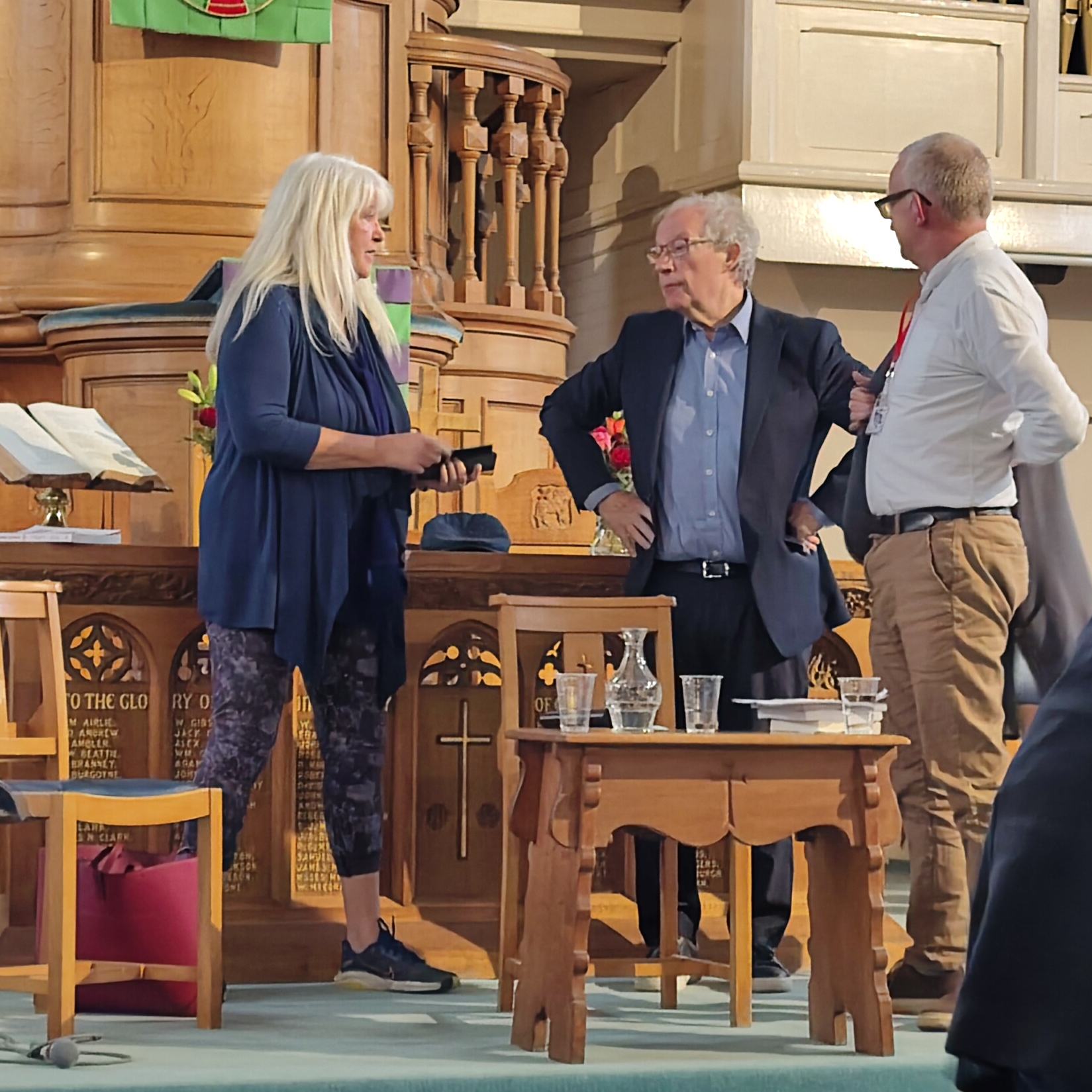

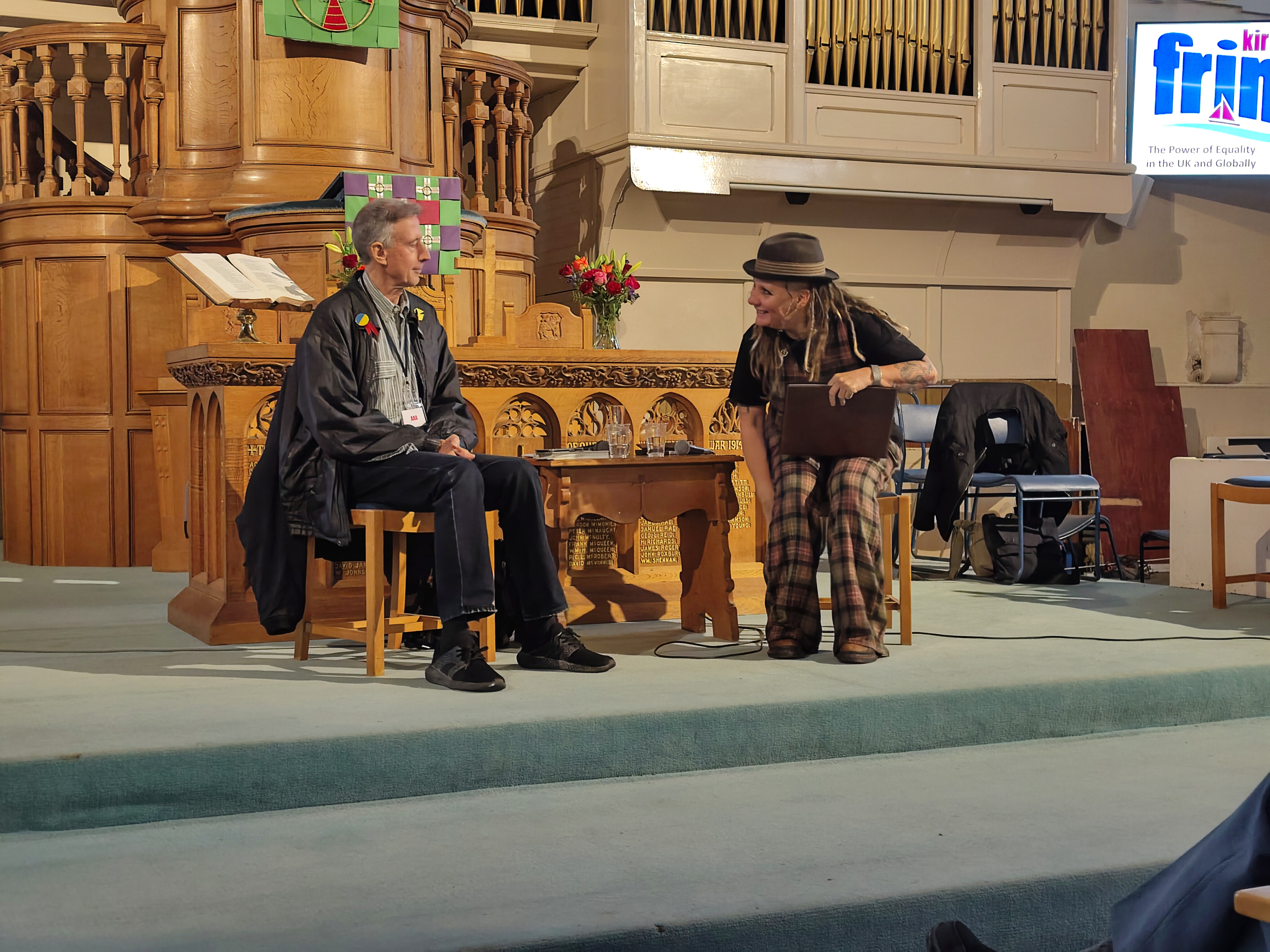














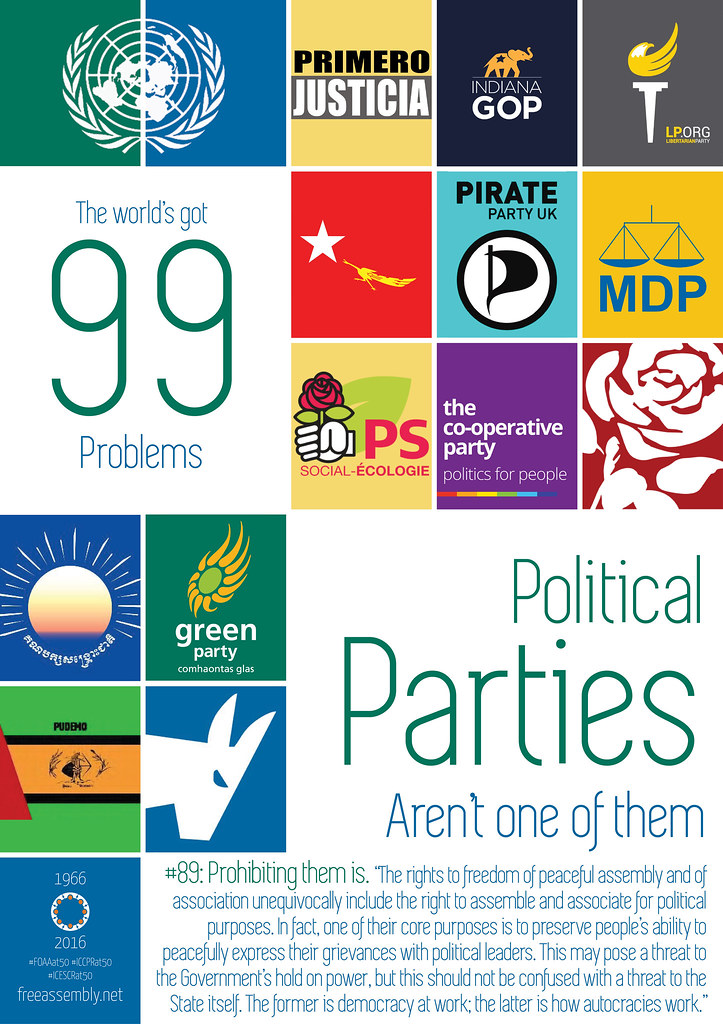
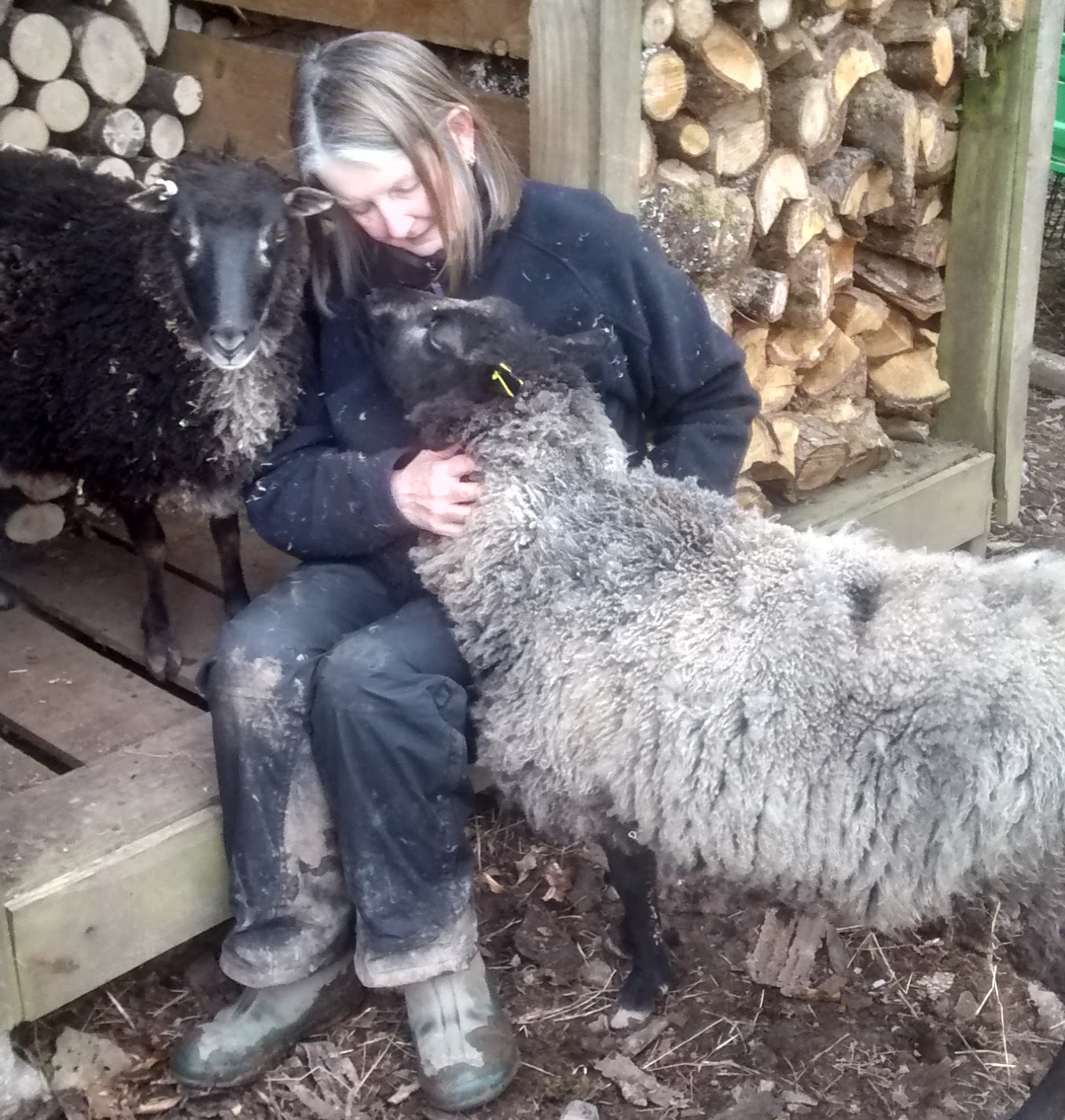















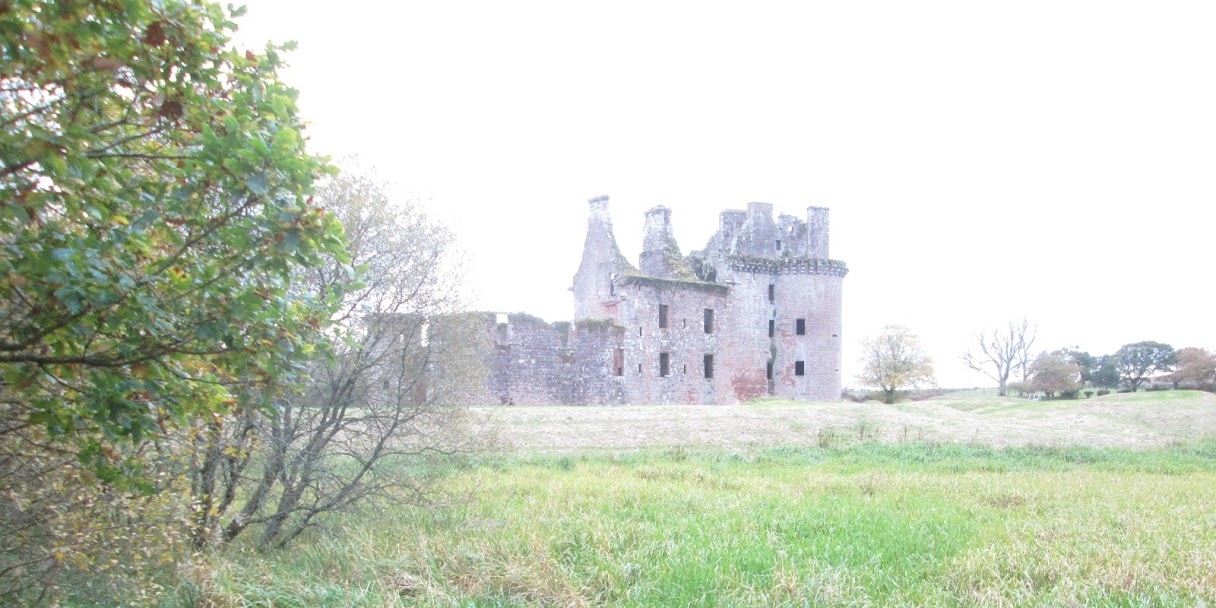

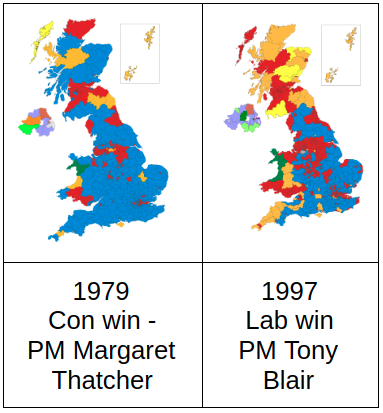
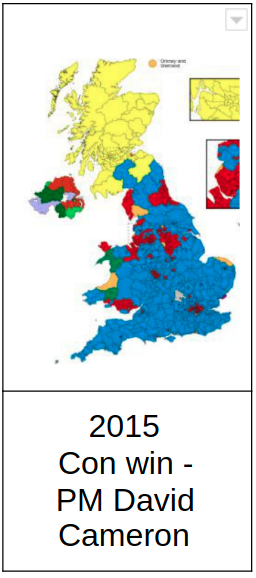




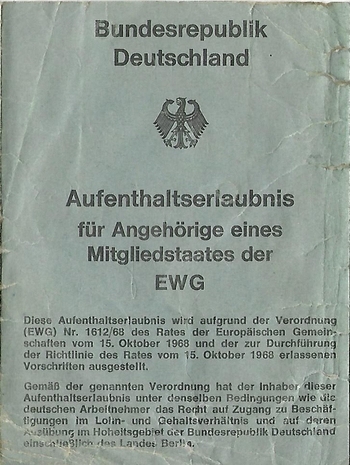
 Carruchan



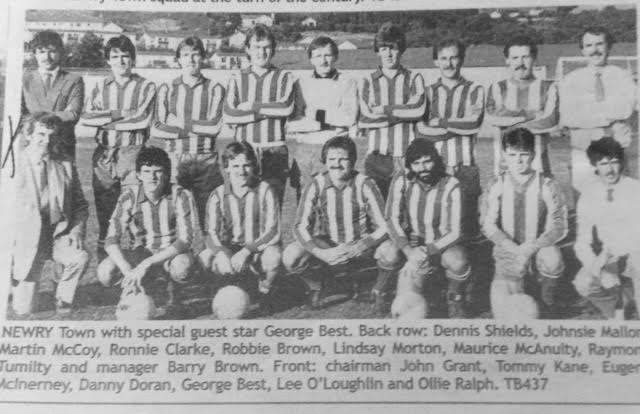
Brexit Revisited
The Democratic Case for Pooling Sovereignty
Although I voted to remain in the European Union in the 2016 referendum, this did not reflect an entirely uncritical view of the European project and, in particular, its democratic structures. I was interested therefore to listen to the Leading Podcast interview with Poland’s Deputy Prime Minister, Radek Sikorski. In a wide-ranging conversation, he makes a very spirited argument in favour of EU Democracy.
Sikorski’s relationship with the UK is an interesting one. Just nineteen years old, he was granted political asylum in Britain in 1982 following the declaration of martial law in Poland in December of the previous year. He won a place to study PPE at the University of Oxford where he established his conservative political credentials and became a member of the notorious Bullingdon Club. He was an acquaintance of both David Cameron and Boris Johnson, and an admirer of the latter.
During this period of his life he was a Eurosceptic. Reflecting on this, he now says that in the 1980s, when his own Euroscepticism was formed, “The British public was consistently misled about how the EU works.” [Podcast: 23:32]
Having returned to Poland after the fall of the communist Eastern Bloc, he has entirely changed his view. He now offers a robust defence of the EU’s democratic character:
“For a directive to come into force not only do you need an agreement of the member states and in a majority of cases unanimously, you also need an agreement of the European Parliament; and the Commission are not ‘faceless bureaucrats’. They are appointed by democratically elected governments.”
Sikorski concludes: “Now that I know how it works I don’t know how you could make it any more democratic than that.” [Podcast: 26.02]
Nigel Farage, or indeed Boris Johnson or Michael Gove, would be unlikely to highlight this particular script; however, the core appeal of Brexit for many had more to do with that pesky slogan coined, I believe, by arch Brexiteer Dominic Cummings: “Take back control!”
These three words neatly encapsulated the alleged indignity of European Union membership: that the great British nation was sharing a sliver of its sovereignty with perfidious Europeans. And so, amidst much waving of the Union Jack, the clamour grew: “Take back control.”
There is, however, a democratic conundrum at the centre of this call to reclaim sovereignty. Intrinsically, democracy is about the pooling of individual sovereignty. In a world where each individual is a law unto themselves, we would be returned to the state of nature described by Thomas Hobbes in which, he argued, life would be “nasty, brutish and short.” Hobbes was no democrat, but in his view, any form of government, however unjust, would be preferable to the state of nature.
I would be tempted to argue with Hobbes’s characterisation of human nature as being so irredeemably brutish, but will set that aside for the moment and return to my main point. If we want democracy, then the sharing of individual sovereignty is a prerequisite. The question only remains to decide how widely that sovereignty should be shared. It is obviously the case that the smaller a democratic unit, the more influence an individual citizen will have. This said, federal and quasi-federal structures, like the European Union, allow decisions to be made which affect larger groups of people without removing the right of smaller groups to manage their own affairs. When all is said and done, has ‘taking back control’ to Westminster given a Scottish voter, or a voter in Liverpool, more control than pooling some sovereignty in a larger body where their MEP has a vote?
Naturally, sharing sovereignty means that we will sometimes dislike democratically made decisions, regardless of whether they have been made locally, nationally, or at some transnational level. The alternative, however, is a free-for-all in which, generally, the powerful get their way and everyone else gets the leftovers.
In the light of the somewhat dismal performance of the UK since its exit from the EU, it seems reasonable to suggest that the time has come to undo the damage done by Brexit and rejoin. According to YouGov: “Nine years on from the EU referendum, most Britons believe that it was wrong to vote to leave the EU.”
It is a curious fact, however, that despite this outcome, one of the key architects of Brexit, Nigel Farage, continues to rise in popularity amongst the disaffected, whilst the esteem in which other leading politicians are held is in free-fall.
Radek Sikorski is clear that, were the UK to apply to rejoin, we would be welcomed back into the European fold. My own sense, however, is that rejoining the EU at this stage would prove unpopular in the UK regardless of Brexit-regret. And there is the additional question of the currency.
Gordon Brown—smart man—negotiated for us to keep the pound rather than adopt the Euro. While not an immediate condition, rejoining would almost certainly require a commitment to adopt the Euro in the long term—a sovereignty I believe is worth retaining.
More importantly, however, in this time of Trumponomics, all bets are off. So far as most commentators are concerned, Trump’s tariffs strategy is actively harming the US economy, and the collateral damage to other economies around the world is of no concern to him. As in all things, Trump appears to prefer division to unity and would doubtless be hostile to the UK rejoining the EU. He has no interest in anything other than a winner-takes-all rammy at the level of international affairs. The way in which he is playing his hand can be stupefying, but undeniably he continues to hold many strong cards.
All things considered, I think we should probably put our application to rejoin the EU on hold. For the moment, we must navigate the turbulent world that Brexit, Trump, and the populist zeitgeist have helped to create.
Endnotes
Leading Podcast Putin, Trump, and 500 Years of Resisting Russia | Poland’s Deputy Prime Minister, Radek Sikorski
Wikipedia Radosław Sikorski
YouGov Nine years after the EU referendum, where does public opinion stand on Brexit?